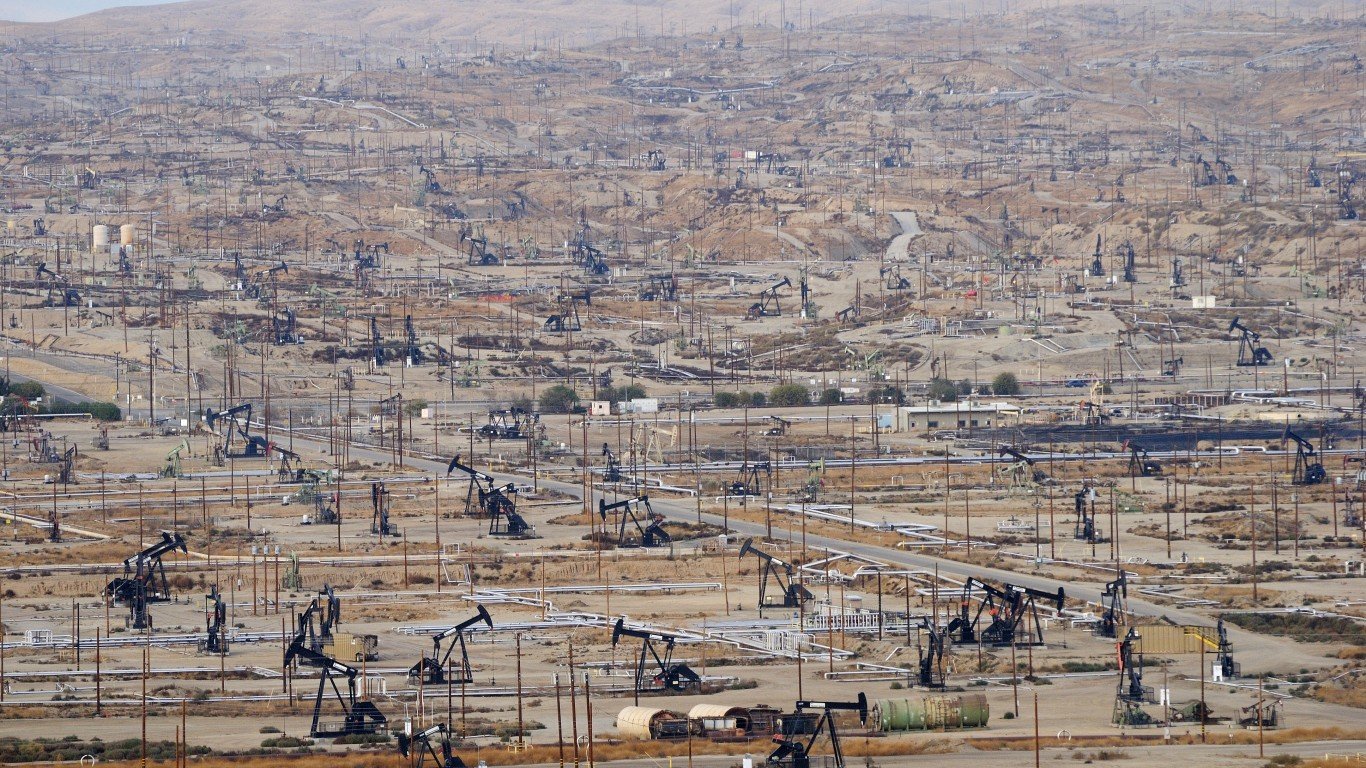
"“This is a chart of just natural resource value by country, right? Russia, $75 trillion. The US, $45 trillion,” he said, describing deposits of coal, timber, natural gas, and gold. His punchline: “So just in natural resources, we have more natural resource value... than the debt that we have now.” That number lands harder with WTI crude at $109.76 per barrel, which sits in the 98th percentile of its 12-month range, lifting the implied value of domestic reserves."
"“Now we can talk about the military. We can talk about public, public lands, public real estate, government buildings, so forth and so on,” he said, adding that “the government has nearly $5 trillion a year just in revenue.” The idea is that if you were looking at a household's financial picture, you'd take liabilities into account alongside assets."
"“If you look at the growth in debt compared to the growth in GDP since the '70s, the debt has been growing way faster than GDP. At some point that will really matter,” Taggart argued."
The argument challenges the view that high U.S. national debt guarantees imminent financial collapse. It claims investors often focus on liabilities without accounting for the value of underlying national assets. The United States is described as holding substantial natural resources, including deposits of coal, timber, natural gas, and gold, with an estimated natural resource value that can exceed the level of debt. Additional government-controlled assets are cited, including military assets, public lands, public real estate, and government buildings. Recurring tax revenue is also emphasized as a stabilizing factor. The timing of debt concerns is debated, with attention to how debt growth compares with GDP growth over time.
Read at 24/7 Wall St.
Unable to calculate read time
Collection
[
|
...
]