"Currency movements drive emerging market returns more than most investors realize. When the dollar weakens, emerging market assets denominated in local currencies become more valuable in dollar terms, and capital flows toward higher-yielding developing economies. The opposite happens when the dollar strengthens. SPEM's performance over the next year will largely hinge on whether the dollar continues its recent consolidation or resumes a strengthening trend."
"Watch the DXY Dollar Index. A sustained move below 100 would likely support continued emerging market strength, while a push above 108 could create headwinds. The Federal Reserve's policy stance matters because interest rate differentials between the U.S. and emerging markets influence capital flows. If the Fed signals rate cuts while emerging market central banks hold steady or tighten, that narrows the rate gap and makes EM assets more attractive. Monthly Fed statements and the quarterly Summary of Economic Projections provide the clearest signals."
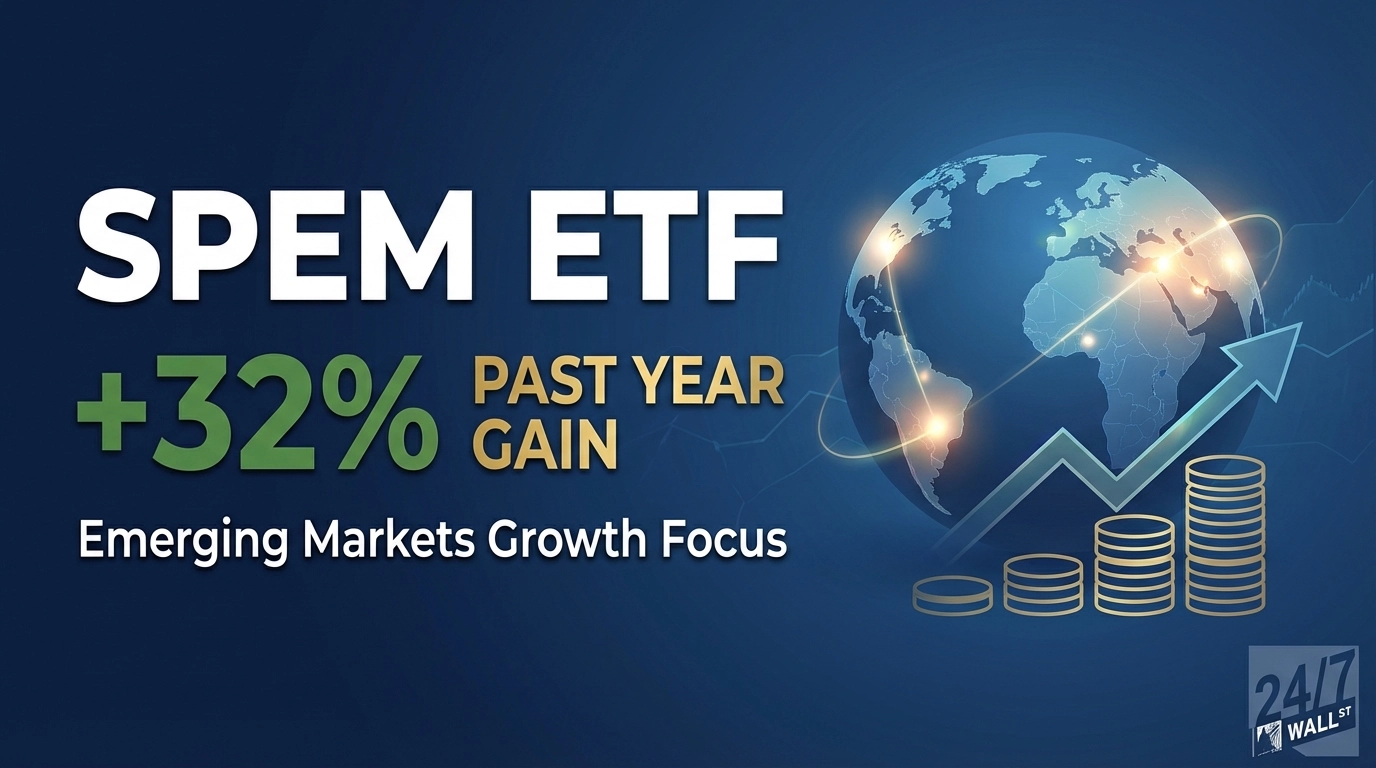
SPEM returned 32% over the past year, outperforming the S&P 500's 16% return due to exposure to recovering emerging market economies in Asia and Latin America where consumer spending and infrastructure investment are accelerating. The SPDR Portfolio Emerging Markets ETF (SPEM) provides diversified exposure to over 800 holdings across China, India, Brazil, and other developing economies with a 0.07% expense ratio. Currency movements and the U.S. dollar's direction critically affect emerging market returns; a weaker dollar boosts local-currency assets while a stronger dollar creates headwinds. Watch the DXY index thresholds of 100 and 108. Federal Reserve policy and interest rate differentials will influence capital flows. Individual holdings can drive volatility, as PDD Holdings (0.72% of the fund) declined 8% over the past year.
Read at 24/7 Wall St.
Unable to calculate read time
Collection
[
|
...
]