Patterns of reserve-currency rise and decline repeat over centuries and are driven by five interacting forces: money and debt, domestic politics, world order, nature, and technology. Growing debt relative to income forces governments toward painful crises or money printing, gradually eroding monetary orders and deepening domestic political conflict as wealth and values gaps widen and democratic faith weakens. The post-World War II rules-based global order is fracturing because enforcement depends on powerful states that may not comply, raising questions about rulemaking and enforcement. Natural shocks and waves of technology, especially artificial intelligence, disrupt economies and power structures and shape future growth.
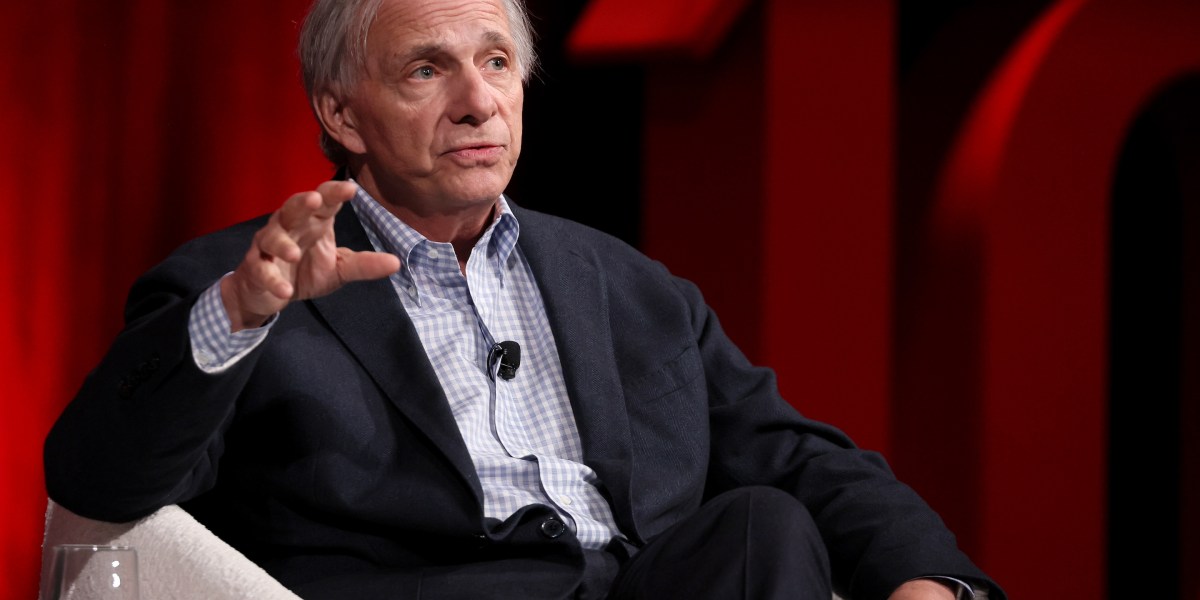
"As an investor for more than 50 years, Bridgewater Associates founder Ray Dalio told Fortune's Kamal Ahmed that, after studying the rises and declines of reserve currencies in major empires over the last 500 years, he sees the same patterns repeating "like a movie." It all boils down to five specific forces that interact-money and debt, domestic politics, world order, nature, and technology, Dalio said. Every issue today sits within the interaction of these forces and their long-term cycles, he said."
"When debt grows faster than income, governments face a choice between painful debt crises or printing money, which gradually erodes the existing monetary order, he explained. Over time, this leads to political conflict at home, as wealth and values gaps widen and faith in democratic institutions weakens. At the same time, the post-World War II, U.S.-led, rules-based global order is breaking down because enforcement of "global rules" ultimately depends on the most powerful countries, which do not always comply,"
"On top of that, shocks from nature, such as pandemics and climate events, and waves of new technology disrupt economies and power structures. "And certainly we're having one of the greatest inventions, if not the greatest invention, when human intelligence is working with artificial intelligence," Dalio said. AI continues to be a top priority for leaders. To hear what executives, including Dara Khosrowshahi (CEO of Uber), Robin Vince (CEO of BNY), and Vas Narasimhan (CEO of Novartis) discussed with Fortune at the USA House,"
Read at Fortune
Unable to calculate read time
Collection
[
|
...
]