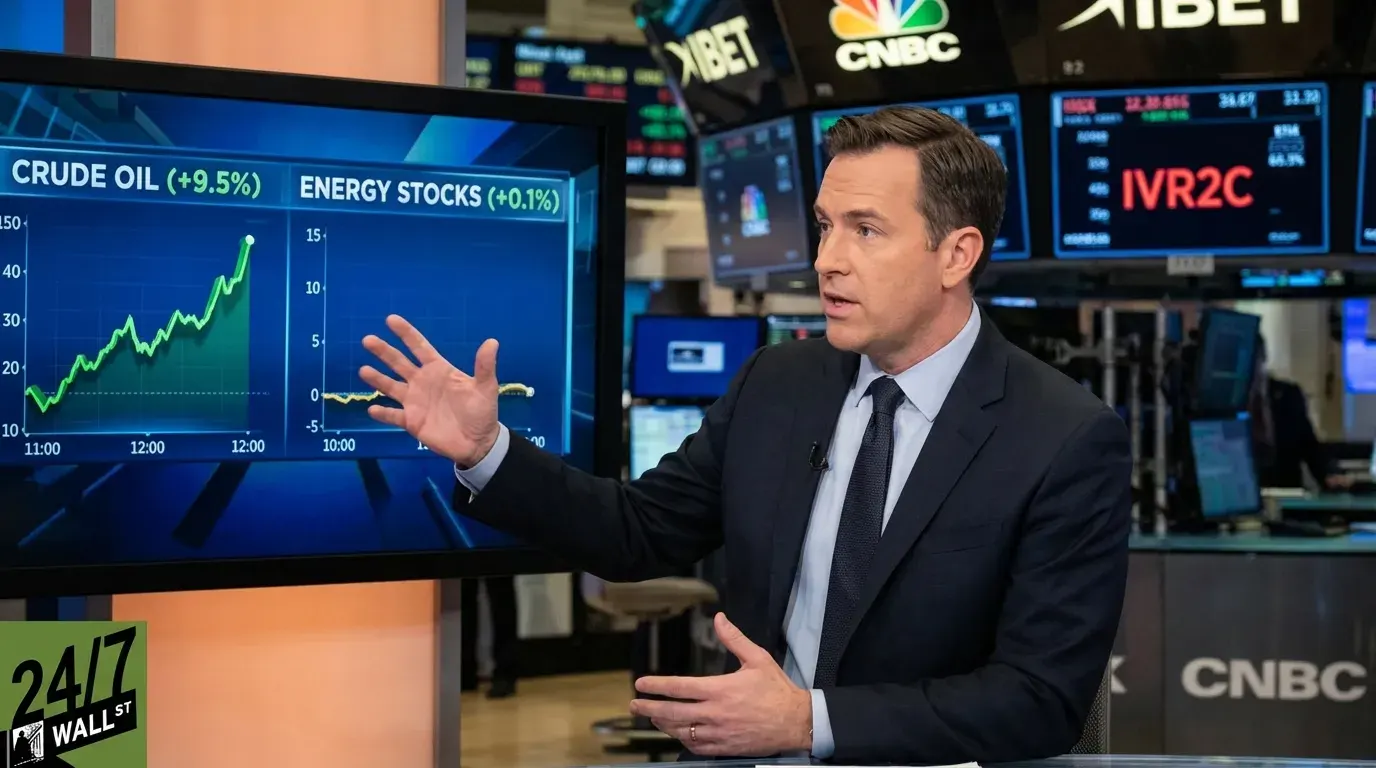
"Look at crude oil. It's up 9.5%, but it's not at $125 a barrel. You got Exxon up half a percent, Chevron up one quarter of 1%. The markets are down a bit but they're not collapsing. This is a huge difference from what we had last night."
"The old mental model for energy stocks was simple: oil goes up, stock goes up. That relationship has weakened considerably, and the reason is that ExxonMobil and Chevron have spent the last several years deliberately reducing their sensitivity to any single point on the commodity curve."
"ExxonMobil has accumulated $15.1 billion in cumulative structural cost savings since 2019, targeting $20 billion by 2030. The company hit a production record of 4.7 million oil-equivalent barrels per day, the highest in over 40 years. But it also generates meaningful earnings from refining and chemicals, segments that don't always move in lockstep with crude prices."
Energy majors like ExxonMobil and Chevron have fundamentally changed how they respond to oil price fluctuations. While crude oil surged 9.5% on Monday, these companies' stock prices barely moved, contrasting sharply with previous market dynamics. This decoupling reflects deliberate corporate strategies implemented over recent years. ExxonMobil accumulated $15.1 billion in cumulative structural cost savings since 2019, targeting $20 billion by 2030, while achieving production records of 4.7 million oil-equivalent barrels per day. Beyond upstream production, these companies generate substantial earnings from refining and chemicals operations that don't correlate directly with crude prices, reducing their overall commodity price sensitivity.
#energy-stocks #oil-price-decoupling #exxonmobil-and-chevron #commodity-sensitivity #structural-cost-savings
Read at 24/7 Wall St.
Unable to calculate read time
Collection
[
|
...
]