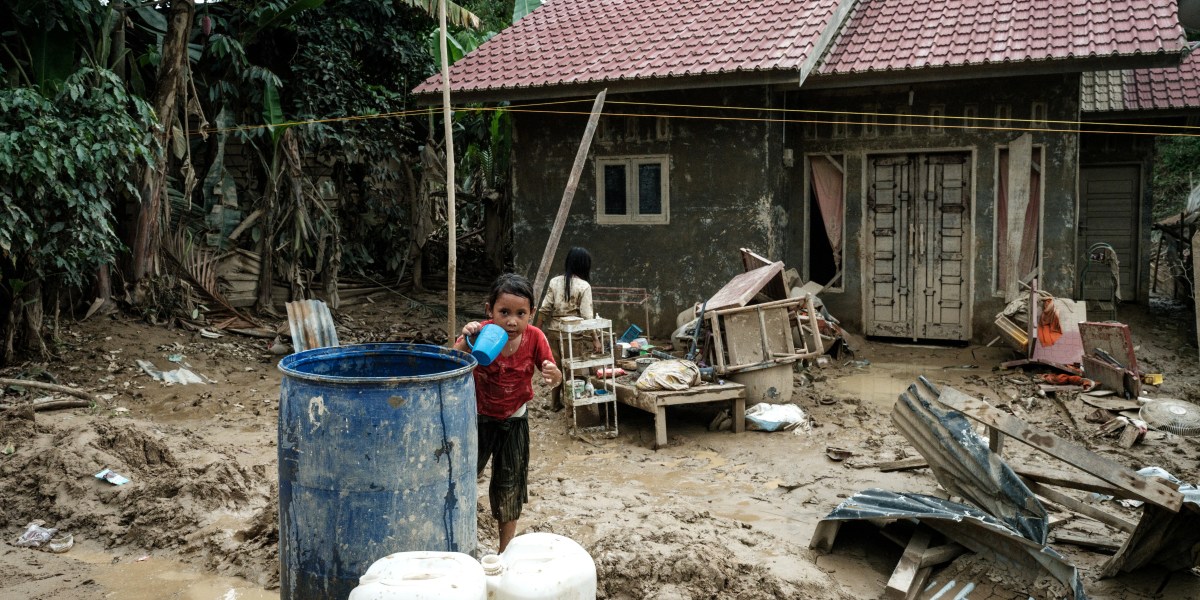
"A lack of insurance coverage in Southeast Asia threatens an increasingly important hub for supply chains, as the region is battered by tropical storms, major flooding, and other natural disasters. Total losses from natural disasters across Asia-Pacific last year totaled $73 billion, yet just $9 billion was insured, according to Germany reinsurance company Munich Re. That makes Asia one of the world's least insured regions against natural disasters."
"Insurance coverage can be less than 5% in many of Asia's lower-income countries, like Myanmar, Laos, Cambodia and the Philippines, according to Munich Re. The lack of reliable climate data across Asia makes it difficult for insurers to accurately assess risk, explains Benedikt Signer, executive director of the SEADRIF Insurance Company, the first regional catastrophe risk facility in Asia, developed in partnership with the World Bank."
"In data-scarce environments, international insurers don't know how to price risk, enter the insurance market, or "deal with the government." Governments also sometimes see insurance as a "waste of public funds, because from the public procurement perspective, when you buy something you need to have a good or service in return," says Signer. "But with insurance, what you're buying is intangible, and you don't get anything back unless there's a payout.""
Southeast Asia shows very low insurance penetration against natural disasters despite heavy exposure to tropical storms, flooding, and earthquakes. Total Asia-Pacific disaster losses reached $73 billion last year while only $9 billion was insured, making the region one of the least insured globally. Major events such as the March 7.7-magnitude Myanmar earthquake caused $12 billion in losses with just $1.5 billion insured. Insurance coverage can be below 5% in several lower-income countries. Limited climate and risk data hinder accurate pricing and market entry by international insurers, and some governments view insurance as an intangible cost without immediate return, reducing uptake and increasing systemic risk.
Read at Fortune
Unable to calculate read time
Collection
[
|
...
]