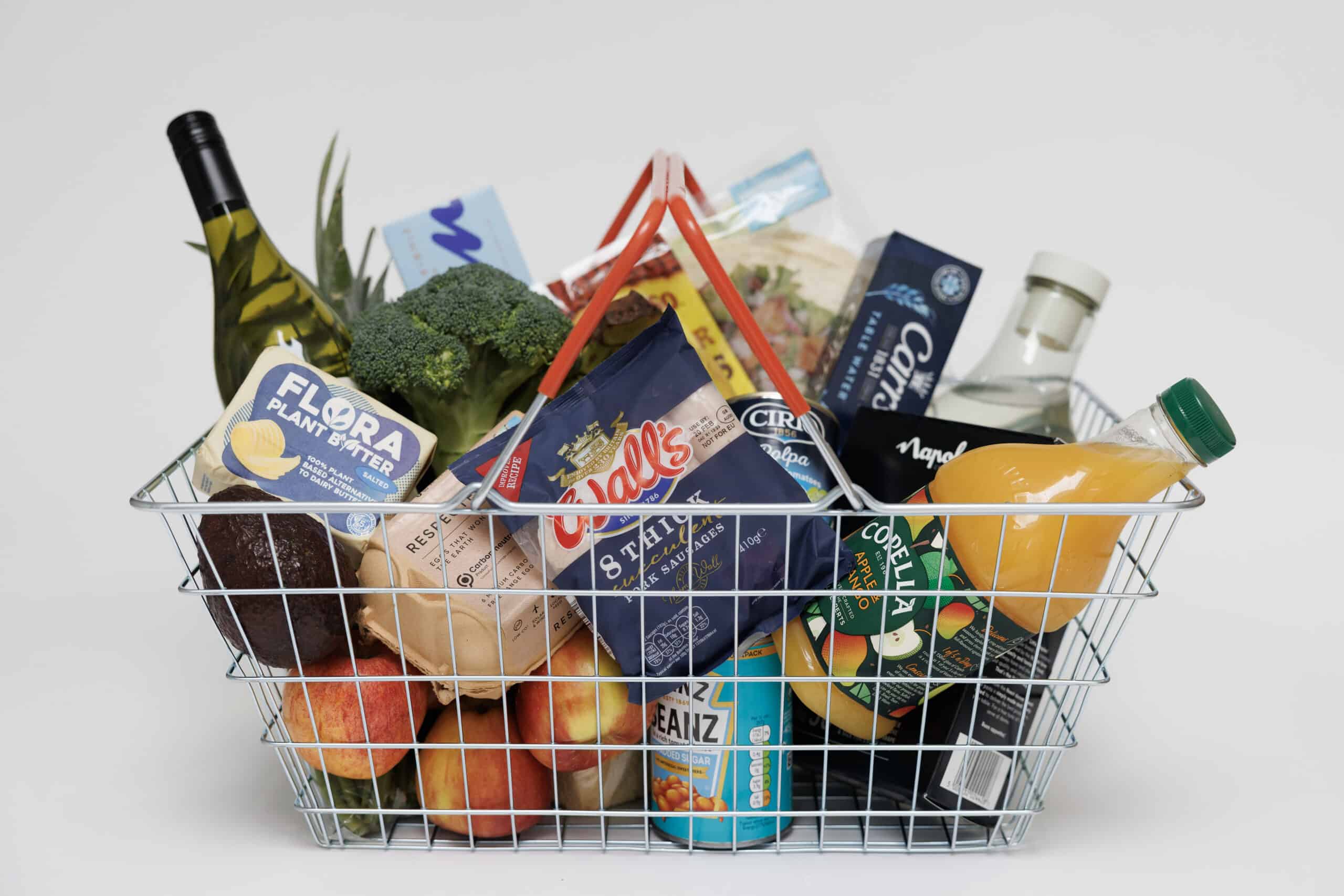
"The average American household spends about $519 a month on groceries, based on the latest BLS Consumer Expenditure Survey figure of $6,224 a year, and grocery prices are still rising: food-at-home prices were up 1.9% year over year as of March 2026. Add about $280 for utilities and roughly $100 for phone and internet, plus a streaming subscription or two, and the bill clears $905 a month. A portfolio of $185,000 generating a blended yield of 6.4% throws off $11,877 a year, or roughly $990 a month. That covers a buffet-sized hole in the household budget, with about $85 left over."
"The trick is the yield. Hit it with the wrong instruments and you erode principal. Hit it conservatively and you need closer to a third of a million in capital. Here is the math at three tiers, using $12,000 a year as the round target. Conservative Tier: 3% to 4% Yield At a 3.7% yield, $12,000 a year requires about $324,000 in capital. This is the broad dividend-growth ETF range, anchored by funds like the Schwab U.S. Dividend Equity ETF (NYSEARCA:SCHD | SCHD Price Prediction)."
"At a 5.8% yield, $12,000 a year requires about $209,000. This is the high-dividend equity and REIT range. Two anchors: Realty Income (NYSE:O) is a triple-net REIT that pays monthly. The current dividend is $0.2705 per share per month, with the next payment landing May 15, 2026. The yield sits at about 5%, and management has now strung together 113 consecutive quarterly increases. Portfolio occupancy sits near 99%, and the stock has gained about 18% over the past year."
Average grocery spending is about $519 per month, with food-at-home prices rising 1.9% year over year. Adding roughly $280 for utilities and about $100 for phone and internet, plus one or two streaming subscriptions, brings typical monthly costs to around $905. A $185,000 portfolio earning a blended 6.4% yield generates about $11,877 per year, or roughly $990 per month, leaving about $85 after covering the gap. The required capital varies sharply by yield: at 3.7% it takes about $324,000 to target $12,000 annually, while at 5.8% it takes about $209,000. Higher yields reduce capital needs but increase the risk of principal erosion if instruments are poorly chosen.
#household-budgeting #inflation-and-grocery-prices #dividend-investing #yield-and-portfolio-income #reits
Read at 24/7 Wall St.
Unable to calculate read time
Collection
[
|
...
]