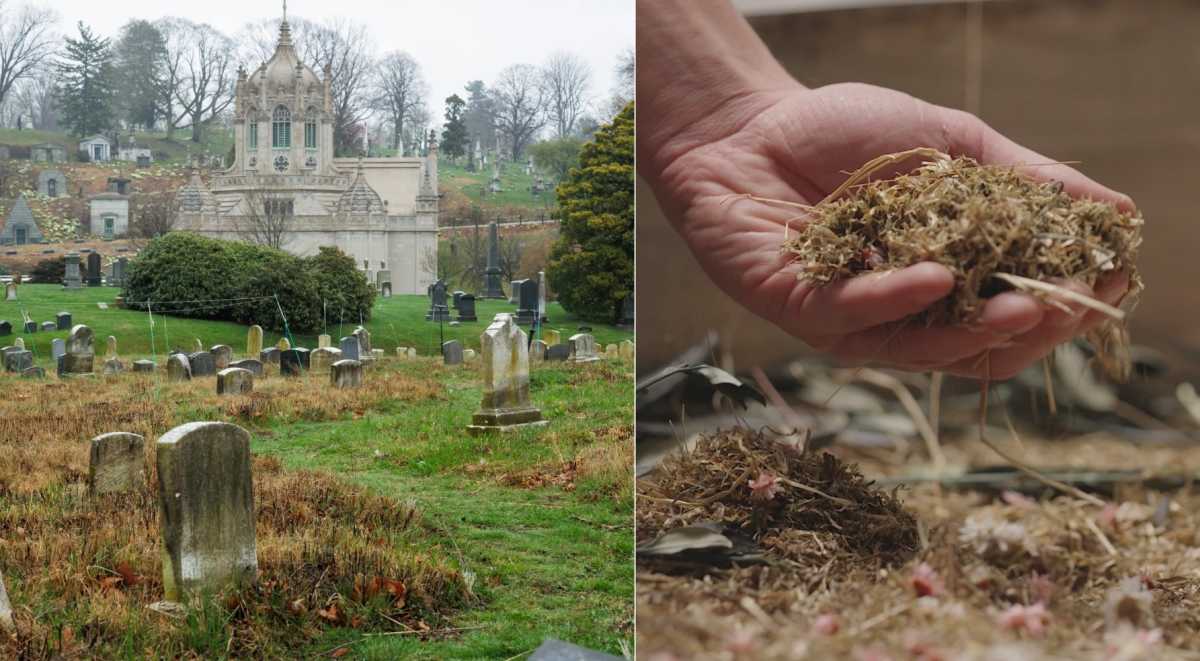
"The process is fairly similar to run-of-the-mill composting. Bodies are sealed in specialized "pods" on a bed of hay, straw and alfalfa. The pods - designed to regulate moisture and airflow - rock gently back and forth to help speed decomposition. After just 40 days, the contents of the pod break down into roughly 160 pounds of nutrient-dense soil, which will be used to support Green-Wood's many plants and trees."
"Human composting is both ecologically and economically beneficial for the sprawling cemetery. Green-Wood is a registered arboretum and for years has worked to fight climate change and protect its natural environment, but death is not carbon-neutral. Cremation requires large amounts of fuel and generates significant air pollution. Traditional burials, where a body is embalmed and buried in caskets not entirely decomposable, can leak hazardous chemicals into the air and formaldehyde into the soil."
"'I think it's really important to think about this as just another way that we are dealing with death,' said Green-Wood president Meera Joshi. 'If you look throughout history, there's been so many different ways between cultures and over time on how people memorialize death. In some senses, this is the original way. It just has the benefit of technology so it can happen faster.'"
Green-Wood Cemetery will offer natural organic reduction, also known as human composting, beginning next year. Bodies are placed in specialized pods on hay, straw and alfalfa; the pods regulate moisture and airflow and rock gently to accelerate decomposition. After about 40 days the remains become roughly 160 pounds of nutrient-dense soil used to nourish the cemetery’s plants and trees. Green-Wood will partner with the German terramation company My Soil and aims to be the first cemetery in New York to offer this option after the state legalized it in 2023. The method reduces emissions compared with cremation and avoids chemicals associated with traditional burials.
Read at Brooklyn Paper
Unable to calculate read time
Collection
[
|
...
]