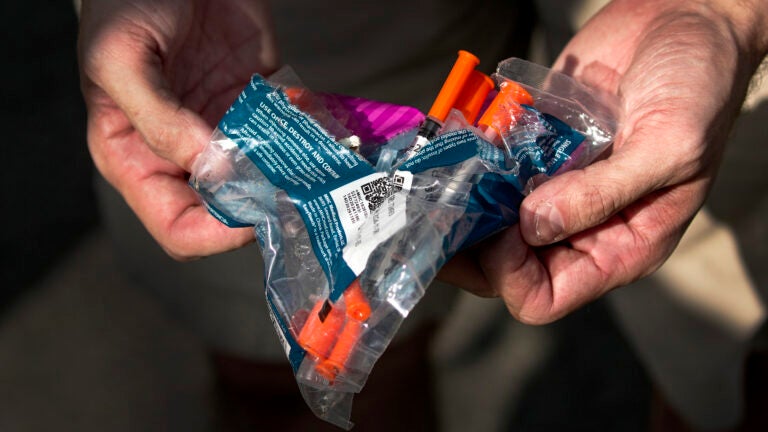
"Used needles and syringes have been a relatively common landscape feature in some Boston neighborhoods for years, sparking action amongst advocacy groups and city officials. The total number of calls for needle pickups around Boston surged nearly 71 percent from 2022 to 2025, an analysis of city 311 data by Boston.com shows, though that was still 17 percent below the number in 2020."
"Our citywide mobile sharps team operate(s) on a rapid response model, following up on 3-1-1 calls while also conducting proactive sweeps. This team operates seven days a week, 7:00 AM to 7:00 PM, conducting proactive sweeps of parks, schools, and hot spots throughout the city."
"Used sharps are dangerous to people and animals if they are not properly disposed of, as they can spread infections like Hepatitis B and HIV, according to the Food and Drug Administration."
Used needles and syringes have become a persistent problem in Boston neighborhoods, found scattered near dumpsters, playgrounds, and public spaces. The city's 311 nonemergency service received a 71 percent increase in needle pickup requests between 2022 and 2025, though this remains 17 percent below 2020 levels. Boston operates a dedicated mobile sharps team that responds to 311 calls and conducts proactive sweeps seven days a week from 7 AM to 7 PM across parks, schools, and identified hotspots. Used needles pose serious health risks, potentially transmitting infections like Hepatitis B and HIV. The 311 system captures only reported incidents, meaning actual needle litter likely exceeds documented figures.
Read at Boston.com
Unable to calculate read time
Collection
[
|
...
]