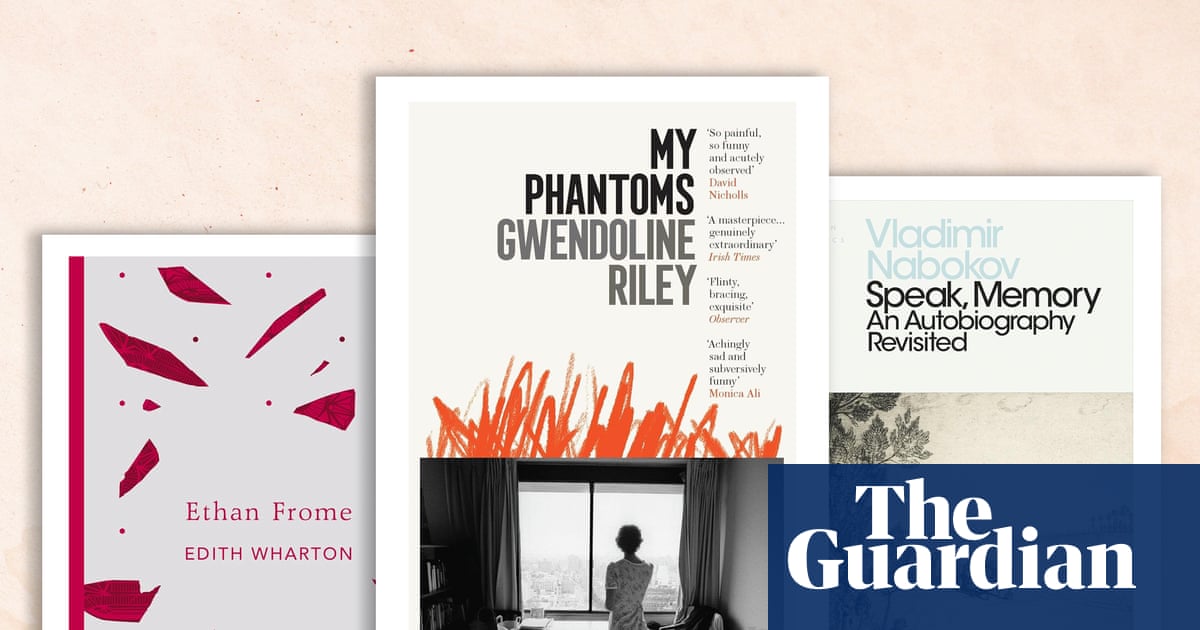
"So: Alice's Adventures in Wonderland and Through the Looking Glass by Lewis Carroll (the zaniness seems to lack agenda and yet still says something big and political); then on to Speak, Memory by Nabokov, newly reminded that language alone (dense, beautiful) can power the reader along;"
"Jonathan Franzen's The Corrections is the rare novel that manages to be both a state-of-the-nation epic and an exquisitely painful family row. This particular family is so meticulously observed that reading about them feels less like fiction and more like overhearing neighbours arguing through a thin wall. Franzen's great trick is to make misery funny without ever quite letting it off the hook."
"Nobody escapes unexamined, least of all the reader: I started off feeling superior but ended up recognising uncomfortable and unflattering fragments of myself scattered throughout the book. The Corrections is not cosy, and it's not kind, but it is deeply humane. It suggests that love persists not because people are redeemable, but because they're not. A brilliant, bracing novel that corrects nothing, yet understands everything."
Classic books such as Alice's Adventures in Wonderland and Through the Looking Glass exhibit playful zaniness that can carry political weight. Speak, Memory showcases dense, beautiful language that propels the reader. The Power Broker exemplifies large-scale ambition and daring. Jonathan Franzen's The Corrections combines state-of-the-nation scope with an exquisitely painful, meticulously observed family drama, making misery funny while refusing easy absolution. The Corrections treats no character, including the reader, as exempt from scrutiny and frames love as persisting despite human failings. JL Carr's A Month in the Country offers a short, witty, contemplative balm—an analogue respite and restorative rural narrative.
Read at www.theguardian.com
Unable to calculate read time
Collection
[
|
...
]