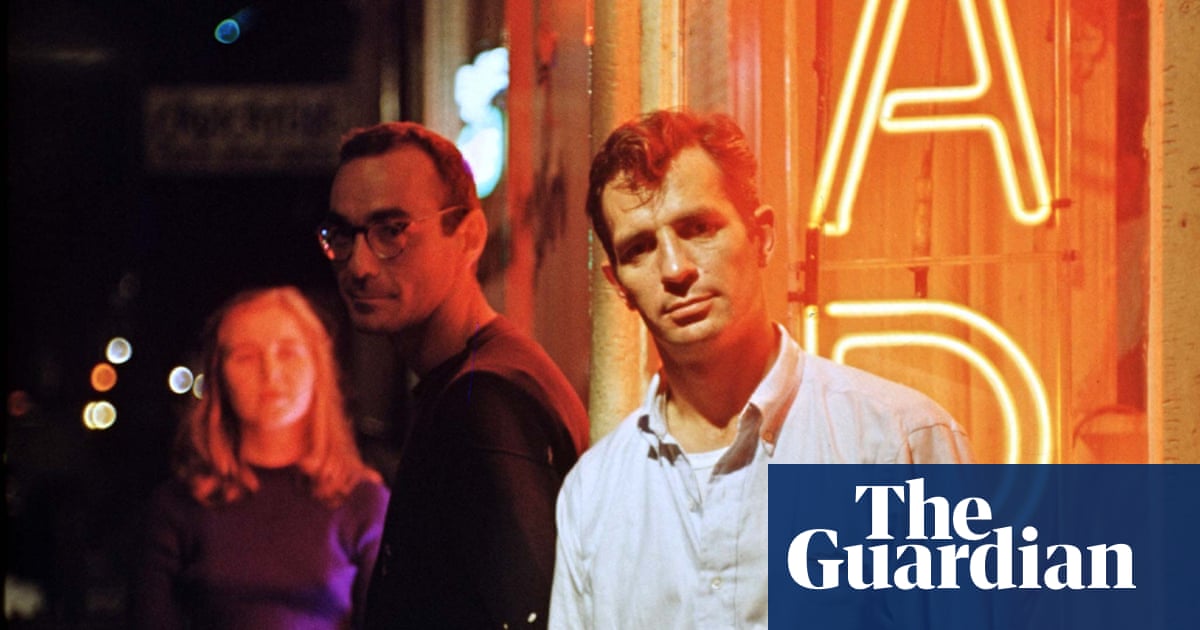
"The correspondence catches Kerouac just coming to New York and having his world broadened from Lowell into this enormous metropolitan life. The letters describe books he read in school and his thoughts about them. Loewentheil believe they show early forms and experiments of what would become Kerouac's signature spontaneous prose technique. He tried it out on his friends."
"Among great literary myths, the one of Jack Kerouac is often reduced to a vibe: The open road, a cigarette, a postwar rebel leaning on a beat-up car—a masculine archetype of rebellion and hedonism. Kerouac's 1957 book On the Road was the bible of the beat generation and chronicles, in startlingly unfiltered prose, his travels across the US with fellow writers Allen Ginsberg, William S Burroughs, and his lifelong muse, the dashing Neal Cassady."
Jack Kerouac's legacy is often reduced to a masculine archetype of rebellion centered on his 1957 novel On the Road, which chronicled travels with fellow beat writers and transformed American literature. However, a new exhibition at New York's Grolier Club titled Running Through Heaven: Visions of Jack Kerouac seeks to rehumanize the myth through previously unpublished materials. Curator Jacob Loewentheil's collection includes Kerouac's annotated copy of Dostoevsky's The Possessed and correspondence from his Columbia University years written to friends in Lowell, Massachusetts. These letters reveal Kerouac's intellectual development, his reading habits, and early experiments with the spontaneous prose technique that would define his literary voice.
#jack-kerouac #beat-generation #literary-exhibition #unpublished-correspondence #american-literature
Read at www.theguardian.com
Unable to calculate read time
Collection
[
|
...
]