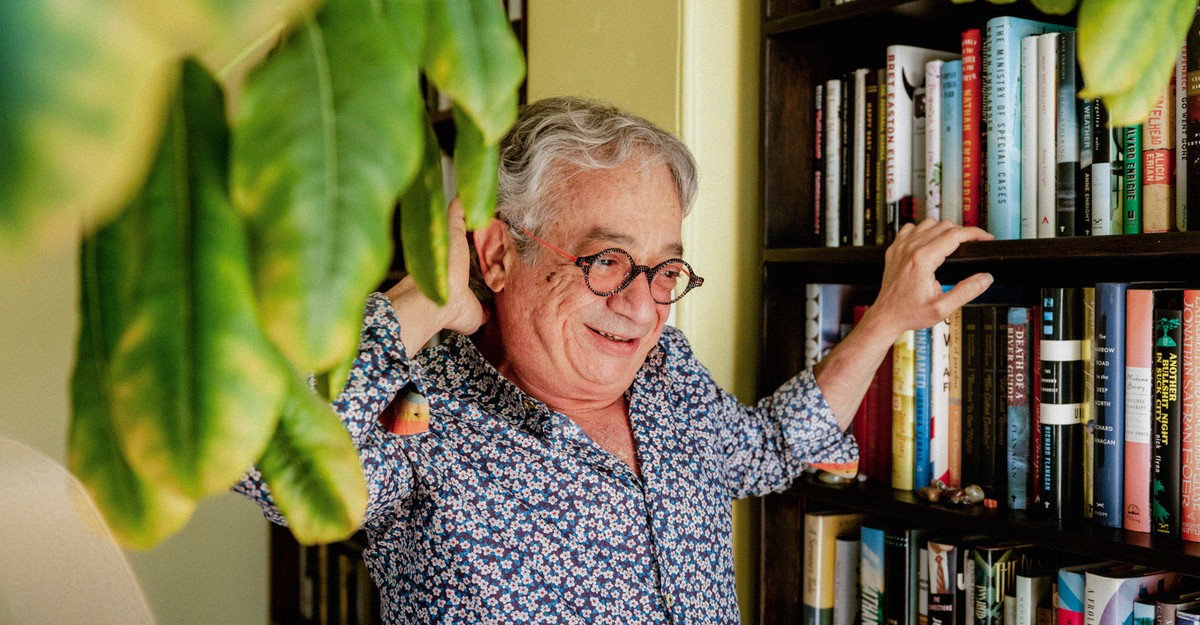
""When I'm told I should write a certain way, I bristle," Rabih Alameddine wrote in a 2018 Harper's essay. "I even attempt to write in opposition to the most recent book I finished. If my previous novel was expansive, I begin to write microscopically; if quiet, I write loudly. It is my nature." The 66-year-old artist and novelist has, over the course of a nearly three-decade career, turned this urge, which he self-deprecatingly calls "childish rebelliousness," into a varied and sophisticated body of work."
"Each of Alameddine's books, dissimilar as they otherwise may be, is an attempt to wrestle with the terrifying arbitrariness of fate. This preoccupation seems to emerge from Alameddine's understanding that the unpredictable swings of history can change a person thoroughly, irrevocably, and without warning. In "How to Bartend," Alameddine describes testing positive for HIV and his subsequent terror of getting sick, which did not happen. The piece concludes, "I did not die and I did not recover.""
Rabih Alameddine's nearly three-decade career features inventive, varied narratives that resist a single style or form. His 1998 debut Koolaids juxtaposed the Lebanese Civil War and the AIDS epidemic in a furious, fragmented tale. He has produced experiments such as a novel made entirely of first chapters and a work that uses camp to riff on the Thousand and One Nights; his seventh, The True True Story of Raja the Gullible (And His Mother), employs drag as a central metaphor and layered structure. Recurring themes include fear and the arbitrary, irrevocable effects of historical events on individuals, informed by personal experience with HIV.
Read at The Atlantic
Unable to calculate read time
Collection
[
|
...
]