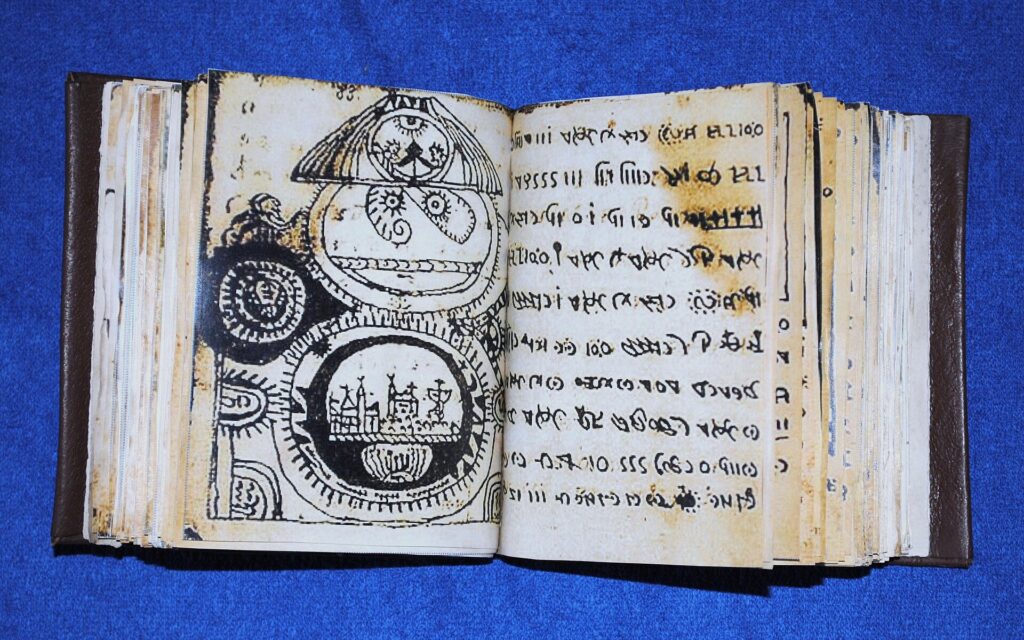
"Image by Klaus Schmeh, via Wiki­me­dia Com­mons Mag­yar, which is spo­ken and writ­ten in Hun­gary, ranks among the hard­est Euro­pean lan­guages to learn. (The U.S. For­eign Ser­vice Insti­tute puts it in the sec­ond-to-high­est lev­el, accom­pa­nied by the dread­ed aster­isk label­ing it as "usu­al­ly more dif­fi­cult than oth­er lan­guages in the same cat­e­go­ry.") But once you mas­ter its vow­el har­mo­ny sys­tem, its def­i­nite and indef­i­nite con­ju­ga­tion, and its eigh­teen gram­mat­i­cal cas­es, among oth­er noto­ri­ous fea­tures, you can final­ly enjoy the work of writ­ers like Nobel Lau­re­ates Imre Kertész and Lás­zló Krasz­na­horkai in the orig­i­nal. Alas, no degree of mas­tery will be much help if you want to under­stand a much old­er - and, in its way, much more noto­ri­ous - Hun­gar­i­an text, the Rohonc Codex."
""Lit­tle is known about this book before it was bequeathed to the Hun­gar­i­an Acad­e­my of Sci­ences in 1838," writes The Art News­pa­per's Gar­ry Shaw. "Its 448 pages bear illus­tra­tions cov­er­ing Bib­li­cal themes and an as yet unread­able text, writ­ten using around 150 dif­fer­ent sym­bols." Like the famous­ly cryp­tic Voyn­ich Man­u­script, much cov­ered here on Open Cul­ture, "there has been much spec­u­la­tion over what lan­guage, if any, is encod­ed - rang­ing from old Hun­gar­i­an to San­skrit, or even a spe­cial­ly invent­ed one - as well as debate over the book's ori­gin and date of cre­ation.""
Magyar ranks among Europe's hardest languages, with features like vowel harmony, definite and indefinite conjugation, and eighteen grammatical cases. Mastery of those features enables reading Nobel-winning Hungarian literature in the original. The Rohonc Codex, a much older Hungarian manuscript, remains unreadable despite such mastery. The codex contains 448 illustrated pages with Biblical themes and a text composed of roughly 150 different symbols. The manuscript was bequeathed to the Hungarian Academy of Sciences in 1838. Scholars have proposed many possibilities for its language, from old Hungarian to Sanskrit or an invented tongue, and its origin and date remain debated.
Read at Open Culture
Unable to calculate read time
Collection
[
|
...
]