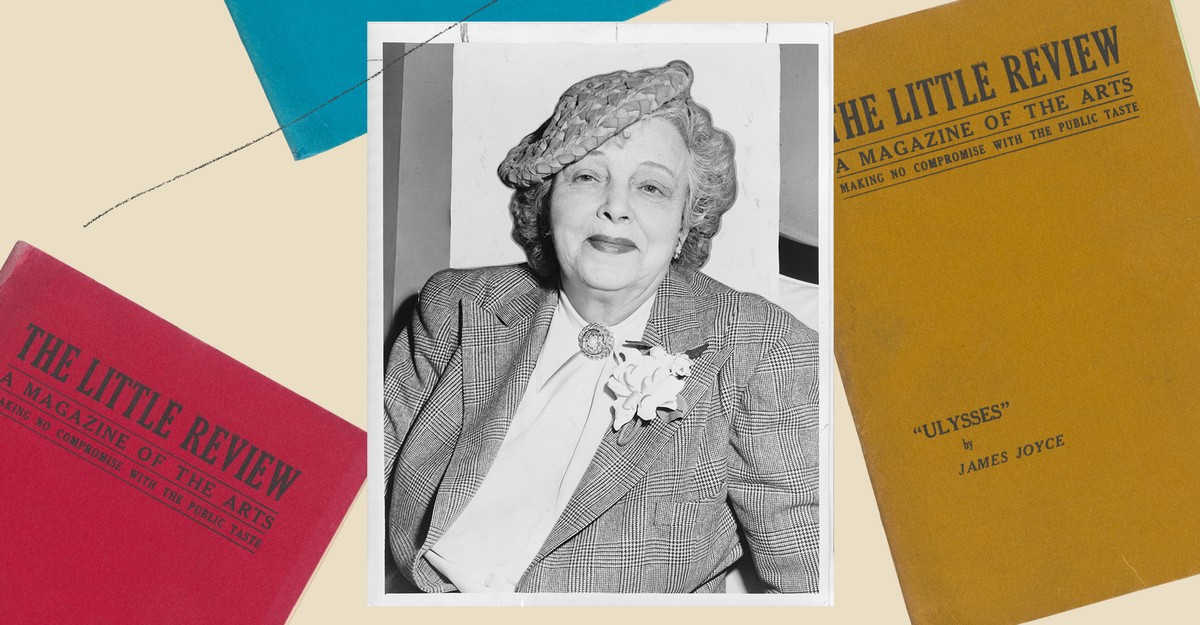
"Many editors languish in the margins of history, their contributions largely invisible despite how much they shape whom and how we read. But in recent years, amid a wave of books unearthing overlooked figures, biographers have turned their sights to pioneering book and magazine editors-including Malcolm Cowley of Viking, Judith Jones of Knopf, Bennett Cerf of Random House, and Katharine S. White of The New Yorker -anointing them as the unsung architects of the American literary canon."
"That Anderson isn't particularly well remembered is somewhat surprising when you consider her central role in one of the first literary-obscenity trials in American history. In 1918, four years before the American bookseller Sylvia Beach published Joyce's Ulysses in Paris, Anderson began serializing the novel in The Little Review. She was forced to stop in 1920, when censors arrested and charged her and Heap with the felony"
Many influential editors shaped the American literary canon while remaining underrecognized. A recent trend of biographies highlights pioneering book and magazine editors and reframes them as central cultural architects. Margaret C. Anderson founded The Little Review in 1914 and introduced American readers to modernist figures such as Ezra Pound, T. S. Eliot, and James Joyce. Anderson transformed the Review from a local Chicago publication into a transatlantic journal by publishing experimental European and American expatriate writers. Anderson began serializing Ulysses in 1918 and was forced to stop in 1920 when censors arrested and charged her and Jane Heap in a landmark obscenity case.
Read at The Atlantic
Unable to calculate read time
Collection
[
|
...
]