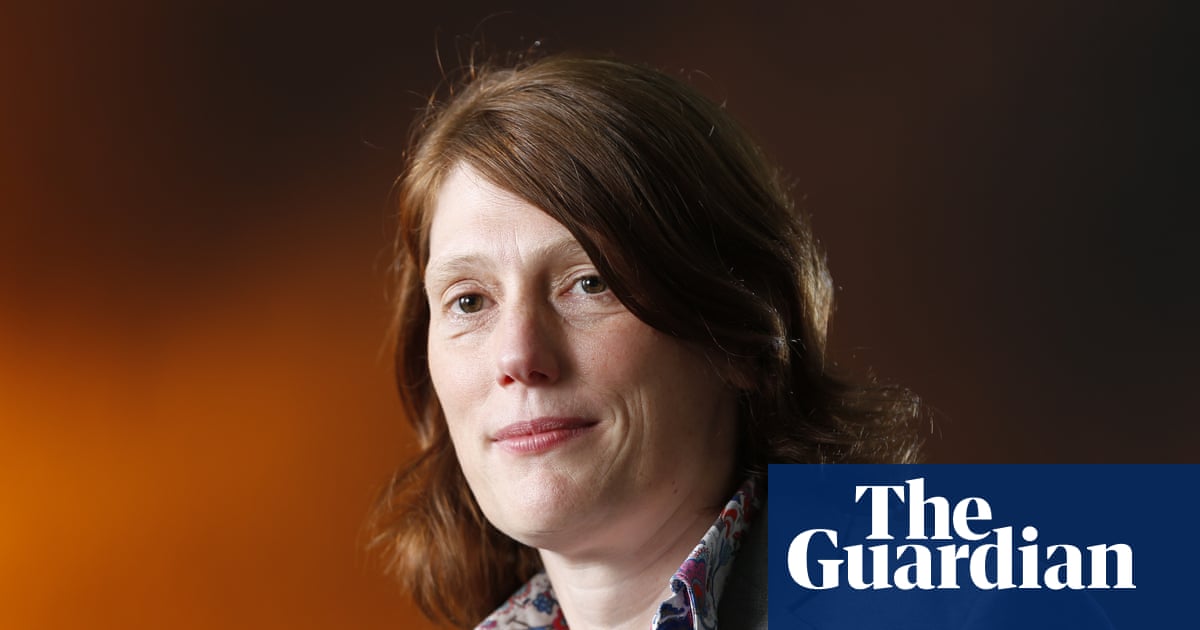
"Joanna Kavenna's two decades as a writer have seen her beat a gorgeously unconventional path through a plethora of subjects and genres, from polar exploration to motherhood to economic inequality, and from travelogue to academic satire to technological dystopia. I like genre, Kavenna said in a 2020 interview, because there's a narrative and you can kind of work against it, test it."
"We first encounter the novel's thoroughly anonymised first-person narrator in Oslo in the summer of 2007, where he or she or they are employed as a research assistant to a renowned Icelandic philosopher named Alda Jonsdottir. Jonsdottir is described as eminent, tall, strong and terrifying, and likes to host dinner parties for her histrionic institutional peers. The hapless narrator's job is to help facilitate her work in box philosophy: the study of categories, the ways we organise reality into groups and sets [] the ways we end up thinking inside the box, even when we are trying to think outside the box."
Seven is a protean novel that blends absurdism, academic satire and philosophical inquiry into a compact, idea-dense narrative. A thoroughly anonymised first-person narrator works in Oslo in summer 2007 as a research assistant to a formidable Icelandic philosopher, aiding investigations into box philosophy and the ways categories shape thought. The narrator travels to the Greek island of Hydra to meet Theodoros Apostolakis, a dentist-poet-mystic and devotee of an ancient board game called Seven. Apostolakis safeguards the Fanouropiton, a Catalogue of Lost Things illuminated like a steampunk Book of Kells. The plot unfolds as a peripatetic romp across scenic European locales, under parabolic skies and over silvery seas.
Read at www.theguardian.com
Unable to calculate read time
Collection
[
|
...
]