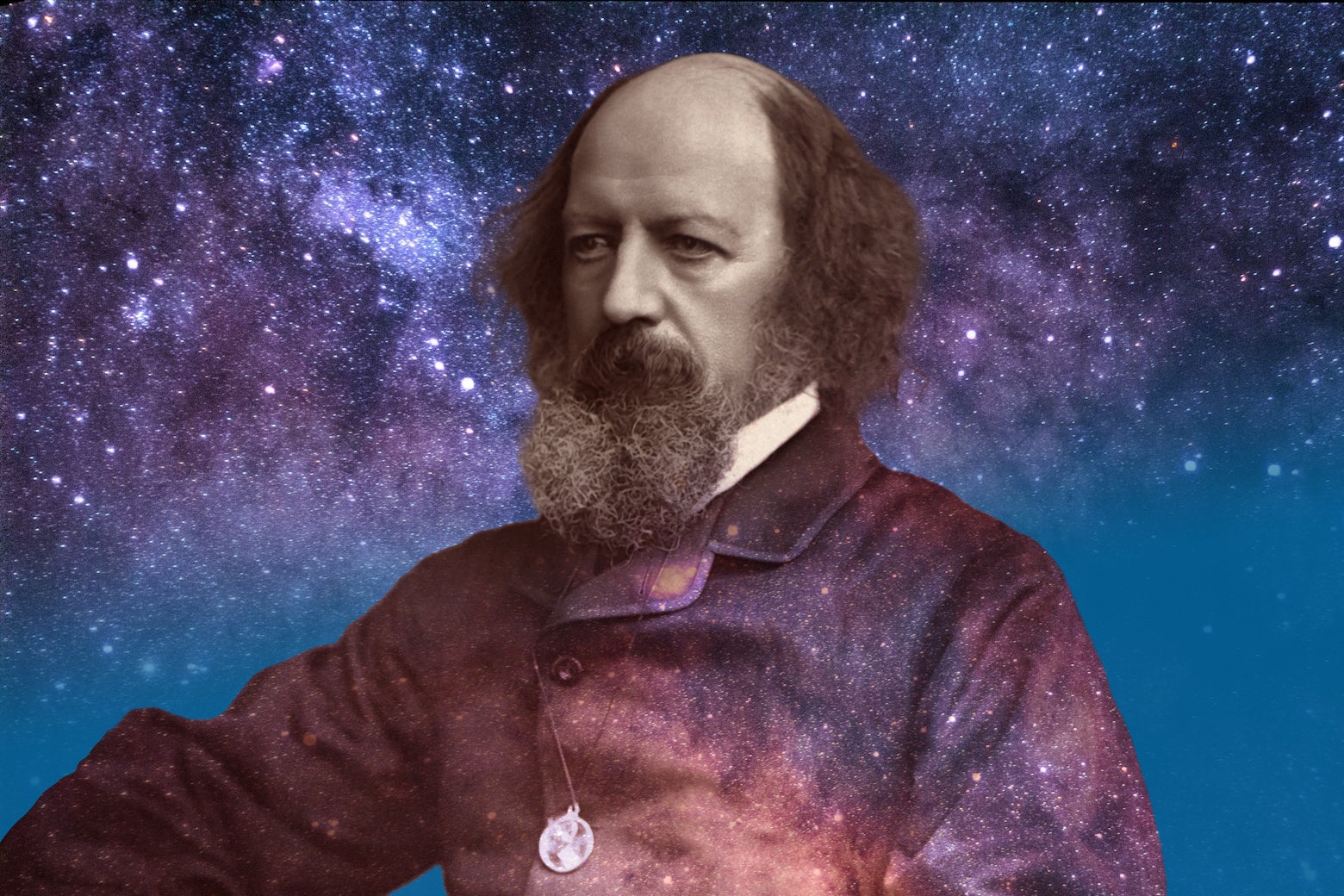
""Was Tennyson ever young?" reads the first sentence of The Boundless Deep: Young Tennyson, Science and the Crisis of Belief, Richard Holmes' enthralling new biography of the poet's early years. It's a fair question, since Alfred Tennyson is typically associated with the sort of sonorous, ringing verse you'd expect from the Poet Laureate of the Victorian era, a venerable, bearded bard who patriotically celebrated the doomed Charge of the Light Brigade in the Crimean War."
"He might also ask if biography was ever young. The form's reputation is as staid as Tennyson's, invoking doorstop volumes crammed with footnotes that hardly anyone bothers to read. Occasionally some valiant soul will talk of working their way by infinite increments through Robert Caro's (multi-doorstop!) biography of Lyndon B. Johnson, but even Caro himself hasn't finished that monster. Biography is serious, yes, and surely edifying, but who can call it lively, let alone fun?"
"Following his entrancing life of Samuel Taylor Coleridge, published in the late 1990s, Holmes has certainly written celebrated books, in particular The Age of Wonder: How the Romantic Generation Discovered the Beauty and Terror of Science, which won a fistful of prizes, including, in the U.S., the National Book Critics Circle Award for nonfiction. He also wrote a history of ballooning, an appropriate topic for a biographer who makes the stodgiest of forms feel effervescent."
Alfred Tennyson's early life combined poetic sensibility with scientific curiosity and encounters with a crisis of belief. Public memory casts Tennyson as a venerable Victorian Poet Laureate, known for sonorous, patriotic verse such as the poem commemorating the Charge of the Light Brigade. Biography as a genre often appears staid and doorstop-like, dense with footnotes, yet exceptional biographical work can render lives vivid and lively. Intellectual currents after the Enlightenment fueled an explosion of scientific discovery that influenced Romantic poets. Intersections between science, ballooning, and literary culture illuminate broader shifts in nineteenth-century thought and artistic identity.
Read at Slate Magazine
Unable to calculate read time
Collection
[
|
...
]