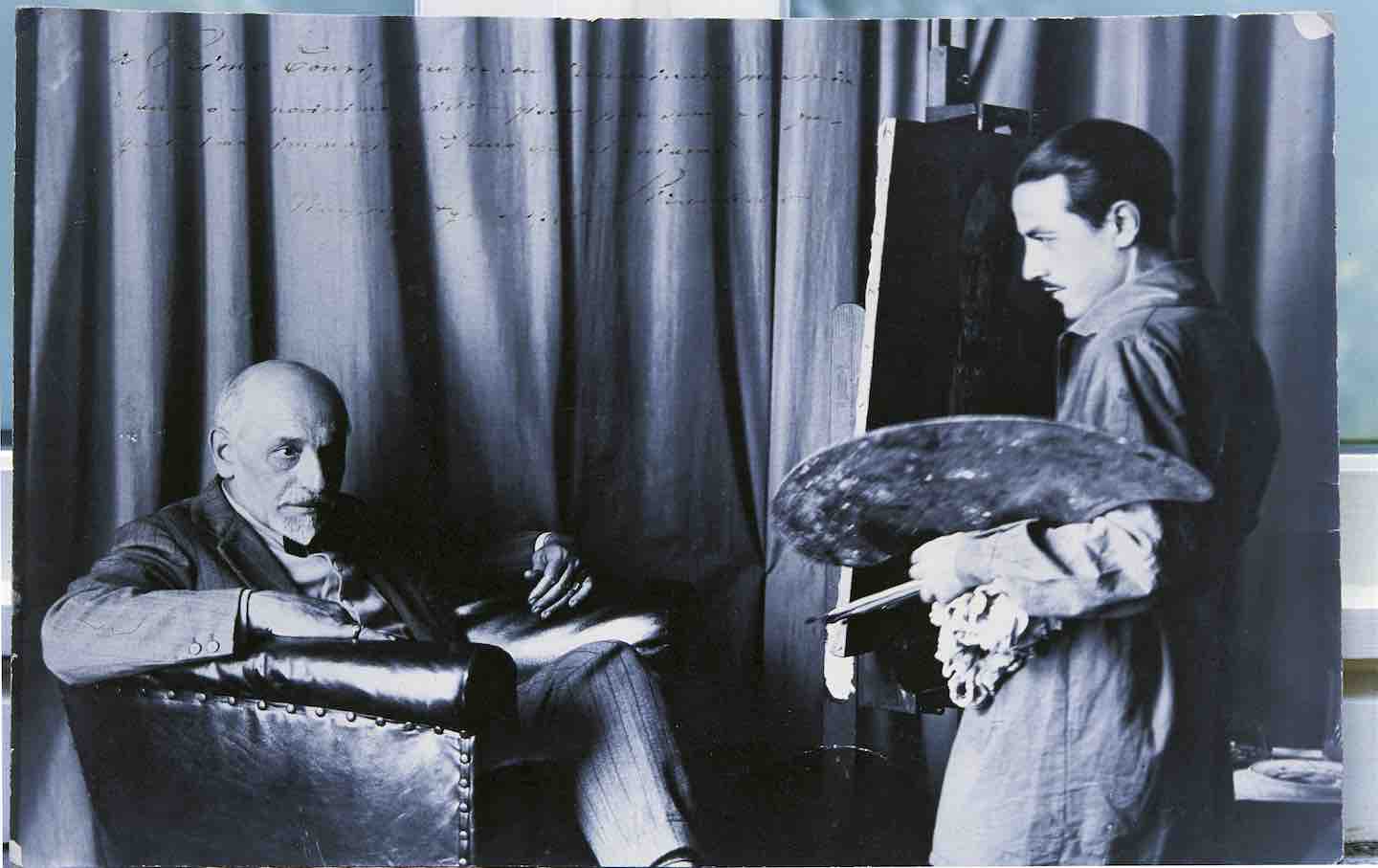
"At the height of his prominence, Luigi Pirandello was the principal darling of Italian drama. His plays were performed throughout Europe and the United States; Mussolini threw 700,000 lire at him when he decided to found an arts theater in Rome; and he won the Nobel Prize in Literature in 1934, praised for his "bold and ingenious revival of dramatic and scenic art.""
"Pirandello's work betrayed a fascination with violence and its supposed power to cleanse society, and he approached his art with the attitude of giving form to chaos. His writing was popular, though, because of his highly developed style, which was characterized by a ceaseless desire to understand the world from the standpoint of the individual. Pirandello was startlingly modern: He committed himself to an ironic self-consciousness, to creating characters that struggled impossibly for individual freedom and to live up to their ideals."
Luigi Pirandello achieved widespread acclaim across Europe and the United States, with plays staged widely, Mussolini funding an arts theater, and a 1934 Nobel Prize in Literature praising his revival of dramatic art. Influential figures such as Jean-Paul Sartre, Jean Anouilh, Jorge Luis Borges, and Thomas Bernhard admired or acknowledged his work, and his productions were compared to landmark modern premieres. His reputation declined by the 1980s as his sympathy for fascism and a fascination with violence and authoritarian myth-making undermined later reception. His dramatic style emphasized ironic self-consciousness, individual struggle, and proto-existentialist themes.
Read at The Nation
Unable to calculate read time
Collection
[
|
...
]