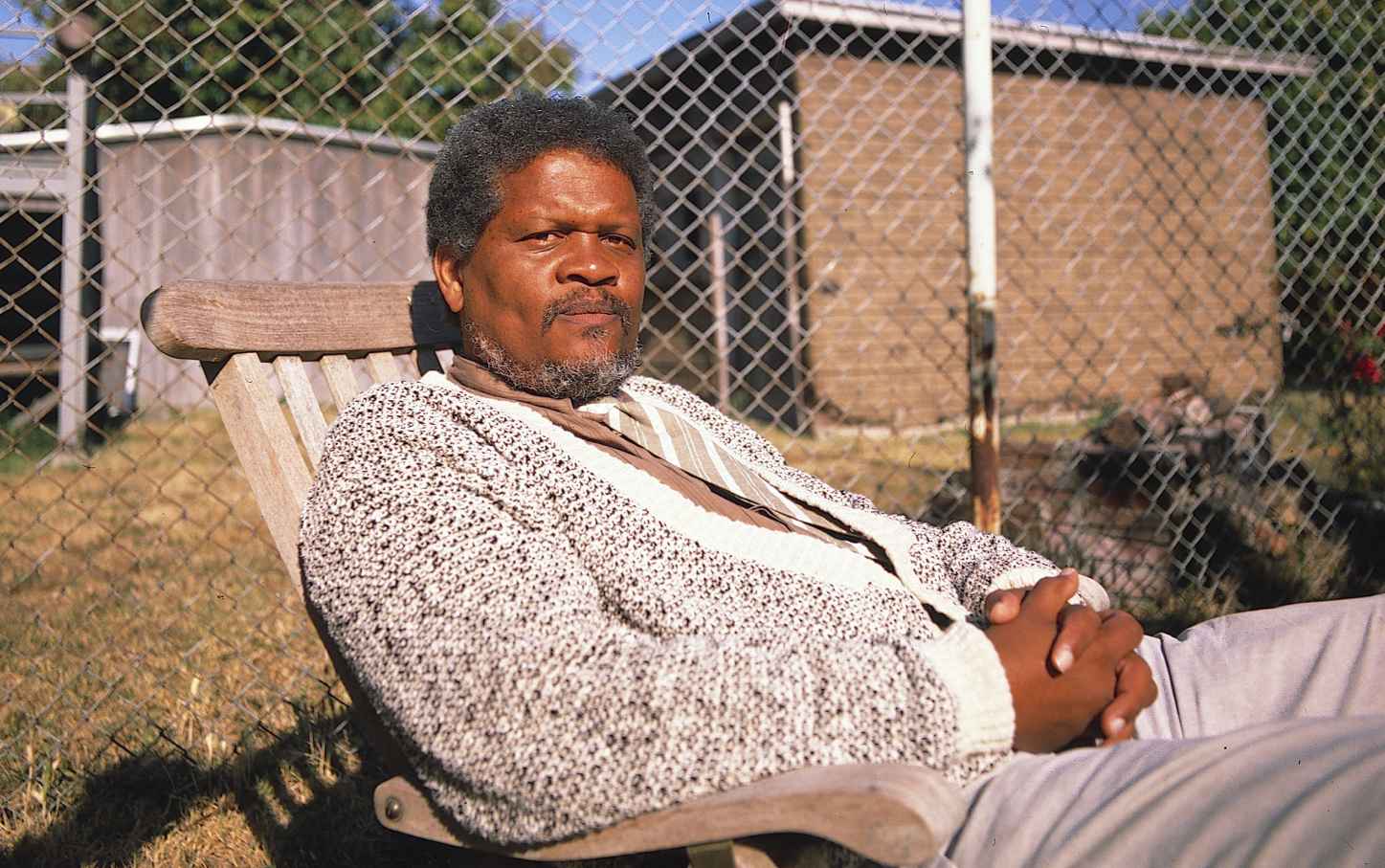
"In New York during the 1960s, I came under the influence of Black cultural nationalists, such as Askia Touré, the founder of the Black Arts Movement. The Umbra Workshop, which published four issues of a literary magazine with the same name, introduced me to Black history and culture, something that was absent from my education. My world was Black and white, as I straddled between the white counterculture and Black cultural nationalism."
"Carla had connections to the Indian and Japanese avant-garde. Her collaborations with Japanese dancer Suzushi Hanayagi would lead to one of the first artistic responses to the war in Vietnam, called The Wall Street Journal. Both Suzushi and Carla became collaborators of the late Robert Wilson. Soon, Carla and I were members of a circle that included Chinese, Japanese, European, and Iranian artists. Among the circle members was the late futurist F.M. Esfandiary."
In 1960s New York, exposure to Black cultural nationalists like Askia Touré and the Umbra Workshop introduced Black history and culture that had been absent from prior education. The individual straddled white counterculture and Black cultural nationalism, publishing in both spheres, cofounded The East Village Other, and supported fundraisers for the Black Arts Repertory Theater in Harlem. The Beats moved American poetry from elite parlor rooms to the streets and drew on earlier proletarian writers, though the Beats remained predominantly white and male. A meeting with Carla Blank led to collaborations with Indian and Japanese avant-garde artists, early artistic responses to the Vietnam War, and participation in a multicultural circle including Chinese, European, and Iranian collaborators. Family history included an Irish-American ancestor named Marion Coleman who had to flee.
Read at The Nation
Unable to calculate read time
Collection
[
|
...
]