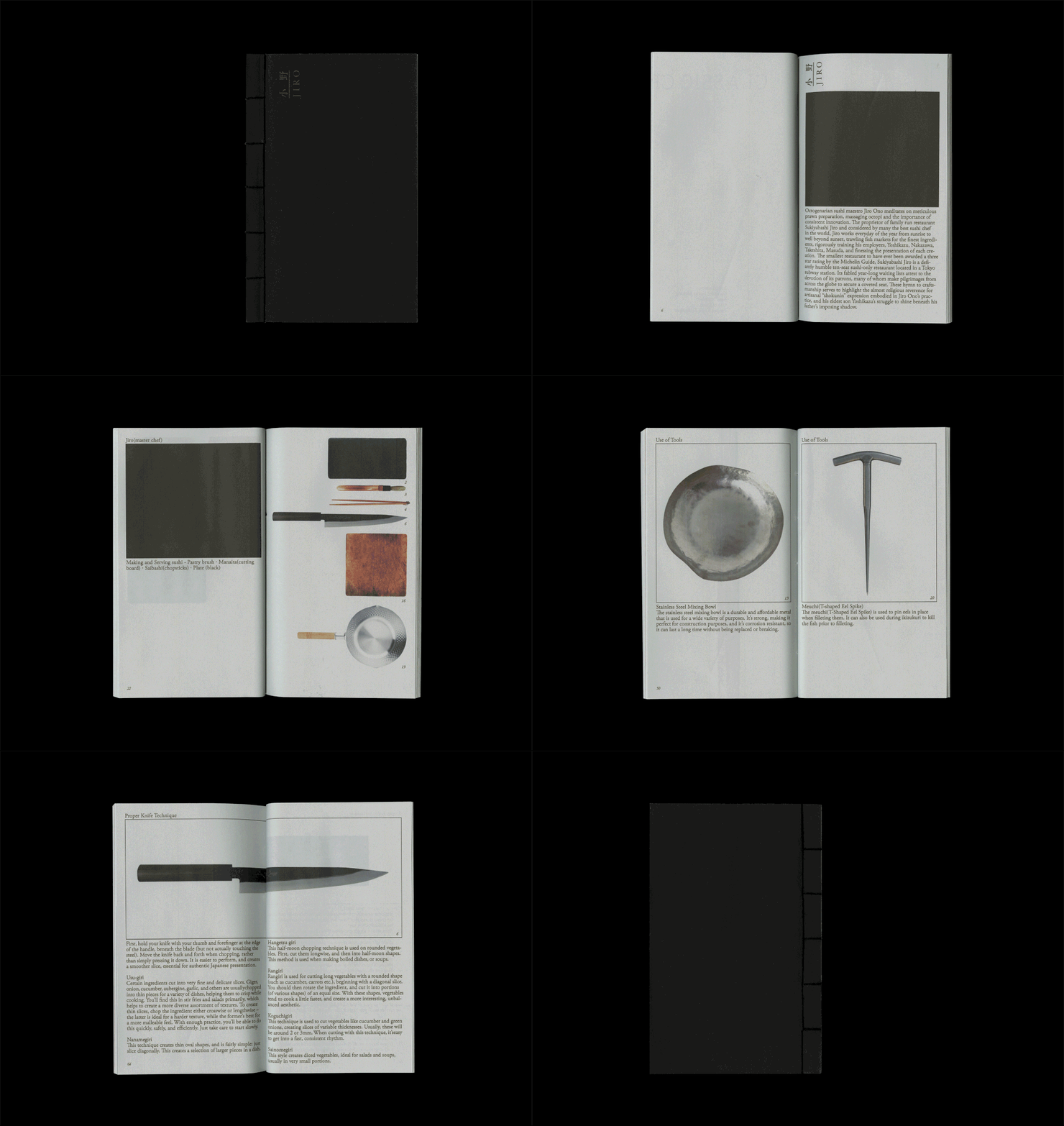
"Like a film, a physical book carries an innate sense of rhythm and deliberately paces our viewing, withholding what's to come at the turn of the page. It too unfolds a moving timeline and "builds its narrative through sequence," says Hyejin. This parallel alone, however, isn't always enough to "make the passage of time fully visible", that we feel when we watch a film, the designer tells us. There needs to be a set of nifty visual cues that come into play in a publication - a design structure that can make our progression through a story feel more visceral."
"For Hyejin this came in the form of a two part structure for the book's chapters: Staff Member and Use of Tools. "In the first chapter Staff Member, each staff member is introduced with a large black form on the left page, suggesting a state before the tools are put into use," says the designer. "In the following chapter, this is removed, and the tools are revealed, marking the shift into active work.""
"When pages start to turn at a faster pace in Use of Tools, one of Hyejin's key considerations was expressing a sense of repetition without relying on any written components as an explanation for the kitchen's cyclical routines. "I approached this by adopting a collection format," she says, "where the tools appear as they would in daily use. By presenting them in a consistent and unremarkable way, repetition is understood as part of an ongoing routine, allowing the sense of refinement to be felt through persistence rather than change.""
"Hyejin's cut-and-paste collection of these culinary tools make for a beautiful set of spreads that reframe the humble and utilitarian objects into scientific specimens that look like they are in entomology display cases; pinned-down, numbered and worthy of careful study. Their meticulous placement on each page makes for an archive that doesn't just translate the documentary's narrative but embodies the attention to detail beh"
A physical book can create a sense of rhythm by pacing what appears as pages turn, similar to how film reveals events over time. Making time feel fully visible requires visual cues and a design structure that makes story progression more visceral. A two-part chapter structure is used: “Staff Member” introduces each person with a large black form on the left page to suggest a state before tools are used, and the next chapter removes the form to reveal tools and mark the shift into active work. Faster page turns in “Use of Tools” express repetition through a collection format that shows tools as they appear in daily use, making routine feel refined through persistence rather than change. The tools are arranged like scientific specimens, creating an archive of attention to detail.
Read at Itsnicethat
Unable to calculate read time
Collection
[
|
...
]