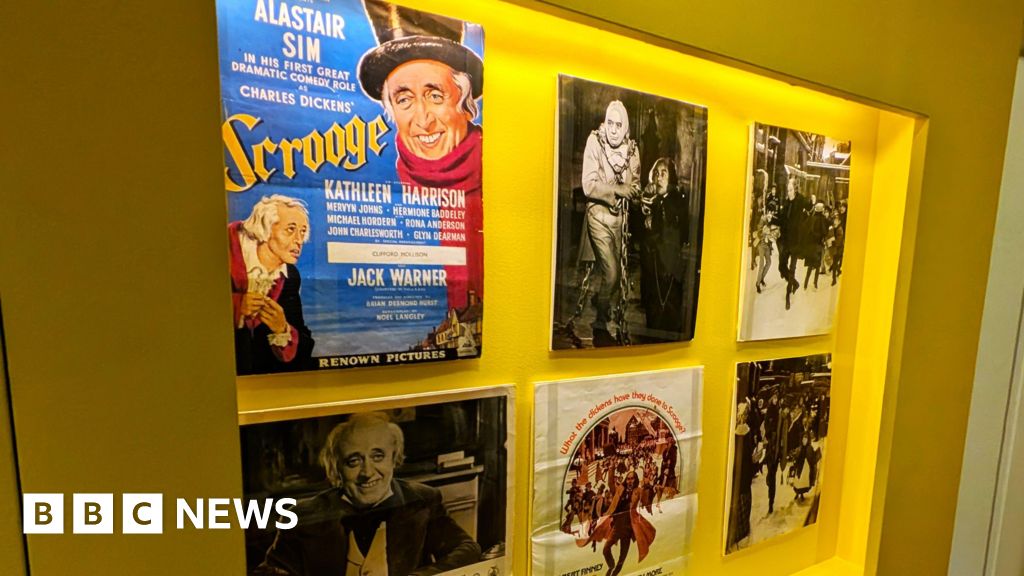
"An exhibition at a former home of Charles Dickens explores how the writer's work has been brought to life on stage and screen, and how a twist of fate could have led to an alternative life as an actor. The Charles Dickens Museum in Doughty Street, London, is the house in which he lived from 1837 to 1839, and where he also wrote The Pickwick Papers, Nicholas Nickleby and Oliver Twist."
"In 1845, Dickens wrote to his friend John Foster describing how, at the age of 20 in 1832, he was invited to audition in Covent Garden for the actor-manager Charles Kemble, but could not go because he "was laid up with a terrible bad cold and an inflammation of the face". By the following year, when he could have auditioned again, he said he "had a distinction in the little world of the newspaper, which made me like it; began to write. See how near I may have been, to another sort of life"."
"Actor, writer, director and museum patron, Simon Callow described this as a "pivotal moment" but said he "never stopped writing, directing and performing plays". He said it all "came to a head in the public readings which he performed for massive and astounded audiences on both sides of the Atlantic". Dickens works such as the Christmas stories were regularly turned into stage plays during his life, while today most people become familiar with his novels through film and TV adaptations."
The Charles Dickens Museum in Doughty Street, London, occupies the house where Charles Dickens lived from 1837 to 1839 and wrote The Pickwick Papers, Nicholas Nickleby and Oliver Twist. An exhibition traces how Dickens's work has been brought to life on stage and screen and notes that a missed audition in 1832 for Charles Kemble almost diverted him toward acting. Dickens remained an enthusiastic amateur performer and gave public readings that drew massive transatlantic audiences. Dickens's stories were frequently adapted for the Victorian stage, and modern audiences largely encounter his novels through film and television portrayals by notable actors.
Read at www.bbc.com
Unable to calculate read time
Collection
[
|
...
]