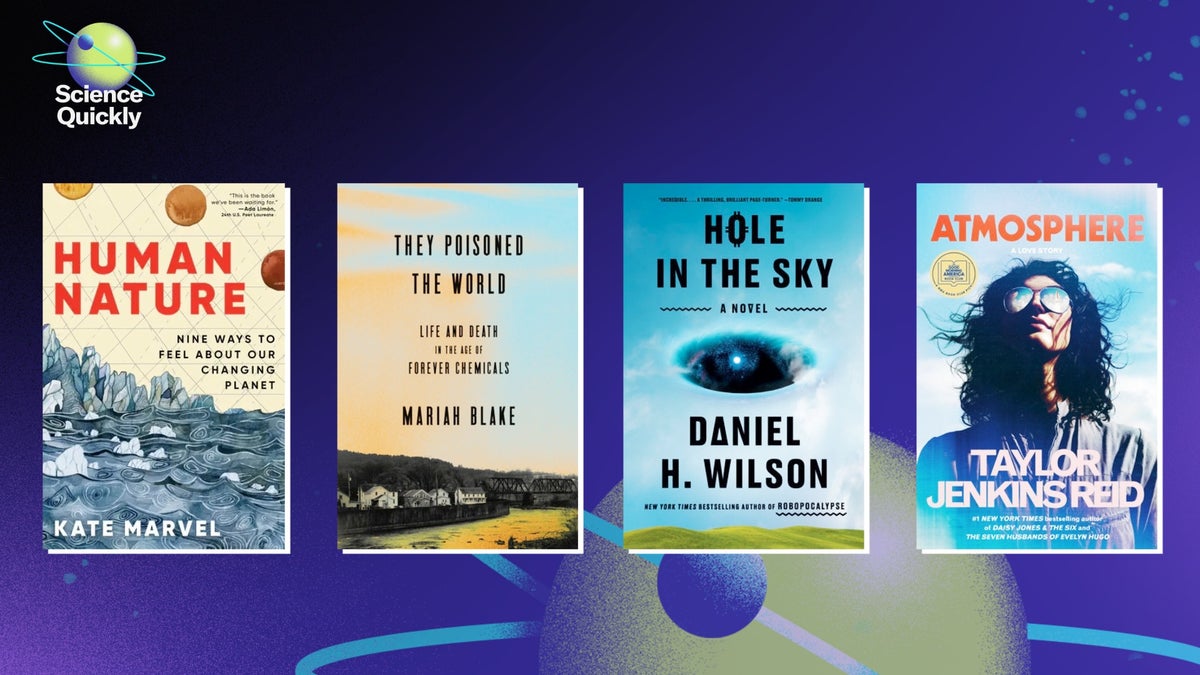
"Kane: So in trying to find the best fiction and the best nonfiction of a year it means doing a ton of research, which, thankfully, we're a bunch of good-natured nerds, and we love any excuse to research and any excuse to read more books. I mean, it was a great self-assigned homework project this year. [Laughs.] So some of the most important things that we were looking at for every book is it had to have an exceptional voice in writing and an incredible story."
"One way that we here at Scientific American stay on top of what's happening in science is not just by examining research papers and studies but also by reading books. For the past two years we've shared our staff favorites, but this year we've decided to expand into two new lists: Scientific American's first-ever best nonfiction books and fiction books of the year."
Scientific American expanded annual book coverage to include first-ever best-fiction and best-nonfiction lists in addition to staff-favorites. Selection required exceptional narrative voice, compelling storytelling, and, for nonfiction, a narrator's voice that grips readers while conveying an engaging story. The editorial process involved extensive research and wide reading across many titles, driven by staff enthusiasm for books. Editors treated the effort as a significant, self-assigned project and prioritized books that combined strong writing with memorable stories. Supporting subscription purchases helps fund continued science journalism and the production of impactful reports on discoveries and ideas shaping the world.
Read at www.scientificamerican.com
Unable to calculate read time
Collection
[
|
...
]