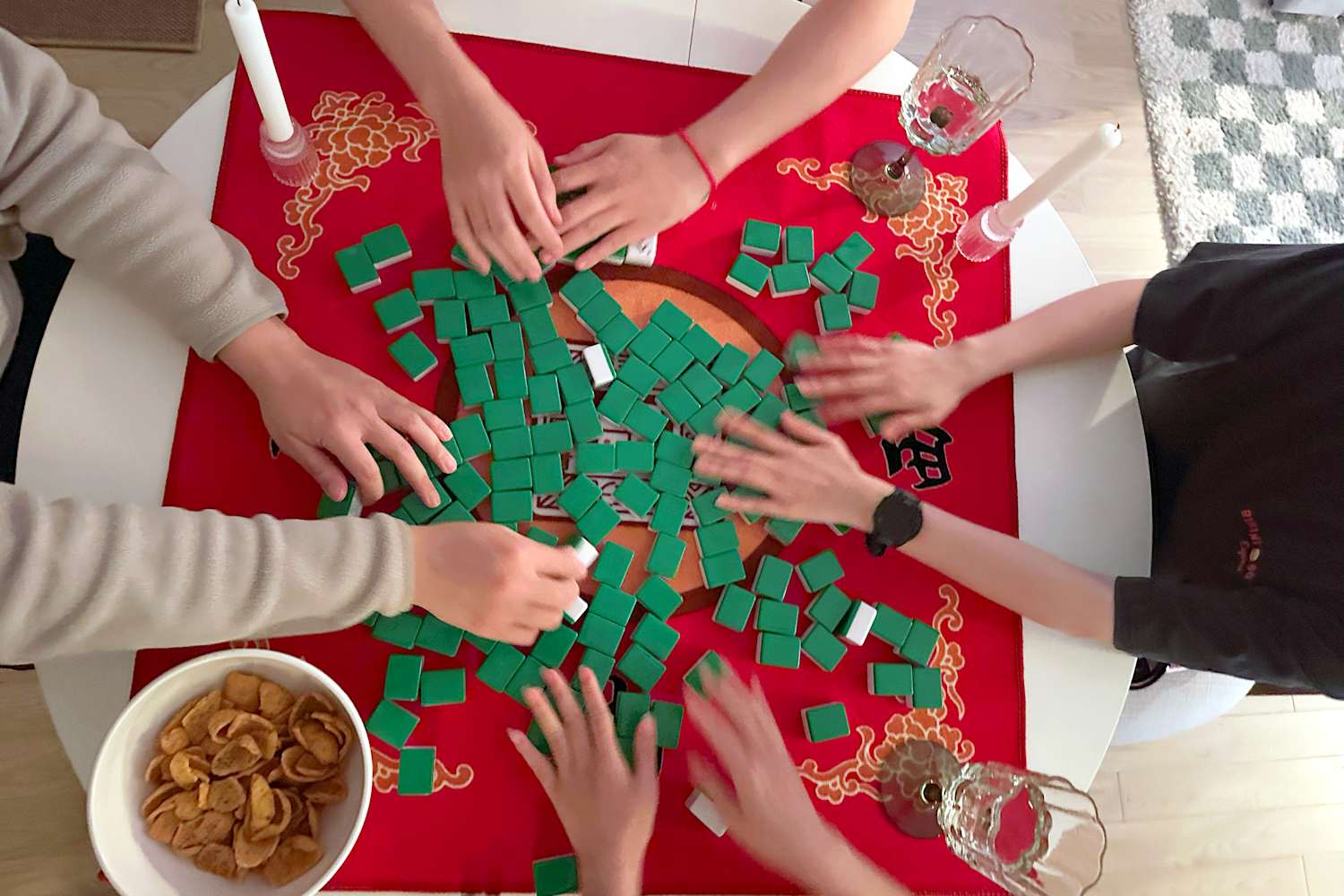
"I grew up in a mostly white suburb in New Jersey, and I wasn't interested in learning how to play mahjong when I was a kid. The small white tiles stamped with intricate flowers, swirling circles, and sharp Chinese characters felt foreign to me. Instead, I observed from the outside; I watched family friends play the game around the kitchen table, chatting into the late hours of the night. The sound of shuffling tiles was a familiar lullaby, my mind drifting off to the hypnotic clicking and clacking."
"Throughout my childhood, I was only comfortable being Chinese American in the few spaces it was accepted: family gatherings, weekend Chinese school, the Asian grocery store. Apart from that, I tried my best to conceal my culture; I was too embarrassed to bring Asian snacks to school, and too reluctant to speak Cantonese."
"Once I graduated from college, I didn't hesitate to move out of the suburbs to New York City. For the first time, I had access to Chinese neighborhoods in just a short train ride - from Flushing, Queens, to Chinatown, Manhattan - and I didn't feel like an outside observer. I could meet other Chinese Americans who were also finding their footing in Asian spaces."
"So when my friend asked me to join her at a mahjong night at Land to Sea, an Asian-owned cafe in Brooklyn, I surprised myself by saying yes. As someone who had spent years feeling disconnected from my cultural identity, I was now ready to learn the game I grew up watching. The day before, my friend and I studied countless cheat sheets, trying to memorize each character and symbol so that we could play our best."
A childhood in a mostly white New Jersey suburb made Chinese culture feel foreign and uncomfortable, leading to observation from the outside and concealment of cultural practices. After college, moving to New York City provided access to Chinese neighborhoods and Asian spaces, reducing the feeling of being an outsider. Joining a mahjong night at an Asian-owned Brooklyn cafe became a turning point, shifting from embarrassment and avoidance to willingness to learn. Preparation included studying cheat sheets to memorize characters and symbols. The cafe’s atmosphere resembled an ’80s Hong Kong mahjong parlor, reinforcing cultural connection through the game and the community around it.
Read at Apartment Therapy
Unable to calculate read time
Collection
[
|
...
]