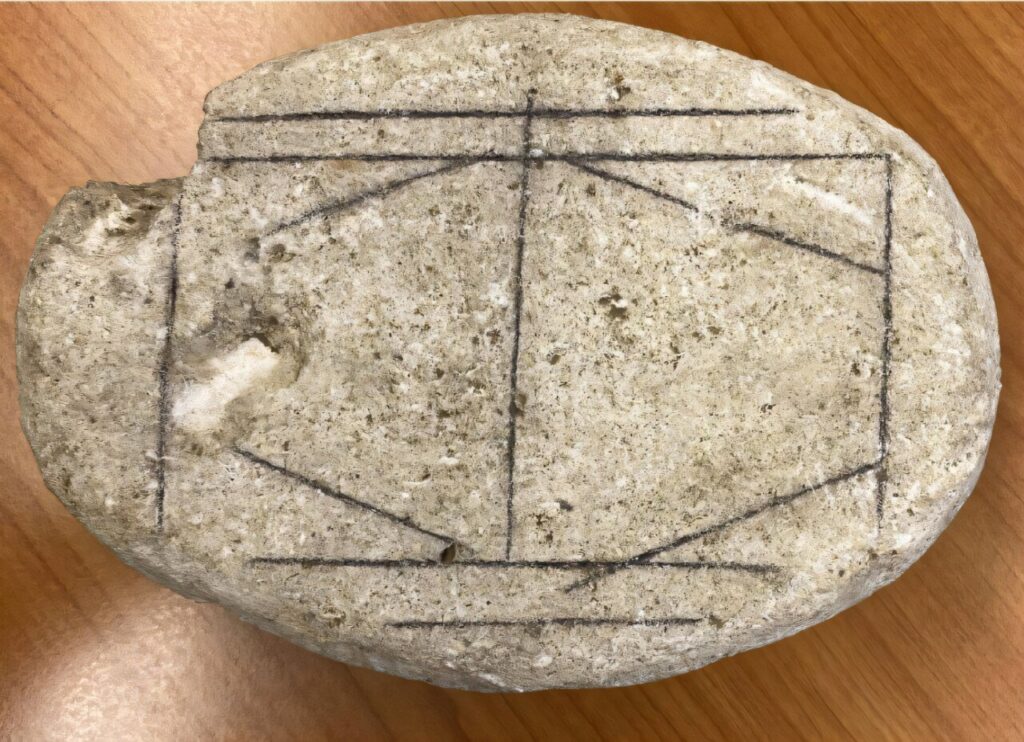
"To examine whether the object may have been used as a game board, we performed use-wear analysis to identify evidence for gameplay and we simulated play using artificial intelligence (AI). This software allows for AI-driven playout simulation, where two AI agents play a game against one another, which can generate quantitative data on gameplay."
"Europe's advantage could lie in the highly developed culture of low-cost leisure evident in quite a few of its societies; it could also owe to the fact that board games seem to have been played there continuously since antiquity, with evidence of examples like the Roman mill game, better known today as nine men's morris."
Europe has maintained continuous enthusiasm for board games since antiquity, supported by developed leisure cultures and historical evidence of games like nine men's morris mentioned in Roman texts. Researchers recently solved a centuries-old mystery surrounding a stone game board discovered in a former Roman town in the Netherlands. Using use-wear analysis and artificial intelligence, they employed a system called Ludii designed to analyze board-game rules. AI agents simulated gameplay against each other using different rule variations to identify which game would produce the specific wear patterns observed on the ancient stone board.
Read at Open Culture
Unable to calculate read time
Collection
[
|
...
]