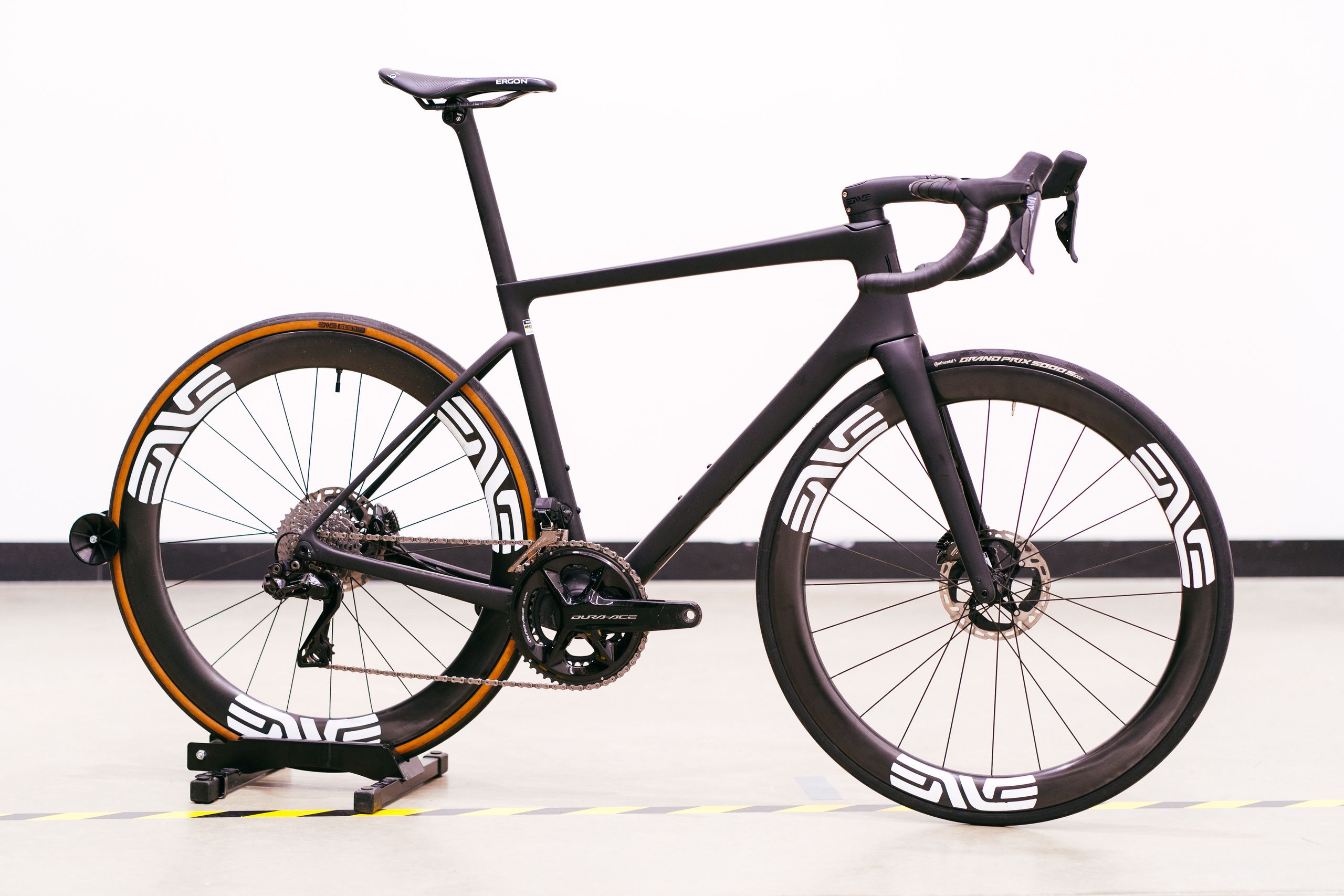
"After moving on from custom geometry frames, ENVE released the Melee in the summer of 2022 as a do-it-all, all-rounder bike. Indeed, it shares a lot of similarities with other similarly designed frames such as the Specialized Tarmac SL8, Cannondale SuperSix, and Factor Ostro VAM. These include the now standard integrated front end set-ups, dropped seat stays, and kamm-tailed tubing for reduced weight and increase virtual aerofoils."
"The ENVE Melee stands out a bit from the rest of the crop of current aero bikes in that it does not have quite as aggressive a stack height. Indeed the 2025 Van Rysel RCR-F dropped the stack height even further than the 2024 RCR, and it is a fairly substantial 15mm lower than the Melee in a size 56cm."
"However, we are seeing more and more WorldTour pros abandoning slammed front end setups in favours of more stack to enable a position where they can ride with their forearms horizontal for extended periods. That might actually help the Melee's cause for a bike that allows better maintenance of aero position in the real world."
The ENVE Melee, released in summer 2022, serves as an all-rounder aero race bike used by TotalEnergies Pro Cycling Team until 2026. It incorporates standard modern features including integrated front end setups, dropped seat stays, and kamm-tailed tubing for weight reduction and aerodynamic efficiency. Unlike some radical contemporary designs, the Melee maintains a more conservative aesthetic while delivering competitive performance. A distinguishing characteristic is its relatively higher stack height compared to similar bikes like the Specialized Tarmac SL8, Cannondale SuperSix, and Colnago Y1RS. The bike uses a two-piece integrated bar and stem rather than the industry-standard one-piece aero design. This higher stack geometry aligns with emerging WorldTour professional trends favoring less aggressive front-end setups that enable sustained horizontal forearm positions during extended riding periods.
#aero-race-bikes #bike-geometry #stack-height-comparison #worldtour-cycling #integrated-bar-and-stem-design
Read at www.cyclingnews.com
Unable to calculate read time
Collection
[
|
...
]