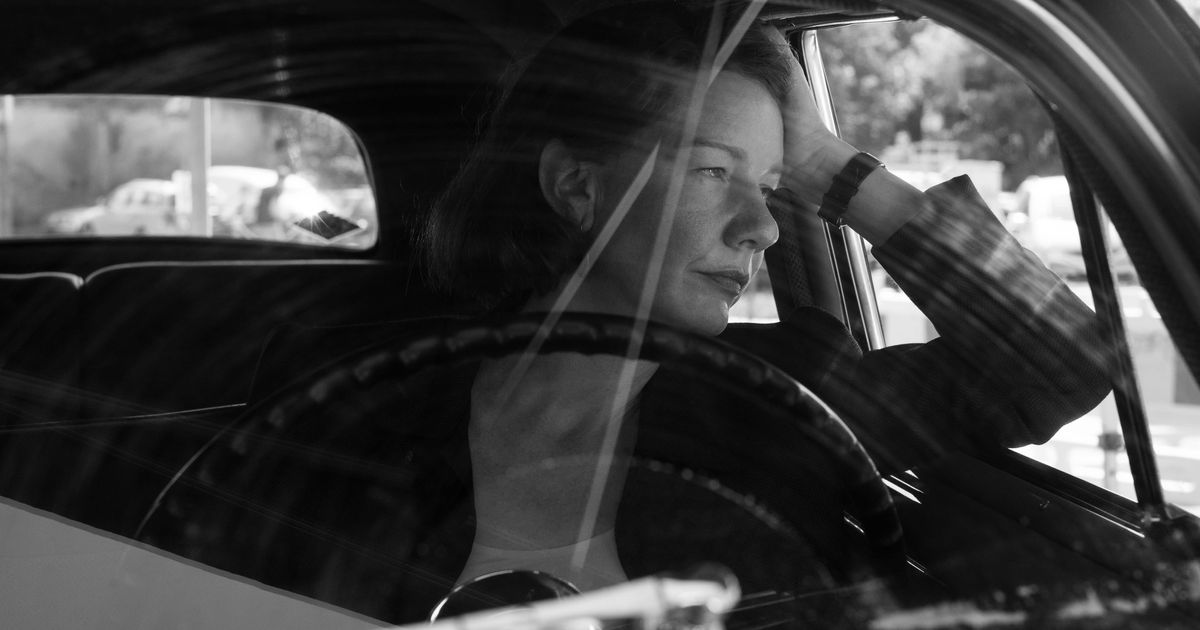
"Fatherland, like Cold War and Ida, is shot in a lustrous monochrome that turns shadows into punctuation marks and sunbeams into something holy, and that makes its performers, chief among them an incredible Sandra Hüller, look lit from within. (The cinematographer is Łukasz Żal, who shot Hamnet and The Zone of Interest.) The Polish writer-director has spent the last decade-plus rendering the period after WWII in severe black-and-white."
"Fatherland, which just premiered in competition at Cannes, takes place in 1949 on a trek across a Germany so shattered by the war that it has been divided in two. The travelers are the famous novelist Thomas Mann (Hanns Zischler) and his daughter Erika (Hüller), who is serving on this trip as her father's assistant, driver, editor, and barber. Thomas fled Germany in 1933 and never lived there again; his citizenship was revoked by the Nazis three years later."
"But he's agreed to travel back to his now-recalcitrant home country to be awarded the Goethe Prize. Or, rather, two of them. He'll first go to Frankfurt, where Goethe was born, to be awarded one version by the West German government, and then cross the border to Weimar, where Goethe died, to receive another by the East Germans."
"But the window that Pawlikowski chooses for Fatherland is defiantly compact, a stretch of time that the director compresses even more to place the suicide of Erika's brother Klaus, which happened in the south of France two months before, within the space of the trip. Pawlikowski has never been prone to go long, but at just 82 minutes, Fatherland is as bracing and brief as a polar-bear plunge."
Fatherland is a monochrome film set in 1949 during a trek across a Germany shattered by World War II and divided into two parts. Thomas Mann, whose citizenship was revoked by the Nazis, travels back to receive Goethe Prizes, first in Frankfurt under West German authority and then in Weimar under East German authority. Erika Mann accompanies him as assistant, driver, editor, and barber, while also carrying her own identity as an actor, war correspondent, and writer. The film compresses time by placing the suicide of Erika’s brother Klaus, which occurred in southern France two months earlier, within the trip’s duration. The black-and-white cinematography emphasizes shadows, sunbeams, and performers’ inner illumination.
Read at Vulture
Unable to calculate read time
Collection
[
|
...
]