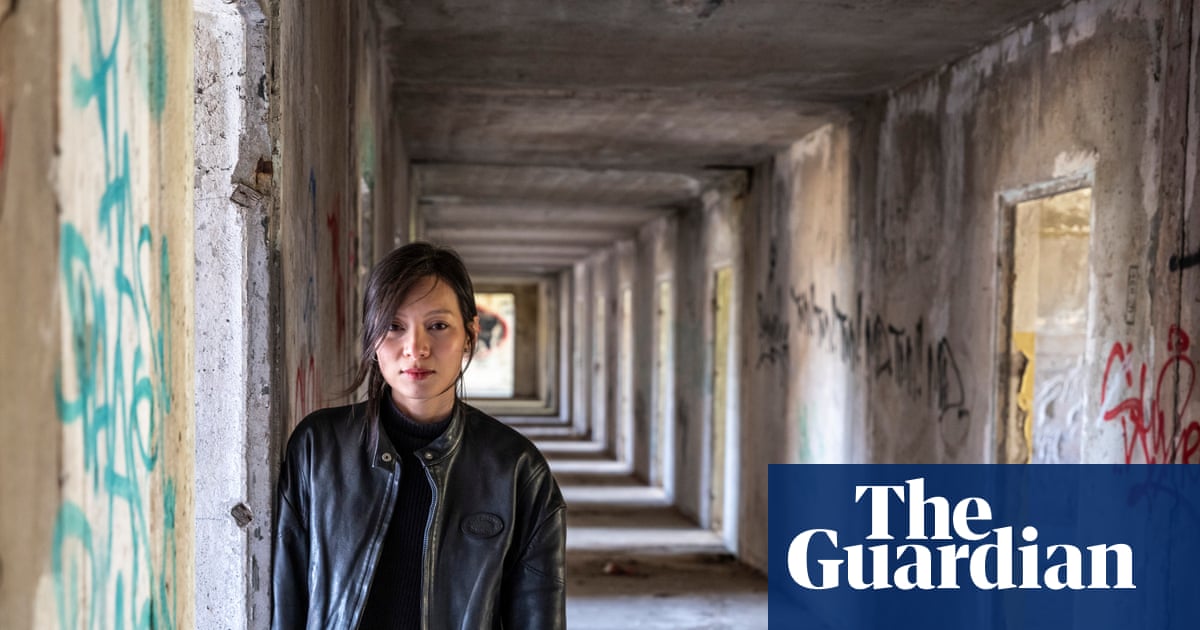
"An air of civilisational wipeout hangs over the Gehrenseestrasse complex, an abandoned housing estate on the north-eastern outskirts of Berlin, where the city still looks shabby without the chic. The insides of the nine prefabricated blocks have long been gutted; six floors of empty window frames stare hollow-eyed over multi-lane carriageways. In the courtyard, paintballers have left behind wooden barricades from when they played at World War III."
"Here was the single bed I shared with my mother for three years, she says, pointing into a corner of the small room. Two metres by 90cm, can you believe it? There in the corridor is where her neighbours used to make banh bao dumplings on camping stoves, for lack of private kitchens. I still remember the smell. Here was the door through which she used to entertain her best friend when his mother locked him in during working hours. We played cards through the gaps, she recalls with glee."
"But she also still remembers where neo-Nazis tried to throw molotov cocktails into the building: They eventually set up a net because the windows kept on getting smashed. How about I add something?' a detail of Human Dignity Shall Be Inviolable, Tieu's mosaic re-creation of the Gehrenseestrasse complex on the exterior of the German pavilion in Venice."
"These days, few people have heard of the Gehrenseestrasse complex, whose last tenants left in 2002. But if Tieu had her say, it would be as essential a stop on the tourist trail as the Brandenburg Gate, the Reichstag or Checkpoint Charlie. There is, in her view, no place that better tells the story of the Vertragsarbeiter generation the oft-forgotten workers who were hired on fixed-term contracts from socialist brother states in Vietnam, Mozambique, Angola or Cuba to boost the East German e"
Gehrenseestrasse, an abandoned prefabricated housing estate on Berlin’s outskirts, shows empty window frames, gutted interiors, and remnants of paintball games. Artist Sung Tieu recreates the complex through a mosaic installed on the exterior of the German pavilion in Venice. She relives specific childhood spaces, including a shared bed, a corridor used for making banh bao dumplings on camping stoves, and a door used to entertain a friend while his mother worked. She also recalls attacks by neo-Nazis, including attempts to throw molotov cocktails and the later installation of a net to stop window smashing. The work frames the estate as a key site for remembering Vertragsarbeiter workers from socialist partner countries.
Read at www.theguardian.com
Unable to calculate read time
Collection
[
|
...
]