"Pomegranate juice sellers are setting up pyramids of fruit on their carts at gaps in the crowd and waiters are trying to reel in passersby with happy hour prices for Aperol spritzes. Amid the noise and movement, it's easy to walk straight past number 206, whose arched doorway features a stone cross stained black with dirt a clue to the building's former use."
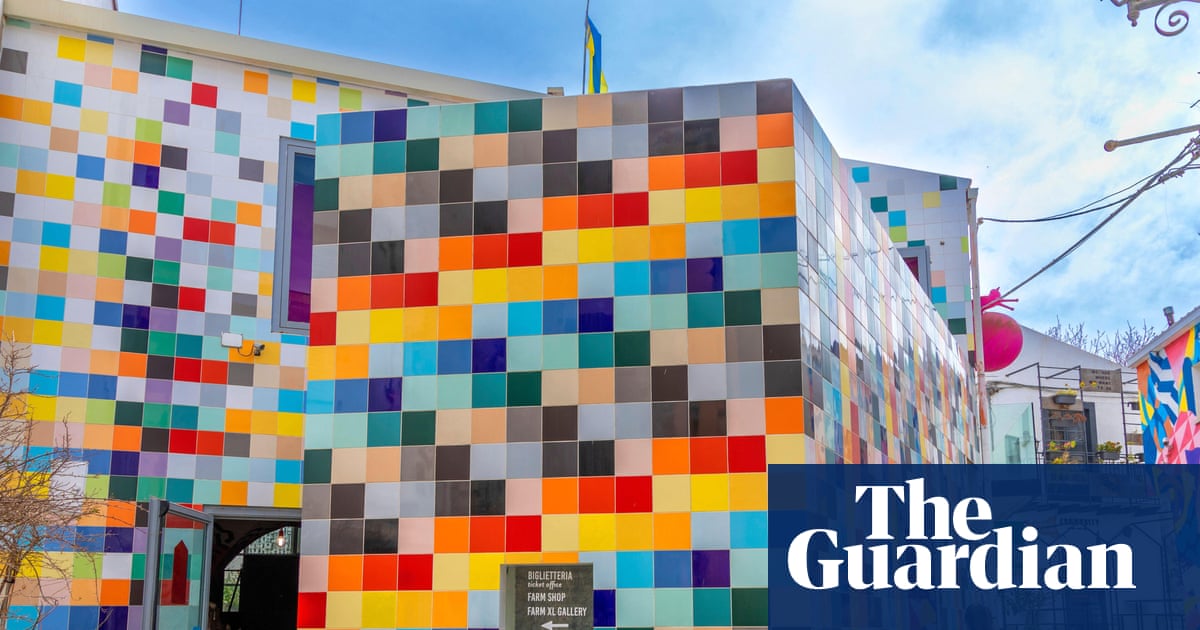
"which has rehabilitated four different urban sites across western Sicily, starting with the city of Favara in 2010. The former sulphur mining town suffered rapid depopulation when its mines closed after the second world war, and many buildings across the historical centre were abandoned by owners who emigrated abroad. Bartoli and Saievi decided to transform a warren of empty, crumbling palazzos into a colourful casbah of art studios, exhibition spaces and hipster cafes."
Palermo's Via Maqueda is crowded with tourists and street vendors. At number 206, Convento dei Crociferi was abandoned for 30 years before Andrea Bartoli and Florinda Saievi transformed it into the Museum of World Cities. The restored cloister opens onto a verdant courtyard with palms and banana trees; marble-floored first-floor rooms host a self-referential exhibition on urban change. The Farm Cultural Park ethos holds that cities change because people make them change. Farm Cultural Park rehabilitated four urban sites across western Sicily, beginning in Favara in 2010, where repurposed palazzos revived tourism and local life.
Read at www.theguardian.com
Unable to calculate read time
Collection
[
|
...
]