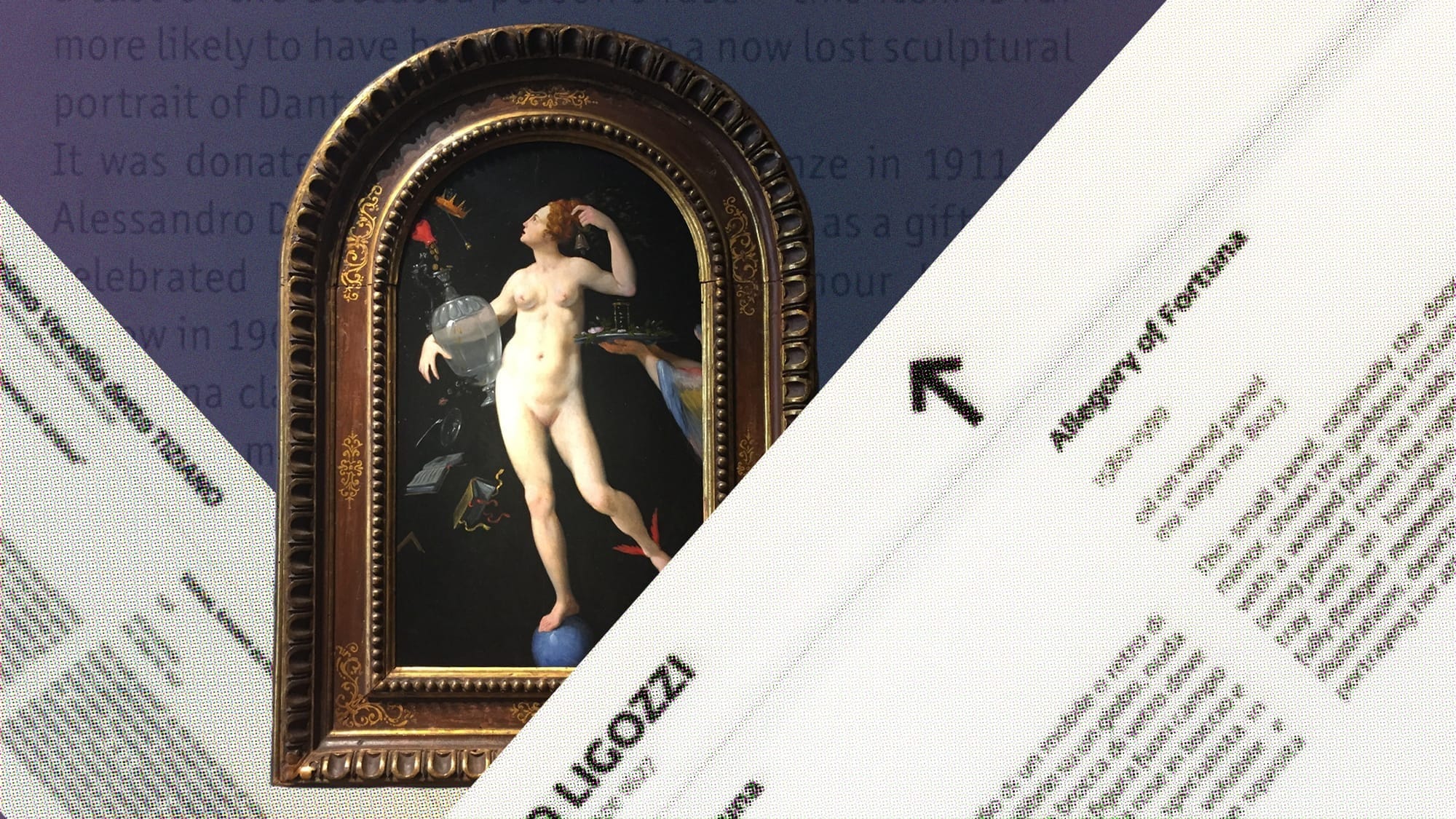
"Wall labels are not always the first thing that grabs my attention when I'm in a museum: there's the art surrounding me, the commotion and conversation in the galleries. But I do take notice when I feel like they're communicating with me - and when they're not. Wall texts aren't just for listing who made an artwork; they're one of the most direct ways that institutions can connect with visitors. So on those rare occasions when they speak to me clearly and graciously, without telling me what to think, but rather inviting me to ruminate on the art, I feel welcomed into the museum."
""There was a lot to commend about this thought-provoking exhibition ... here I want to focus on the show's didactics, which were - not to put too fine a point on it - pretty bad," writes Aruna D'Souza of her visit to the 36th Bienal de São Paulo, where labels "in hard-to-find locations [turned] one's experience of the exhibition into a scavenger hunt.""
Wall labels significantly influence museum visitors' experiences by guiding interpretation, welcoming attention, or alienating viewers depending on placement, clarity, and tone. Poorly placed or obscure labels can turn exhibitions into scavenger hunts and undermine didactic goals, as occurred at the 36th Bienal de São Paulo. A Miami artist's photographs and quilts document queer and trans presence in Florida's waterways and describe transformation through immersion in the ocean. The publication of Chroma marks a shift toward recognizing polychromy and its entanglement with white supremacy. Some sculptural work intentionally shifts between depth and flatness to challenge perception and perspective.
Read at Hyperallergic
Unable to calculate read time
Collection
[
|
...
]