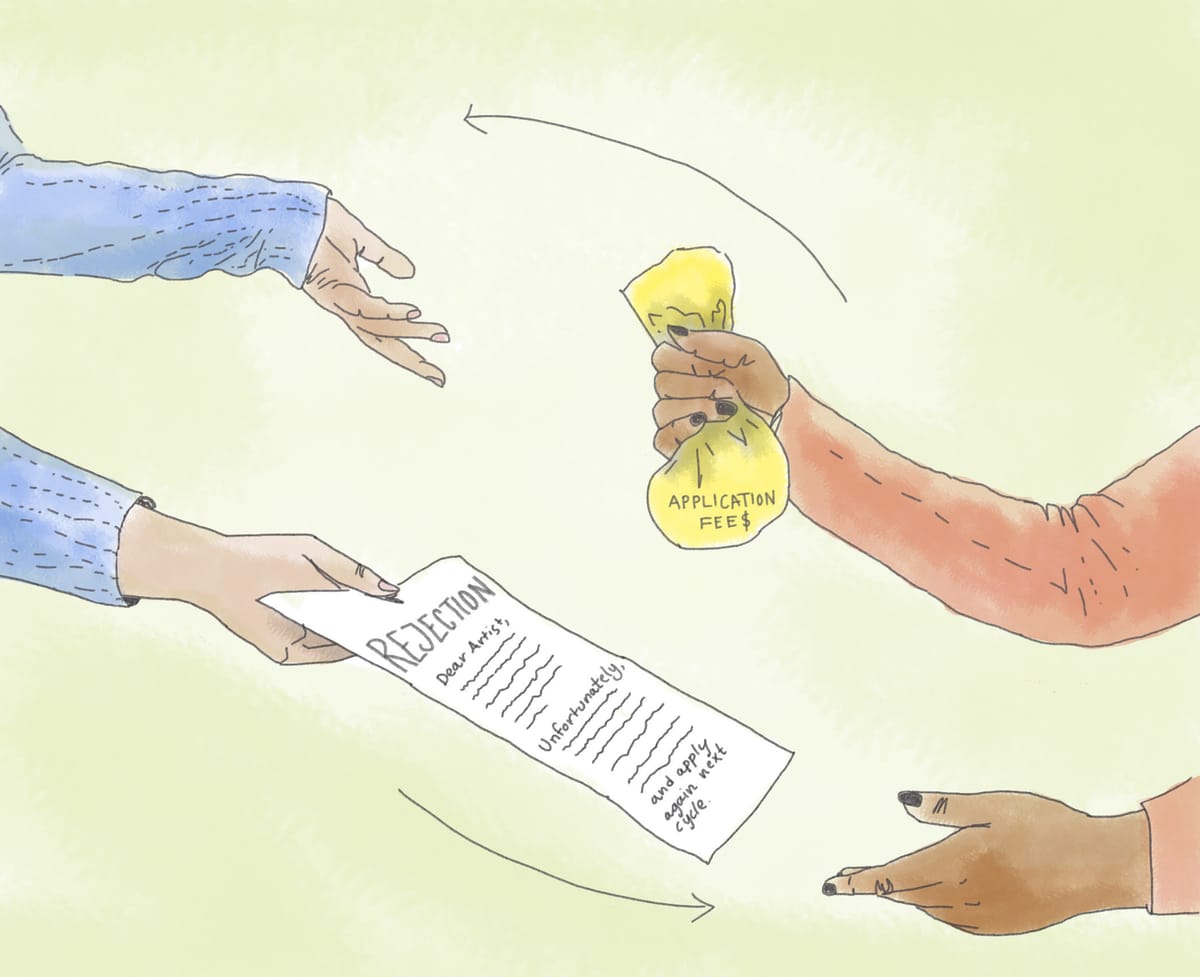
"Application fees are one of the least examined but most pervasive forms of class stratification in the arts. They appear modest enough to feel reasonable while quietly shifting the cost of access from the institution to the applicant. The result is not only financial but psychological. Artists are trained to normalize small losses, to accept incremental debt as the cost of belonging, and to treat unpaid administrative labor as a prerequisite for being seen."
"Others are outright predatory. A former student once described an exhibition call in which the gallery charged an application fee, with the promise that it would be refunded if the artist was not selected. The catch was that everyone was selected. The gallery then required artists to deliver the work at their own expense. Anyone who could not afford shipping forfeited the fee. The gallery always kept the money. It looked like inclusivity but operated like a trap, a guaranteed revenue stream disguised as opportunity."
Application fees act as paywalls that shift the cost of access from institutions to artists, disproportionately disadvantaging those with limited means. Modest charges across multiple calls accumulate and normalize incremental financial loss, unpaid administrative labor, and debt as prerequisites for visibility. Fees measure means rather than merit, undermining claims of equity and access. Some fees are merely annoying; others are predatory, structured to extract guaranteed revenue through deceptive refund promises or requiring artists to bear shipping and installation costs. Artists who cannot absorb these costs forfeit opportunities, and institutions offload operating expenses onto applicants, deepening class stratification in the arts.
Read at Hyperallergic
Unable to calculate read time
Collection
[
|
...
]