"I'm thinking about the place of art in love, and how artistic observation, appreciation, and disagreement have helped me cultivate compassion in my own relationship. My partner and I are both passionate, hard-headed people (I'm an Aries, he's a Taurus, pray for us), and when we're at odds, neither of us is good at surrendering. But in our shared experiences of art - in conversation and in quiet reflection - we bare the soulful sensitivity that is the fertile soil of empathy."
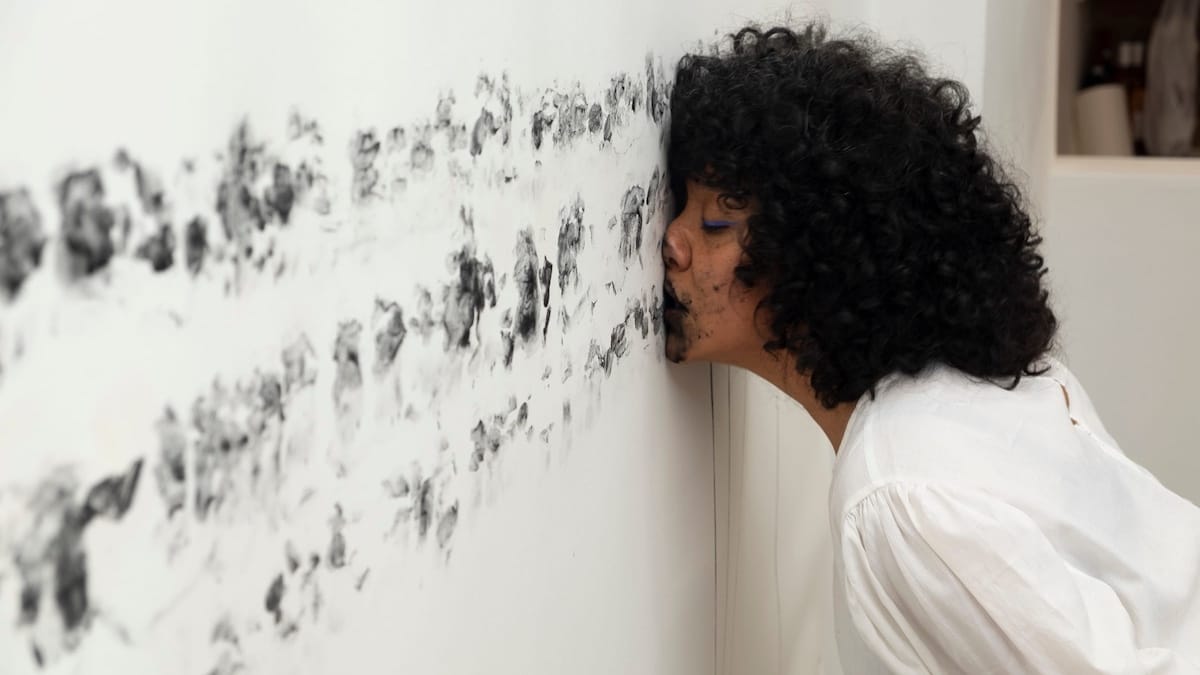
"tasting toys, and producing an orchestra of incomprehensible sounds are mundane activities for young children, but for Mónica Palma, these interactions revealed new ways to understand her body, her identity, and her practice. "From all the ages that I worked with, my favorite were the two-year-olds," Palma writes. "One child in my classroom had only a handful of words and a finger for pointing. With those minimal tools, she knew how to speak to the world. I didn't notice shame or frustration, just presence.""
Artistic observation, appreciation, and disagreement cultivate compassion and empathy within intimate relationships by enabling vulnerability, nuanced perception, and softened interpersonal edges. Children’s sensory play—biting surfaces, tasting toys, producing incomprehensible sounds—reveals embodied ways of knowing that inform artistic practice, with two-year-olds demonstrating direct presence and communicative minimalism. An artist’s archive holds meaning and vulnerability, and its loss can entail profound grief and questions about legacy. The aesthetics of liminality emphasize uncanny transitional spaces and emotional disorientation as sources of visual and conceptual insight. Offbeat cultural programming in urban settings offers art-filled opportunities for romantic, platonic, or solitary engagement.
Read at Hyperallergic
Unable to calculate read time
Collection
[
|
...
]