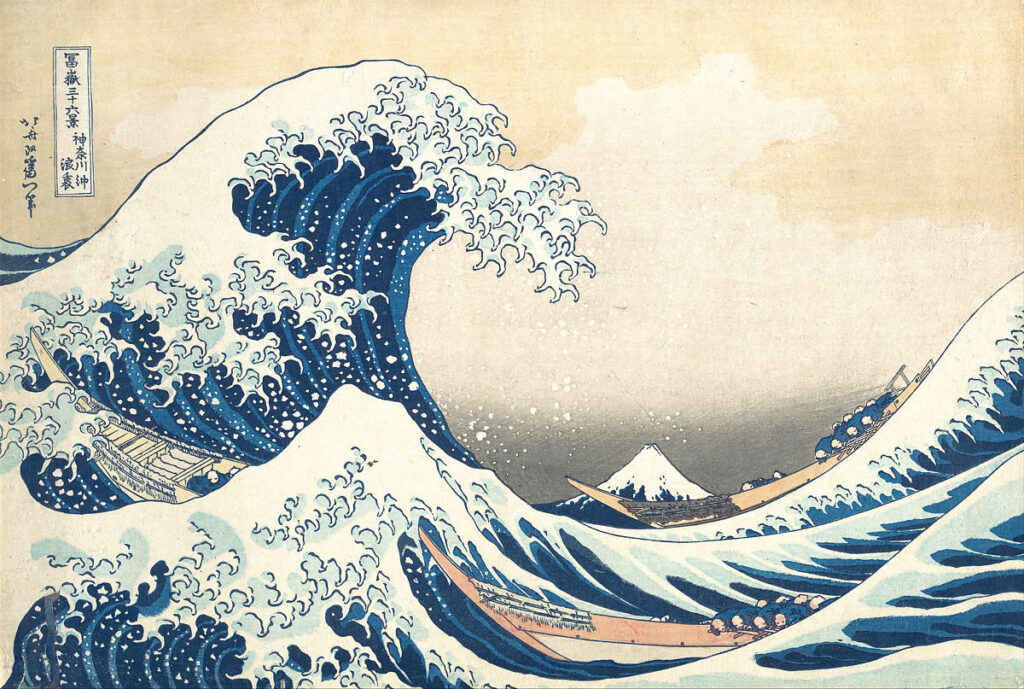
"When wood‑cut artist Katsushika Hokusai made his famous print The Great Wave off Kanagawa in 1830 - part of the series Thirty-six Views of Mount Fuji - he was 70 years old and had lived his entire life in a Japan closed off from the rest of the world. In the 19th century, however, "the rest of the world was becoming industrialized," James Payne explains above in his Great Art Explained video, "and the Japanese were concerned about foreign invasions.""
"It's also true, however, that The Great Wave would not have existed without a foreign invasion. Prussian blue, the first stable blue pigment, accidentally invented around 1705 in Berlin, arrived in the ports of Nagasaki on Dutch and Chinese ships in the 1820s. Prussian Blue would start a new artistic movement in Japan, aizuri‑e, woodcuts printed in bright, vivid blues."
"'Hokusai was one of the first Japanese printmakers to boldly embrace the colour,' Hugh Davies writes at The Conversation, 'a decision that would have major implications in the world of art.' When the country's isolationist policies ended in the 1850s, 'a showcase at the inaugural Japanese Pavilion elevated the artistic status of woodblock prints and a craze for their collection quickly followed.'"
Hokusai created The Great Wave off Kanagawa in 1830 as part of Thirty-six Views of Mount Fuji at age 70 while Japan remained closed to outsiders. During the 19th century industrialization abroad raised Japanese fears of foreign invasion. The Great Wave visualizes anxiety that the sea protecting Japan's isolation could become its downfall. Prussian blue, invented around 1705 in Berlin, reached Nagasaki in the 1820s via Dutch and Chinese ships and launched the aizuri-e movement of bright blue woodcuts. Hokusai was among the first Japanese printmakers to embrace the colour. When isolationist policies ended in the 1850s, international exhibitions elevated woodblock prints and spurred Western collecting, with Hokusai and Hiroshige especially sought after.
Read at Open Culture
Unable to calculate read time
Collection
[
|
...
]