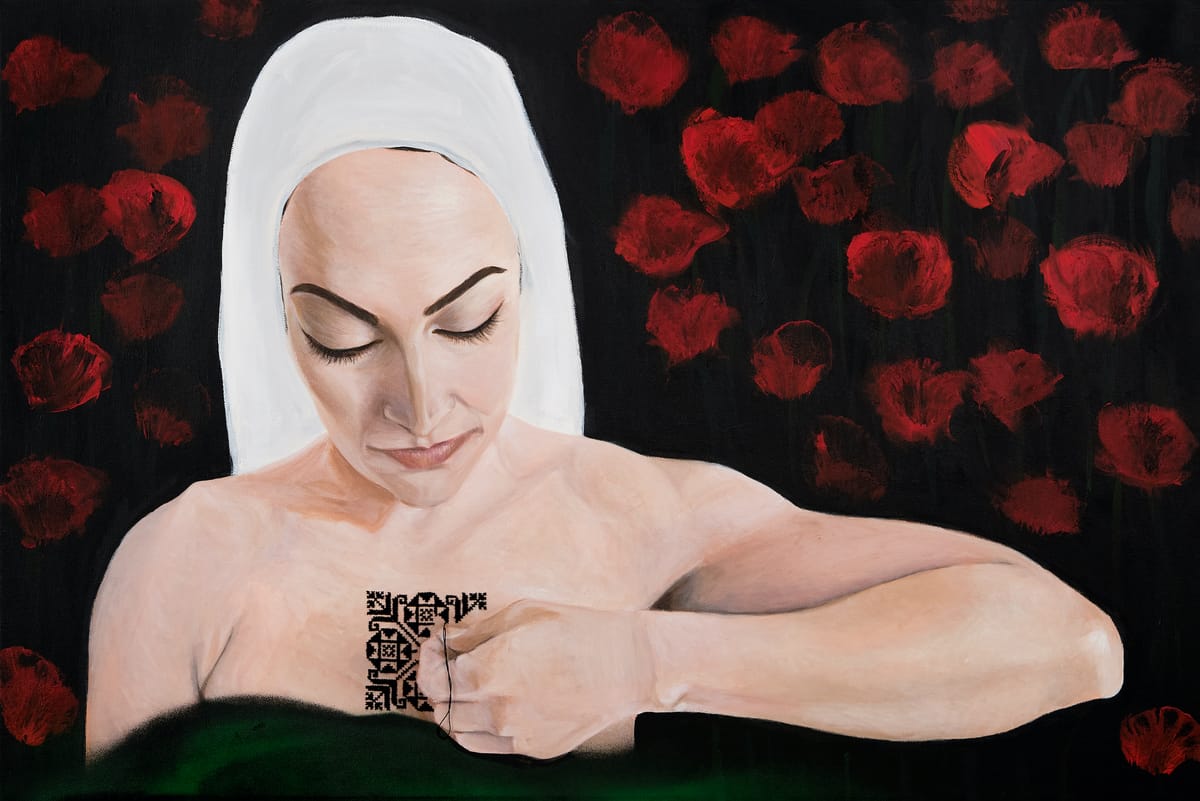
Tatreez is an ancient Palestinian embroidery tradition that carries cultural, historical, and political meaning beyond decoration. Contemporary practitioners adapt traditional motifs and techniques—including laser etching and fashion applications—to make visible forms of identity and resistance. Textile work has often been undervalued as feminine-coded craft despite its role in preserving stories and signaling solidarity. After the 1980 ban on the Palestinian flag, women encoded national colors into clothing as a means of covert communication and preservation. Tatreez now appears across media, conveying Palestinian experiences, histories, and political messages through wearable and visual art.
"On November 4, 2025, Election Night in New York City, artist Rama Duwaji joined her husband, mayor-elect Zohran Mamdani, on his victory stage. The 28-year-old was wearing all black, but her top appeared subtly textured. It was laser-etched with a pattern that recalled classic tatreez, the ancient and celebrated style of Palestinian embroidery. "She's making a powerful statement by wearing that," said Narrative Threads: Palestinian Embroidery in Contemporary Art author Joanna Barakat about Zeid Hijazi's "Frequency Top.""
"For example, did you know that in 1980 Israel banned the Palestinian flag? The mere use of its combination of colors in a public forum could be reason for imprisonment or steep fines. So Palestinian women began to stitch dresses and thobes in subtle combinations of red, green, and black, preserving a message the freedom fighters would not for"
Read at Hyperallergic
Unable to calculate read time
Collection
[
|
...
]