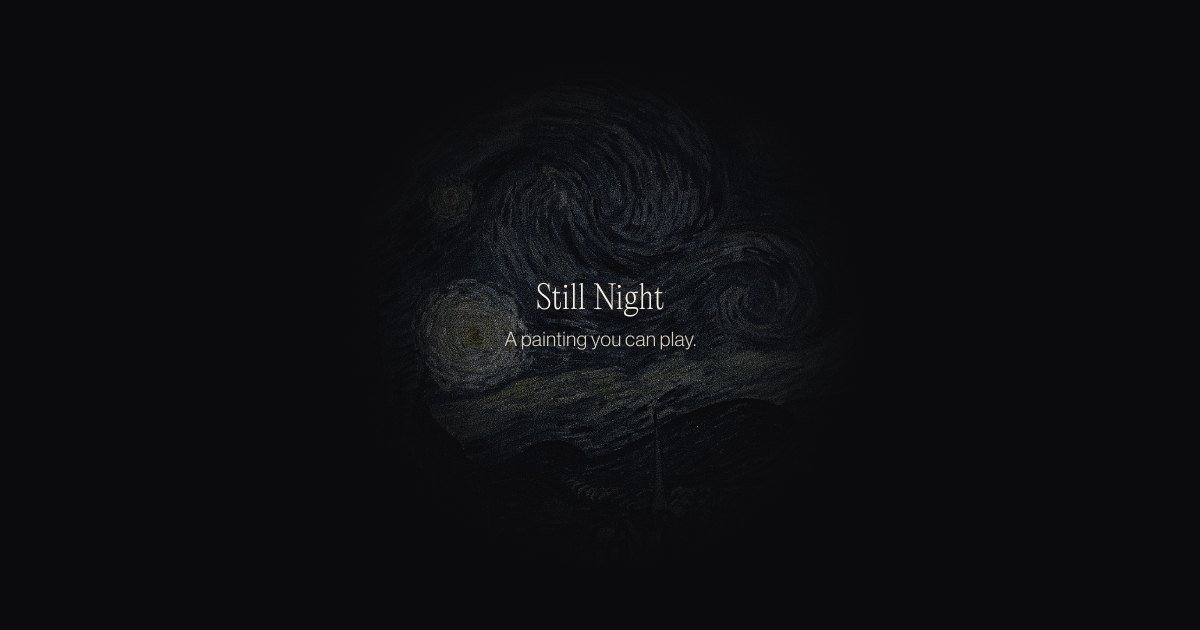
"For 400 years, people have tried to match color and sound. Most assumed notes translated to hues. It doesn't work that way. Research found something simpler. Brightness shapes how we feel sound, the same way it shapes how we feel color."
"Bright colors make sound feel higher, lighter, and happier. Dark colors make sound feel lower, heavier, and sadder. It isn't a code. It's a connection we're born with."
"Still Night reads Van Gogh's Starry Night and lets the connection play. The dark parts of the painting answer low. The bright parts ring high."
The painting itself can be played as an instrument rather than serving as a visual overlaid with music. For centuries, attempts to link color and sound assumed a direct translation from notes to hues, but that mapping does not work. Research indicates a simpler relationship based on brightness. Bright colors make sound feel higher, lighter, and happier, while dark colors make sound feel lower, heavier, and sadder. This relationship is not treated as a coded system but as a connection people are born with. Still Night uses Van Gogh’s Starry Night so that dark areas produce low responses and bright areas produce high responses.
Read at Still Night
Unable to calculate read time
Collection
[
|
...
]