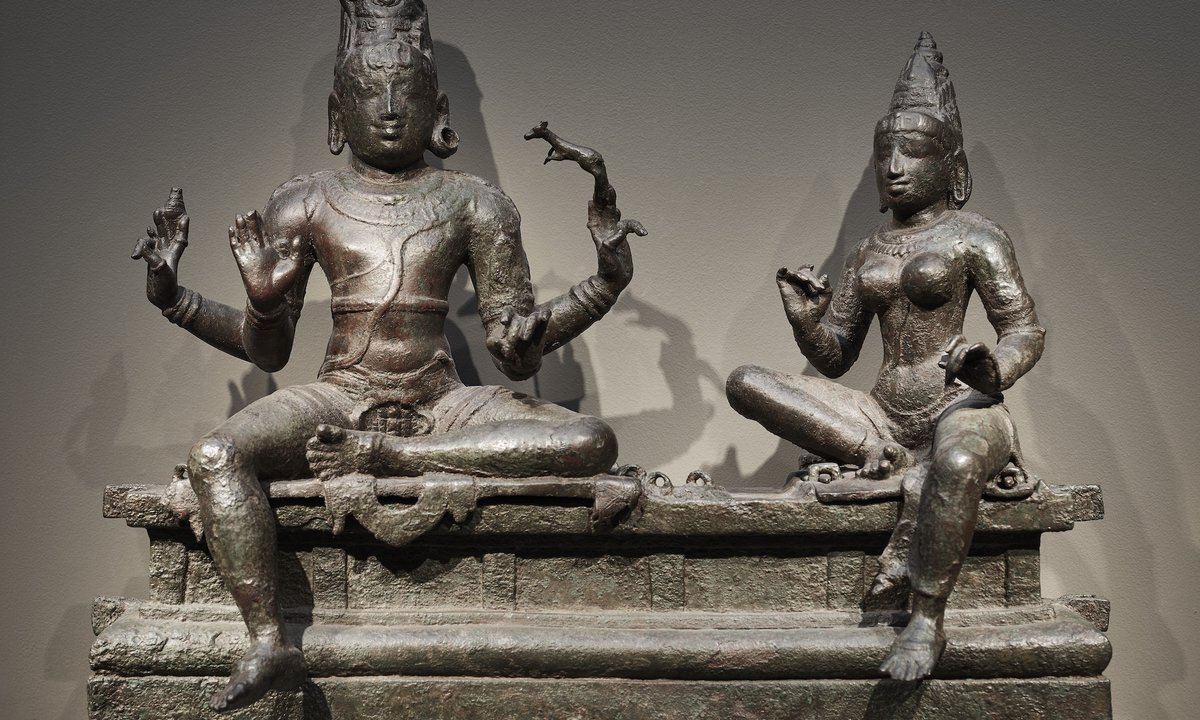
"The bronzes depict Hindu figures and were used in temple worship and ritual processions. Produced using the lost-wax technique, such figures are particularly valued for their naturalistic modelling, fluid movement and devotional function. Many surviving examples were taken from temples during the 20th century as the international market for such artefacts grew. The oldest of the three objects, Shiva Nataraja, will remain at the NMAA on long-term loan from India, with its full historical context provided in updated signage"
"In 2023, researchers at the NMAA working with the Photo Archives of the French Institute of Pondicherry found that, between 1956 and 1959, these three bronzes had photographed in temples in the south Indian state of Tamil Nadu. Those findings were then reviewed by India's Archaeological Survey, which concluded that the artefacts had been taken in violation of national laws."
The National Museum of Asian Art in Washington deaccessioned three South Indian bronze sculptures and will return them to India after provenance reviews found illegal removal. Two bronzes date to the Chola period (around 990 and the 12th century) and one to the Vijayanagar period (16th century). The bronzes depict Hindu figures used in temple worship and ritual processions and were produced by the lost-wax technique. The oldest object, Shiva Nataraja, will remain on long-term loan to the museum with updated signage providing historical context. 2023 research and photographic evidence from 1956–59 led India's Archaeological Survey to determine the artefacts were removed in violation of national laws.
Read at The Art Newspaper - International art news and events
Unable to calculate read time
Collection
[
|
...
]