High-profile art auctions largely detach artworks from meaning, feeling, and thought. Art is reduced to price and displayed as a commodity, turning the process into a ritual where money performs desire for itself. Bidding and applause function as self-congratulation by wealth rather than engagement with culture. Major works can be transformed into financial instruments and trophies that disappear into private hands for long periods, limiting public viewing. Auction houses present the activity as a market, but it operates like a small oligarchy of global bidders, megadealers, auction houses, and surrounding advisers and influencers. The result is a spectacle where participants look at one another instead of the art.
"Almost nothing that happens at the sort of high-profile art auctions that have been taking place this week has anything whatsoever to do with art. Auctions are not about seeing, feeling, or thinking. Art is stripped bare of meaning and placed naked on the block with only a price to define it. Auctions are rituals in which money performs desire for itself. Art enlarges consciousness, deepens experience, destabilizes certainty. Auctions reduce all that to blood sport for the ultrarich - a streamed séance where capital applauds itself while everyone else pretends they are witnessing culture, entering art history by paying the most money."
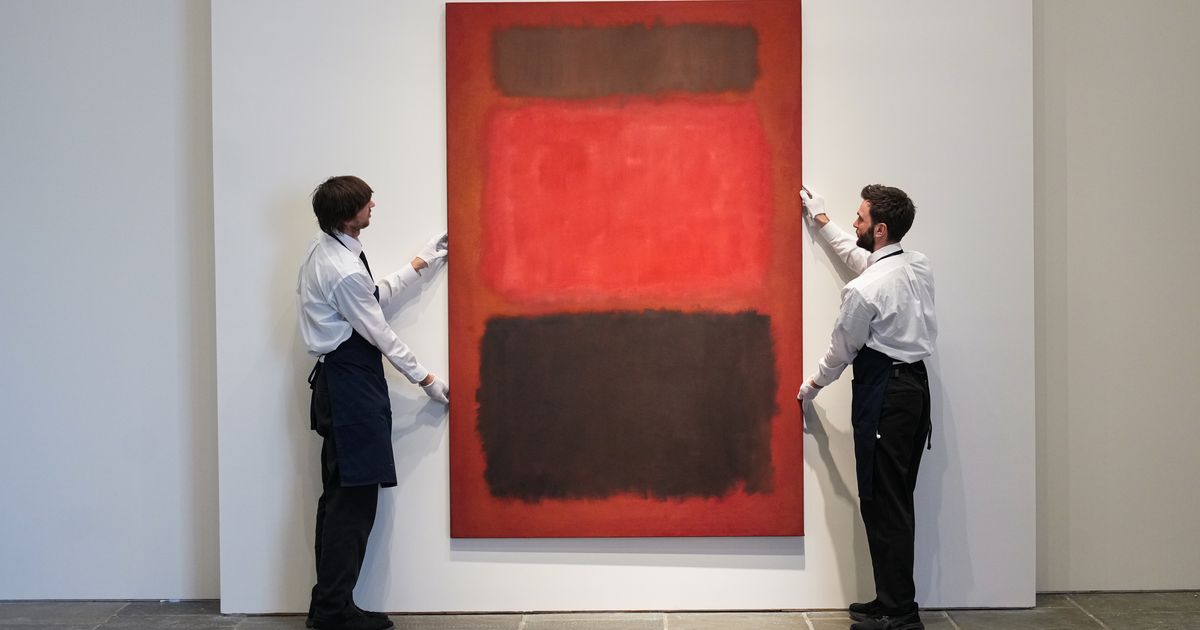
"After seven minutes of bidding this week, Christie's sold a magnificent Jackson Pollock, Number 7A, formerly owned by S.I. Newhouse. The room gasped. Then came the applause: the sound of wealth congratulating itself for existing. A sculpture by Constantin Brancusi, Danaïde - also from the Newhouse collection -climbed past $100 million, while a painting by Mark Rothko, Brown and Blacks in Reds, approached this magic number."
"The works were alchemically transformed by this awful ritual into something like casino chips, financial instruments, placeholder trophies large enough to park in a free port beside an untaxed Basquiat and a dinosaur skeleton. Works touted as pure genius are likely to disappear into private hands for many years before they're ever seen by the public again, probably at an auction. By evening's end, more than a billion dollars' worth of art had changed hands in a few hours. I would suggest that rather than truly looking at art, everyone was looking at one another."
"Auction houses pretend this is a "market." It is not a market. It is a tiny oligarchy: a dozen or so global bidders, a handful of megadealers, several auction houses, and an expanding entourage of advisers, consultants, influencers, and hangers-on feeding off proximity to impossible money. The auctioneer stages this competitive desire in"
Read at Vulture
Unable to calculate read time
Collection
[
|
...
]