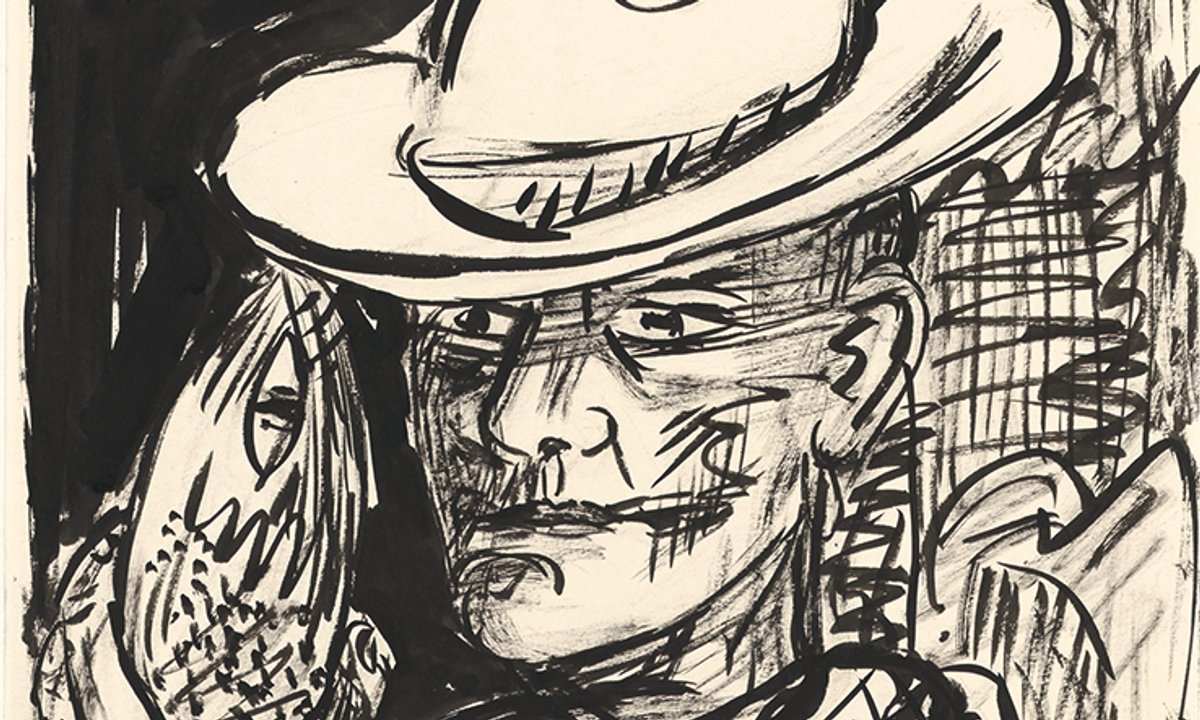
Max Beckmann produced distinctive paintings and recurring figures including circus performers, street toughs and a mask-like self-portrait. An exhibition at Frankfurt's Städel Museum concentrates on eighty of his drawings, drawn from major international collections. The show traces his development from pre-First World War experiments with Post-Impressionism to the traumatic wartime period when his medic experience precipitated a 1915 breakdown and radically reconfigured his art. Beckmann's hard-edged signature style first crystallized in his drawings in the 1920s, when drawings shifted from preparatory studies to autonomous works. His 1925 marriage to Mathilde "Quappi" von Kaulbach made her a recurrent muse.
"The paintings of the German artist Max Beckmann are easy to recognise but hard to categorise. Often mislabelled as an Expressionist or else vaunted-to his chagrin-as a leading figure of the Weimar era's New Objectivity movement, Beckmann (1884-1950) was a singular, wilful figure, with a sharp but ethereal palette and a crowd of recurring figures that included circus characters, street toughs and his own menacing, mask-like face."
"The war strongly affected Beckmann, with his experience as a medic leading to an apparent breakdown in 1915. But the conflict also made him a major artist by wholly reconfiguring his art. His hard-edged signature style first emerged in his drawing, Freyberger says, and coincided with a new approach to drawings generally, which by the 1920s had gone from painting studies to autonomous works of art."
Read at The Art Newspaper - International art news and events
Unable to calculate read time
Collection
[
|
...
]