James Cheshire, a geography and cartography professor at UCL, spent three years cataloging 440 drawers of forgotten maps in a dusty archive room. His exploration uncovered 96 historically significant maps spanning different epochs and geographies, including rare documents like a pre-atomic bomb Hiroshima map and a Nazi-era Madrid map. These discoveries highlight cartography's crucial role as a sociopolitical memory keeper. Cheshire's background in spatial data analysis informed his selections, including one of only 34 copies of the first geological map of the Indian subcontinent by Victorian mapmaker George Bellas Greenough. The work emphasizes both the enduring value of analog cartography and the importance of digitizing map data for accessibility in teaching and research.
"The 96 "lost" maps explored here span epochs, geographies and geological landscapes. Some threatened to break apart in human hands, while others, tucked away from sunlight and human interference for many decades, seemed surprisingly fresh: a map of Hiroshima printed just weeks before the atomic bomb was dropped, another of Madrid used for the Nazi invasion of Spain, and yet another of the ocean floor."
"Greenough was "one of the first to see the potential for maps as something more than a way of showing people where to go". The initial sketch took Greenough over a decade to create. An early find was one of only 34 copies of the first map showing the geology of the whole of the Indian subcontinent."
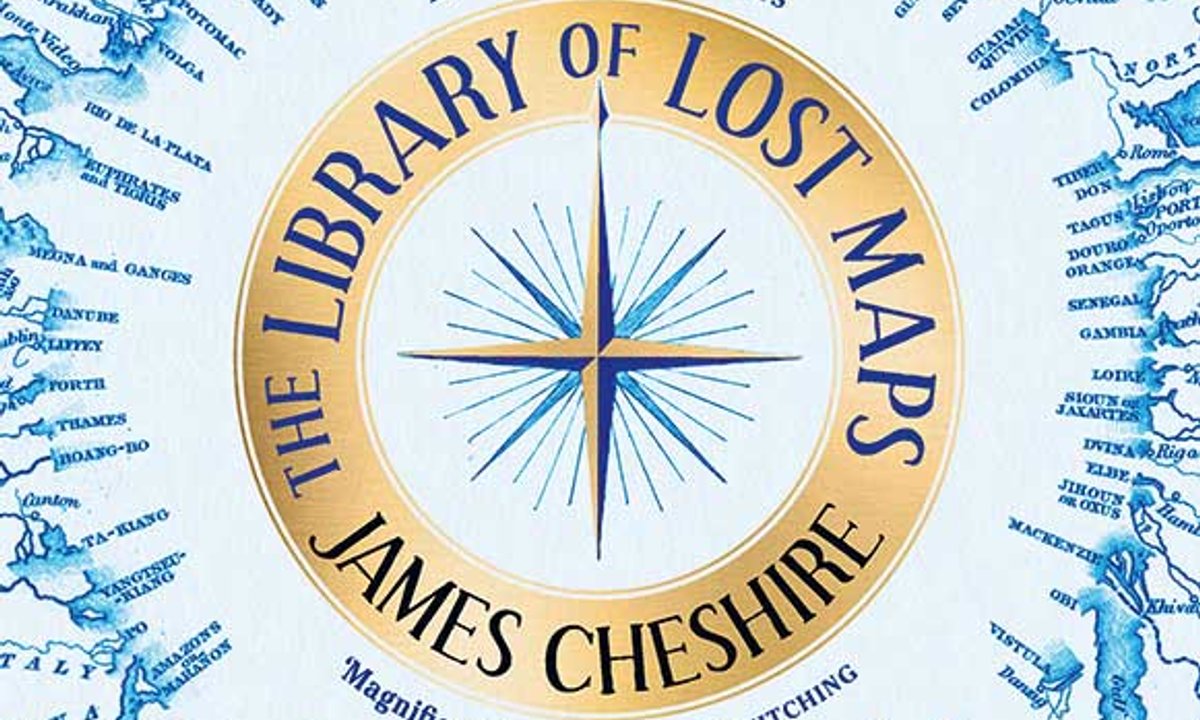
"The resulting book is an exquisite record of the curiosities Cheshire discovered, and an apt homage to the analogue ways of the world as well as the importance of cartography. These cartographic gems, alongside Cheshire's commentary, elevate The Library of Lost Maps to a timely, enlightening and hugely entertaining volume about the inexorable vitality and importance of libraries as sociopolitical memory keepers."
Read at The Art Newspaper - International art news and events
Unable to calculate read time
Collection
[
|
...
]