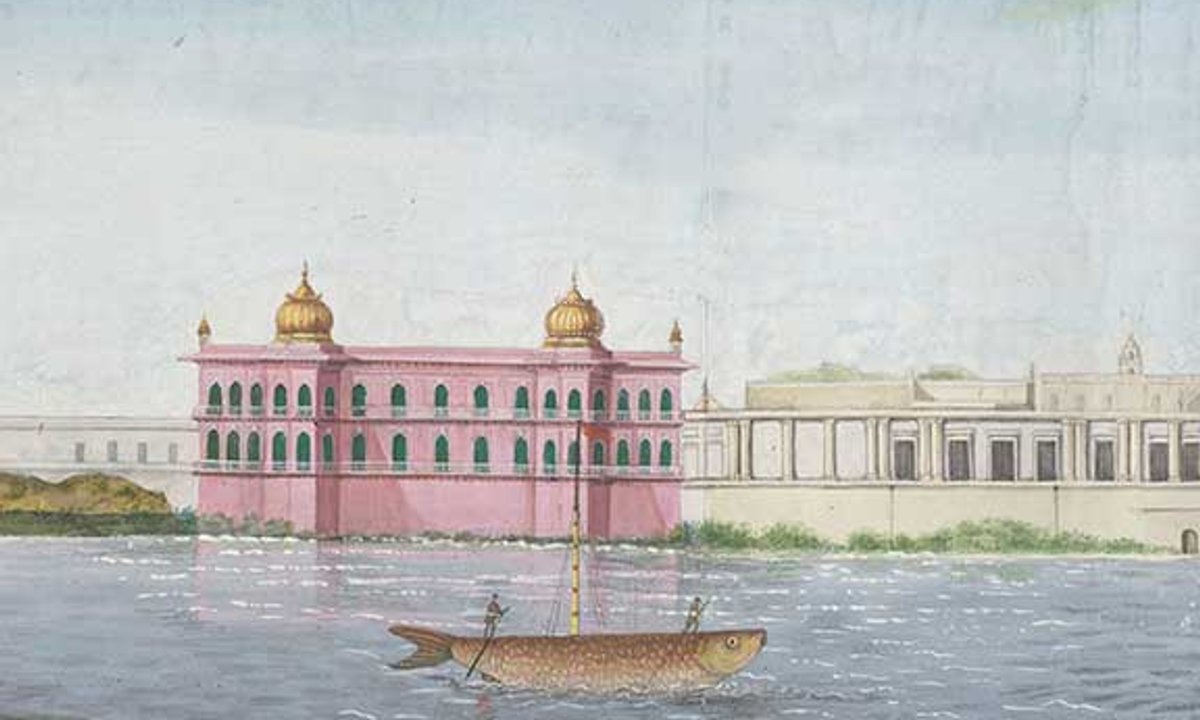
""Within artistic traditions on the Indian subcontinent, narrative scrolls were popular forms of art. These were made for people at all levels of society. They often tell devotional narratives, unfolding as the scroll is unrolled.""
""The Lucknow scroll, or Lucknow from the Gomti, was made between 1821 and 1826 and comprises 33 joined sheets of laid paper, executed in watercolour, gouache and gold.""
""We can think about the Lucknow scroll in terms of storytelling, as it allows the viewer to follow a journey along the banks of the river.""
The Lucknow scroll, a 37ft-long early 19th-century artwork, is now publicly displayed at the Yale Center for British Art after two years of conservation. Part of the exhibition Painters, Ports and Profits, it addresses themes of empire and artistic exchange. Due to its size and fragility, the scroll will be shown in sections, allowing visitors to see different parts over time. Created between 1821 and 1826, the scroll features a view of Lucknow and reflects the storytelling tradition of Indian narrative scrolls.
#lucknow-scroll #yale-center-for-british-art #19th-century-art #indian-narrative-scrolls #art-and-empire
Read at The Art Newspaper - International art news and events
Unable to calculate read time
Collection
[
|
...
]