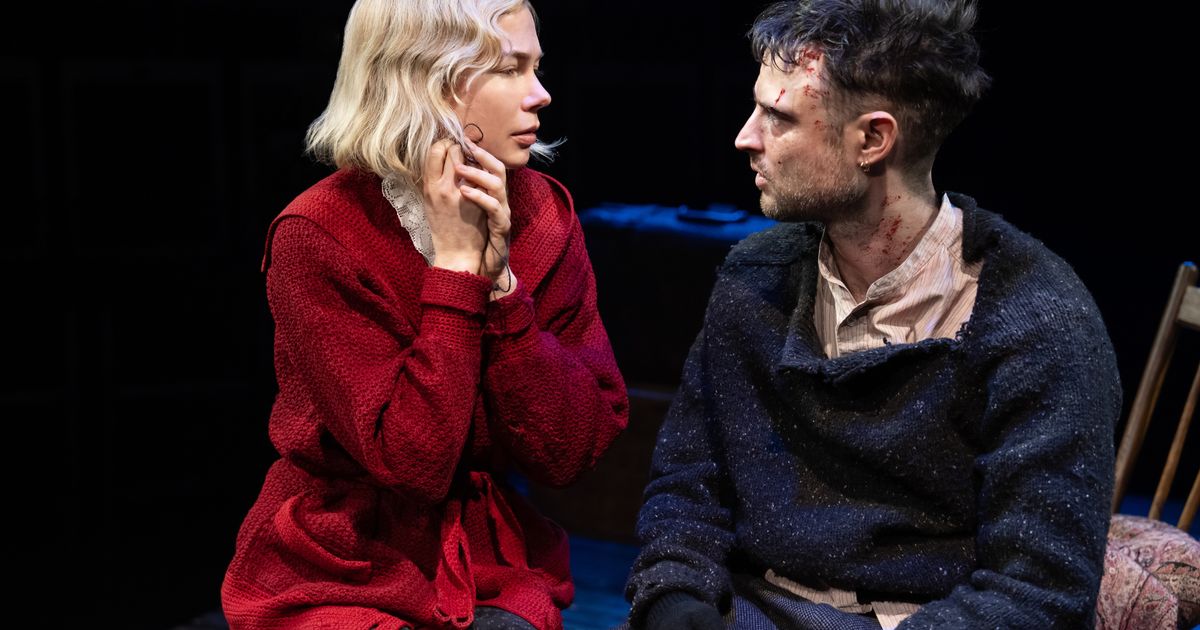
"When the play that would become Eugene O'Neill's Anna Christie opened in 1920, it was named not for the woman that would expand to fill its center but for her father. Chris Christopherson (no relation to the singer) stumbled onto the stage in Atlantic City after a tumultuous rehearsal process for which O'Neill was largely absent, its director desperately hacking minutes out of the script and slashing the title to simply Chris while he was at it. Whatever happened in Chris, O'Neill wasn't having it. By the next year he had rewritten the play from the bottom up, refocusing its spotlight on a character who had begun as little more than a prim cipher, carving away at her marble till he revealed a heroine."
""It's a response that is totally inarticulate and flies out of my body and attaches itself to the work like a harpoon. And then, all of a sudden, I'm going in that direction, whether I really want to or not.""
"O'Neill would approve: His play is, after all, about the sea - or, more accurately, about the inexorable currents that sweep us up like the undertow, the ecstatic callings we're powerless to resist despite their danger, despite all our efforts to be good."
Eugene O'Neill originally titled the play for Chris Christopherson, but a problematic opening and subsequent rewrites recentered the drama on Anna, turning her from a cipher into a heroine. The play examines irresistible callings and the sea's metaphorical undertow, blending big dialects, briny atmosphere, contraband booze and moments of humor. The revival attracted Michelle Williams and director Thomas Kail, who emphasize the piece's emotional sharpness and subtle feminist currents. The drama balances passion and moral complexity while staging a tactile, plush-and-grimy theatrical experience that highlights O'Neill's muscular language and deep feeling.
Read at Vulture
Unable to calculate read time
Collection
[
|
...
]