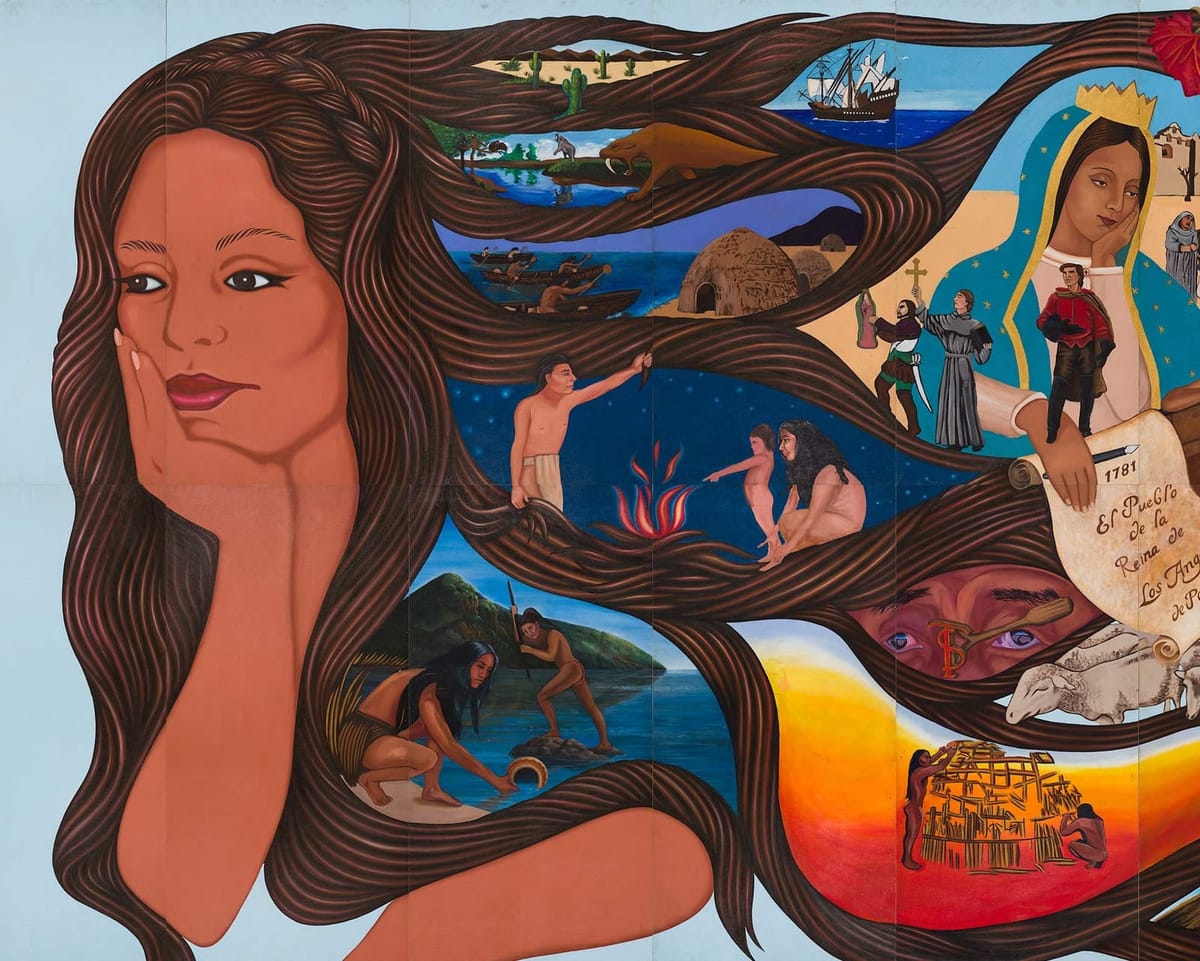
Artist-run spaces form the core of Los Angeles's art community, while the city's public image remains tied to a market increasingly influenced by the East Coast. Neighborhoods and creative centers have shifted over decades—Venice warehouses, downtown Arts District, Bergamot Station—driven by gentrification, rezoning, and rising rents. Artists repeatedly relocate studios to follow affordable rents, and galleries move to capitalize on market trends. A DIY, irreverent ethos characterizes artist communities, contrasting New York glamour. Historical episodes include Ferus Gallery’s curatorial influence and Barbara Carrasco’s rejected bicentennial mural, which later found installation at the Natural History Museum.
"People who have lived in Los Angeles longer than I have scoff at the way I chart the scene's migration. They say I should have been here in the '60s, when studios flourished in dilapidated Venice warehouses and contemporary art was defined by the exhibitions mounted at Ferus Gallery on La Cienega Boulevard. In the '70s and '80s, artists left the beach for downtown, which led to the area being called the Arts District."
"Since I moved here nearly 15 years ago, the creative centers have hopped from one neighborhood to another, chased out of their dens by the developments, price gouging, and rezoning that come with gentrification. Artists have relocated their studios from Skid Row to Chinatown to West Adama, following the rental market. Galleries have moved from Culver City to the Arts District and then to the edge of Koreatown, which they've renamed "Melrose Hill.""
Read at Hyperallergic
Unable to calculate read time
Collection
[
|
...
]