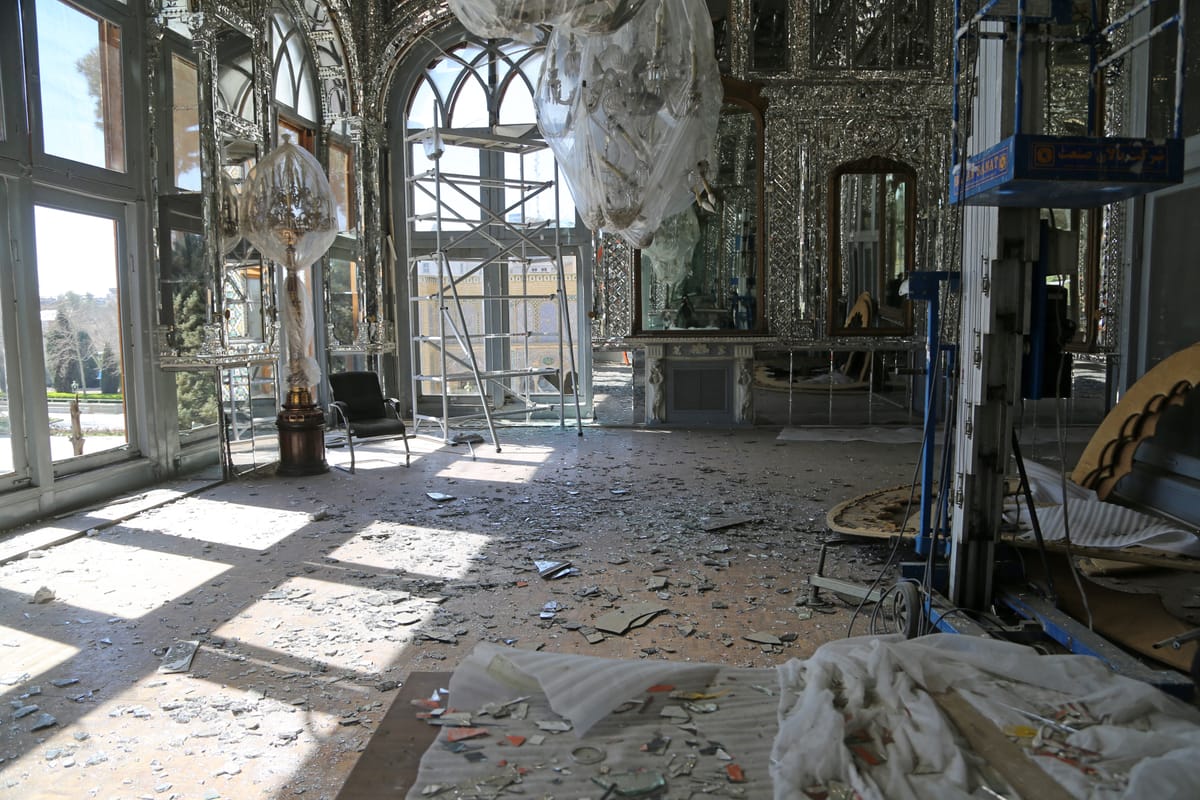
"The bombing may not have targeted the palatial site, but the palace is close to the old bazaar and other important 19th-century buildings, including a mosque. Together they constitute the core of Tehran as it was built as the capital city in the late 19th century."
"The palace contains a network of courtyards and buildings arranged according to their ceremonial significance. The more ceremonial areas are closer to the exterior, while the interior has served as a living space for members of the ruling family. Today, the complex includes a museum that houses a significant collection of Iranian art and manuscripts."
Golestan Palace, a UNESCO World Heritage Site in Tehran and one of Iran's oldest monuments, sustained significant damage from shockwaves generated by US and Israeli airstrikes on March 2. The palace, built during the Qajar dynasty in the 18th and 19th centuries, symbolizes the dynasty's power and represents the core of Tehran's development as a capital city. The complex features courtyards and buildings arranged by ceremonial importance, with the palace now functioning as a museum housing valuable Iranian art and manuscripts. Damage includes shattered windows, damaged ceilings, and broken marble statues, primarily affecting the ceremonial sections containing the most elaborate decorations.
#cultural-heritage-damage #golestan-palace #unesco-world-heritage-site #iranian-art-and-manuscripts #military-conflict-impact
Read at Hyperallergic
Unable to calculate read time
Collection
[
|
...
]