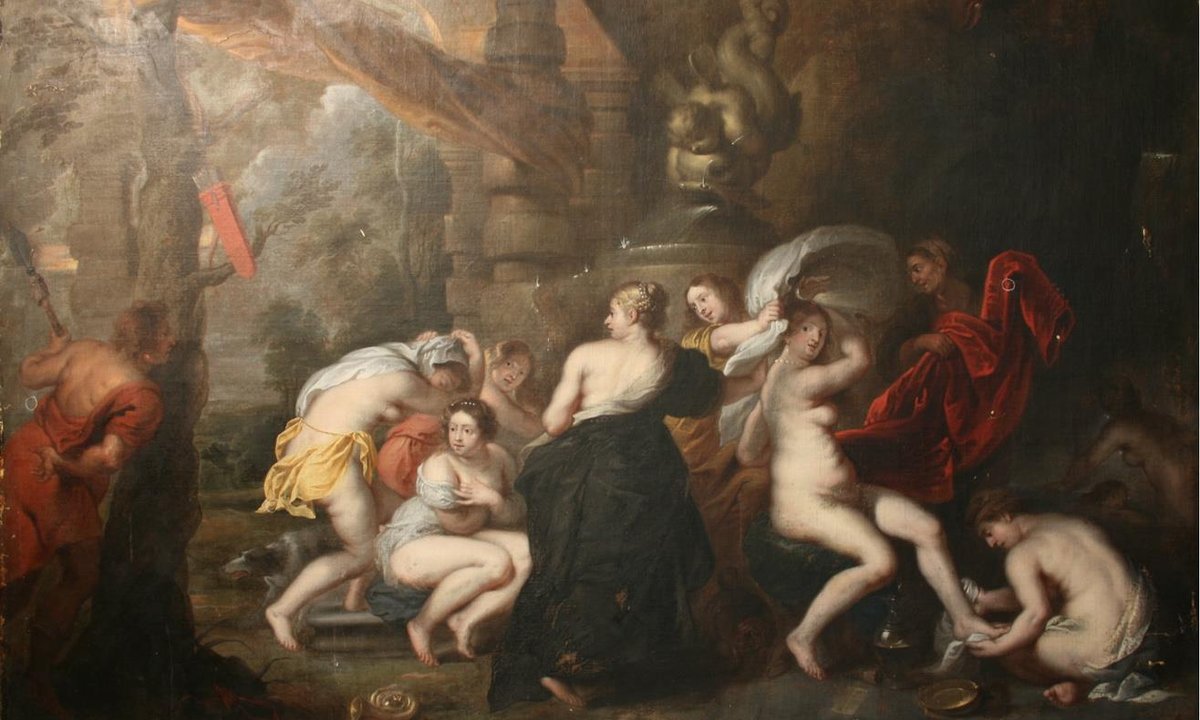
AI-driven attributions have altered long-held views by declaring some paintings authentic and others not, prompting disputes with leading curators and scholars. AI claimed portions of works long thought to be copies could be by masters such as Rubens, while other traditional attributions were challenged. Dwindling inventory and rising values incentivize attempts to certify "new" works by famous artists, and fear of costly litigation has reduced expert willingness to issue authenticity opinions. The Kallir Research Institute receives over 100 annual submissions about works attributed to Egon Schiele, about 95% being fakes, forgeries, or misattributions. Scientific techniques like X-rays, infrared reflectography, and pigment analysis can confirm material compatibility but cannot alone establish authorship; deep familiarity with an artist's oeuvre remains essential.
"Recently, AI decided that a painting long thought to be a copy of Caravaggio's The Lute Player is actually by the master, while another version of the same subject, previously thought to be authentic, is not. Both conclusions were disputed by the former Metropolitan Museum of Art curator Keith Christiansen. A similar debate erupted in March 2025 when AI declared that portions of The Bath of Diana, also long believed to be a copy, could have been painted by Peter Paul Rubens."
"In this battle between machines and humans, it sometimes seems as if machines are winning. Dwindling inventory and rising values incentivise attempts to certify "new" works by famous artists, while fear of costly litigation has caused many experts to stop issuing opinions of authenticity. The art world is increasingly inclined to challenge what the journalist Sarah Cascone calls "the dubious science of connoisseurship"."
"As the leading expert on Egon Schiele and the author of his catalogue raisonné, I have been issuing opinions of authenticity regarding works attributed to him since 1990. Every year, the Kallir Research Institute receives more than 100 submissions, around 95% of which are fakes, forgeries or misattributions. Most can easily be identified as such by me and my staff. No special tools or forensics are required, just deep familiarity with Schiele's authentic oeuvre."
Read at The Art Newspaper - International art news and events
Unable to calculate read time
Collection
[
|
...
]