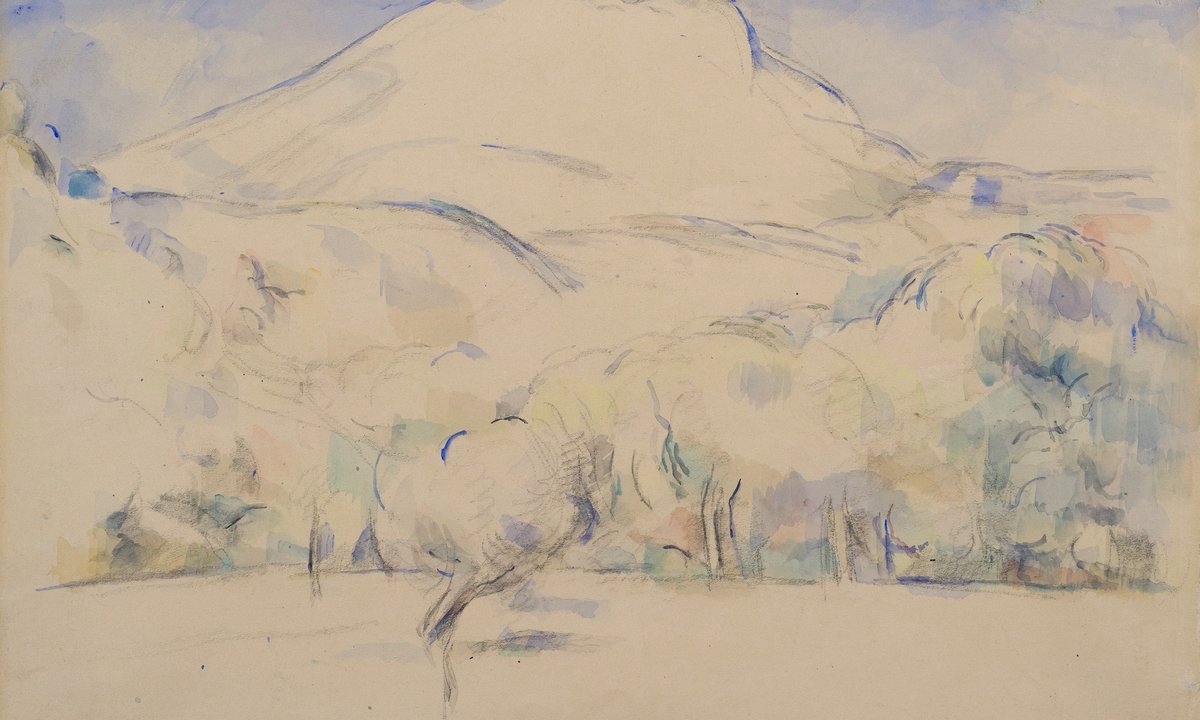
A Cezanne watercolour shown at the Fondation Beyeler in Basel was previously owned by Gustav Schweitzer, a Jewish businessman who fled Berlin in 1935. A provenance researcher found archival documents showing Schweitzer loaned the 1888 work depicting Montagne Sainte Victoire to Basel’s Kunsthalle for a 1936 exhibition, with correspondence continuing until 1939 confirming its safe return. The circumstances of Schweitzer’s later loss of ownership are unknown, with possibilities including sale under duress after fleeing Germany or looting in Nazi-occupied territory. The museum was urged to keep the work to support a fair solution. The foundation stated it will inform the lender of the suspicion and return the artwork, saying it lacks authority to retain works without an appropriate legal basis.
"A watercolour on show in the Fondation Beyeler's recent exhibition devoted to Paul Cezanne once belonged to a Jewish businessman who lost it due to Nazi persecution, according to a researcher working for the heir of Gustav Schweitzer, a Jewish businessman who fled Berlin in 1935."
"The provenance researcher, Willi Korte, unearthed documents in the Basel public archives chronicling Schweitzer's loan of the 1888 watercolour depicting the Montagne Sainte Victoire to the city's Kunsthalle for a 1936 exhibition. Correspondence between the curator in Basel and Schweitzer or his secretary continued until 1939, when she wrote from Paris to confirm the watercolour's safe return. How Schweitzer lost ownership of the work is not known, Korte says."
""But this means it was either sold under duress after Schweitzer had fled Germany, or it was looted in Nazi-occupied territory," he says. Korte urged the Fondation Beyeler to keep hold of the watercolour. "The Fondation Beyeler should live up to its historical obligation to actively contribute to a fair and just solution," he says."
""The lender of the watercolour will be informed of the suspicion that has been raised," the spokesperson stated. "As a matter of principle, a Swiss museum has no authority to retain artworks without an appropriate legal basis.""
Read at The Art Newspaper - International art news and events
Unable to calculate read time
Collection
[
|
...
]