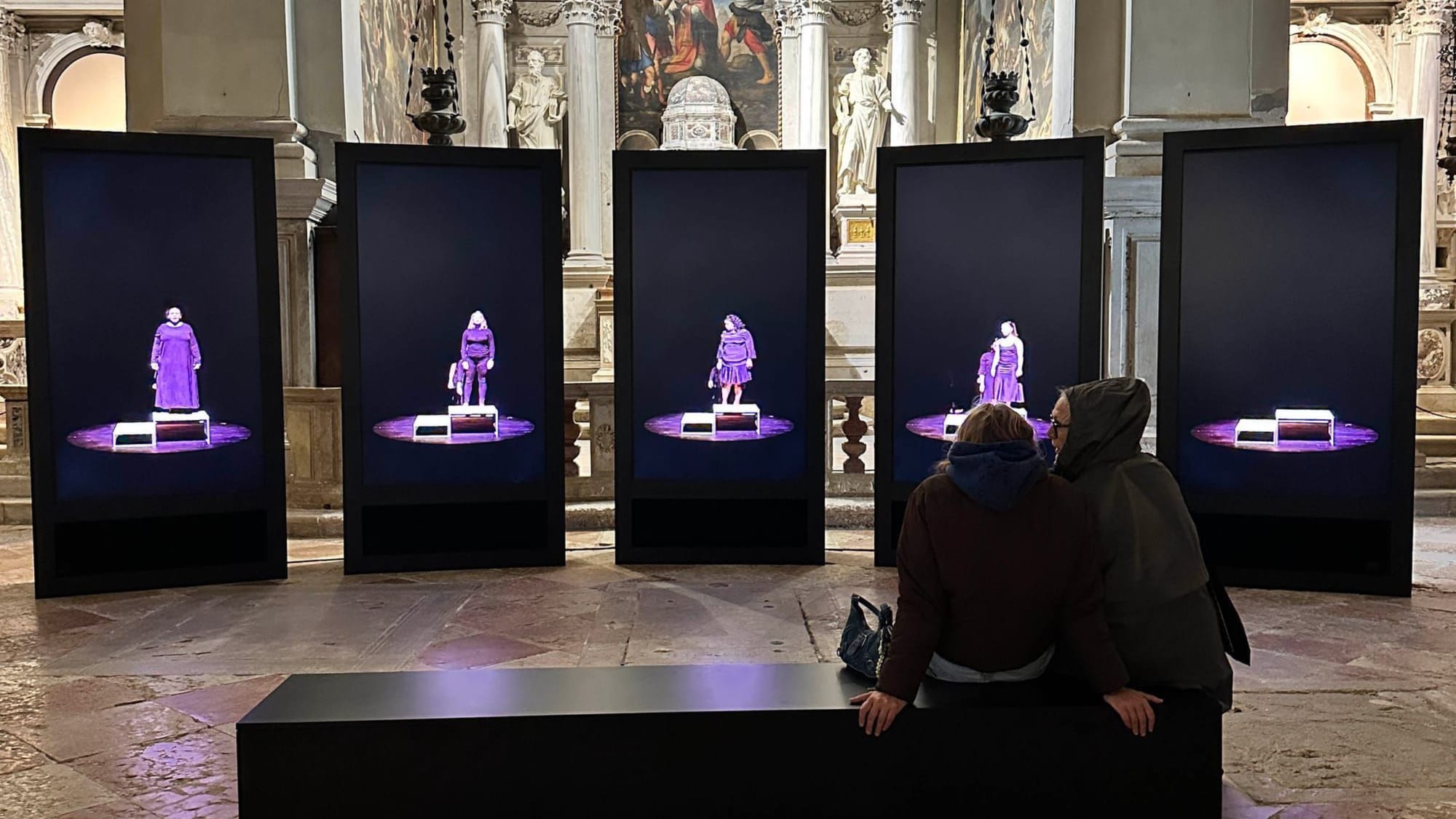
"Though each work is distinct, in the vaulted space of the church, the voices meld, becoming a choir: All these acts of violence are connected both through geopolitics (the still unfinished work of decolonization) and, here, through sound. We, the viewers, not only hear the music that results, but we also feel it in our bodies thanks to the acoustics of the building. We are implicated, in other words - we are not allowed to simply watch."
"Back in January, we had to wrap our heads around the fact that South Africa, the same country that charged Israel with genocide at The Hague, censored an exhibition about Palestinian grief. The nation's Culture Minister Gayton McKenzie, a supporter of Israel, nixed Gabrielle Goliath's installation Elegy for its pavilion at the Venice Biennale, using false accusations of foreign intervention that convinced nobody."
"But that wasn't the end of the story. A few organizations stepped up, and Goliath's show was eventually installed in a Venice church. "The censorship of Goliath's proposed contribution to the Biennale seems especially perverse when confronted with the actual installation, which is hauntingly beautiful and achingly tender," writes critic Aruna D'Souza."
"British-Nigerian photographer Misan Harriman would probably identify with Goliath, as he's being subjected to a smear campaign for his solidarity with Palestinians. Staff reporter Rhea Nayyar has that story. Also, check out our list of art books to read this summer, including new titles by Megan O'Grady and Jennifer Higgie."
South Africa censored Gabrielle Goliath’s installation Elegy for its pavilion at the Venice Biennale. Culture Minister Gayton McKenzie rejected the work using claims of foreign intervention. After organizations intervened, the installation was ultimately installed in a Venice church. The work frames grief as a necessary tool for building solidarity, connecting violence through geopolitics and decolonization. In the church’s vaulted space, multiple voices merge into a choir, and viewers hear the resulting music while feeling it physically through the building’s acoustics. The experience implicates viewers rather than allowing passive watching. The newsletter also notes a smear campaign targeting photographer Misan Harriman for his solidarity with Palestinians and recommends art books to read.
Read at Hyperallergic
Unable to calculate read time
Collection
[
|
...
]