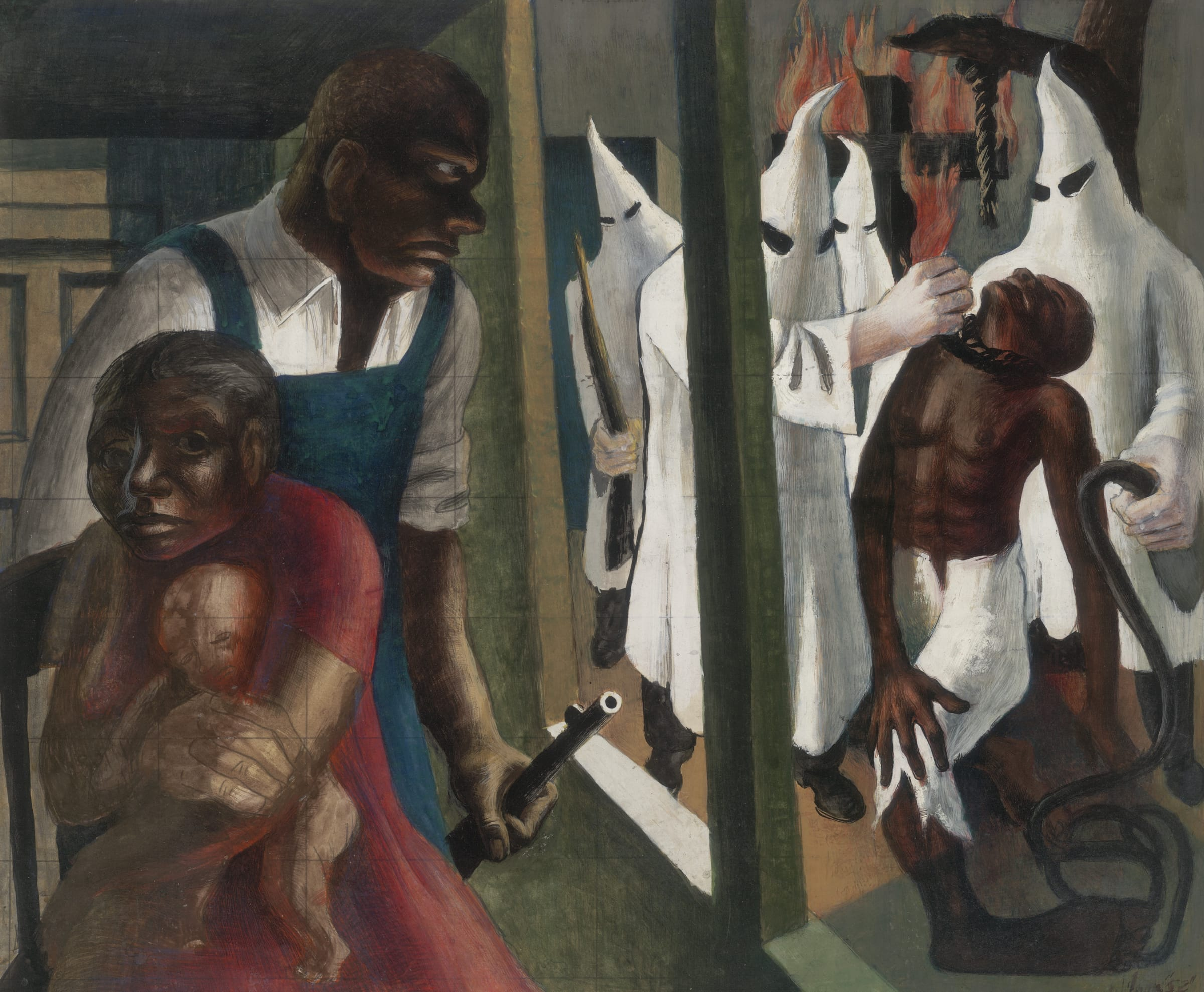
Frigid weather encourages inward reflection and connections to historical moments. A conversation with Morgan Library curator John Marciari links Caravaggio's 17th-century rise to enduring artistic influence. John Wilson's paintings of American racial violence draw on Richard Wright's writings, with Wilson crediting Wright for articulating the struggle of African Americans to maintain human dignity. Tribeca galleries debated contacting city agencies about street vendors outside their businesses even as they issued anti-ICE solidarity statements. Damien Davis offers commentary on what effective solidarity looks like. Marciari outlines how a provincial artist sparked an artistic revolution in Rome.
"Maybe it's the cabin fever speaking, but I think it's when it's the most brutal out that we turn inward, and the ghosts of the past come to visit. On the eve of that relentless snowstorm, for instance, my call with Morgan Library curator John Marciari transported me to the 17th century, to the moment Caravaggio became the mononymic character that remains so influential today. It's a reminder of how the past makes the present, and the present makes the future."
"Both links of the chain are at play in our city right now. Writer A. G. Sims walks us through how John Wilson's depictions of American racial violence (which can be seen at The Met through this weekend) are underpinned by the influence of Richard Wright's writings. "He put into words what I wanted to express visually," Wilson wrote about Wright, "the struggle of African Americans to maintain their human dignity in an oppressive world.""
Read at Hyperallergic
Unable to calculate read time
Collection
[
|
...
]