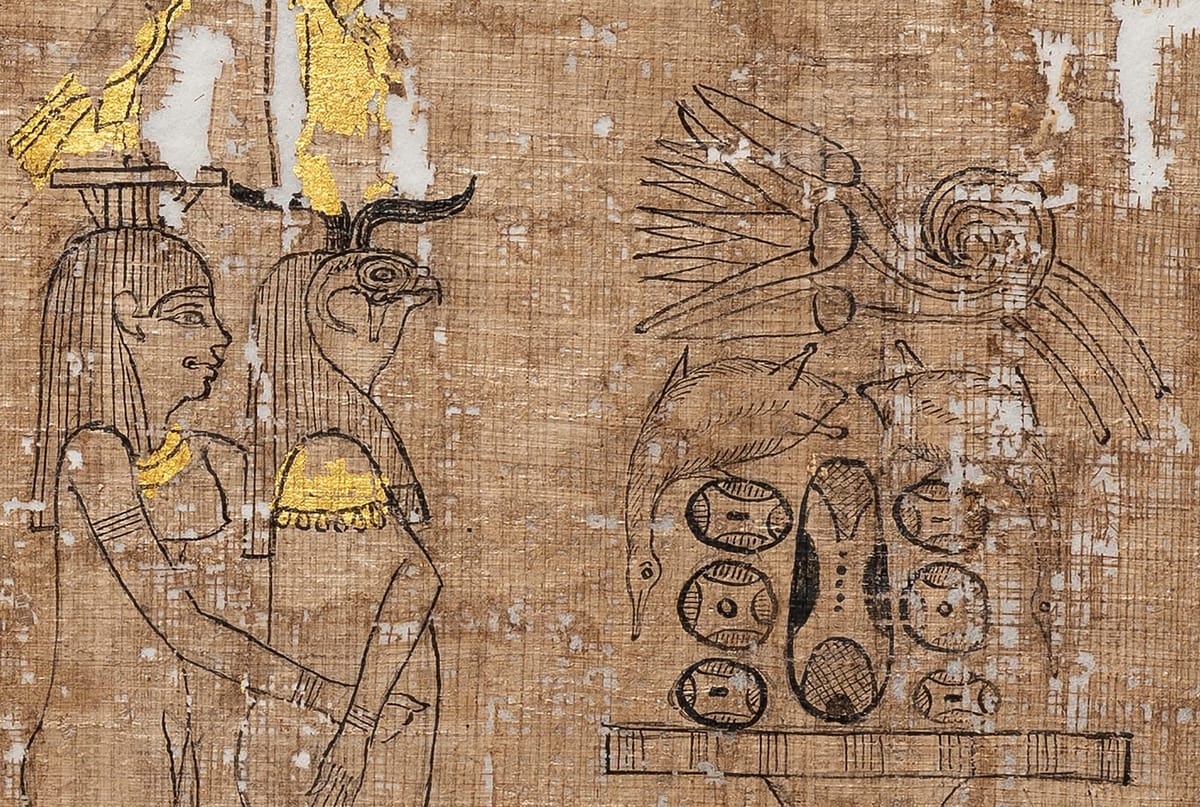
"There is no singular "Book of the Dead": The term refers to a loose collection of funerary texts - a written version of the Kemetic tradition of protection spells and mummification rules for the deceased - that anyone in Ancient Egypt could theoretically acquire from a scribe, though it would cost you. There are about 200 known spells, and while no book contains all of them, the tour de force of the new Brooklyn exhibition is a 21-foot papyrus from around 250 BCE containing more than 160."
"Visible are boats floating through the mythical Field of Reeds; an offering table piled with bread and trussed ducks; and the famous scene of a heart weighed on a scale against the feather of Ma'at, to make sure one is in balance, that the heart is not too heavy. If it is, there's a lion-hippo-crocodile creature waiting to eat it. This is how one dies."
The Book of the Dead represents a collection of funerary texts from ancient Egypt, not a single unified work. These texts functioned as instruction manuals for the afterlife, containing protection spells and mummification guidelines that deceased individuals could acquire from scribes. The collection comprises approximately 200 known spells, though no single book contains all of them. The Brooklyn Museum's exhibition features a remarkable 21-foot papyrus from around 250 BCE containing over 160 spells, making it exceptionally rare and significant. The texts describe the journey through the mythical Field of Reeds and include the famous scene of the heart being weighed against the feather of Ma'at to determine spiritual balance and worthiness for the afterlife.
Read at Hyperallergic
Unable to calculate read time
Collection
[
|
...
]