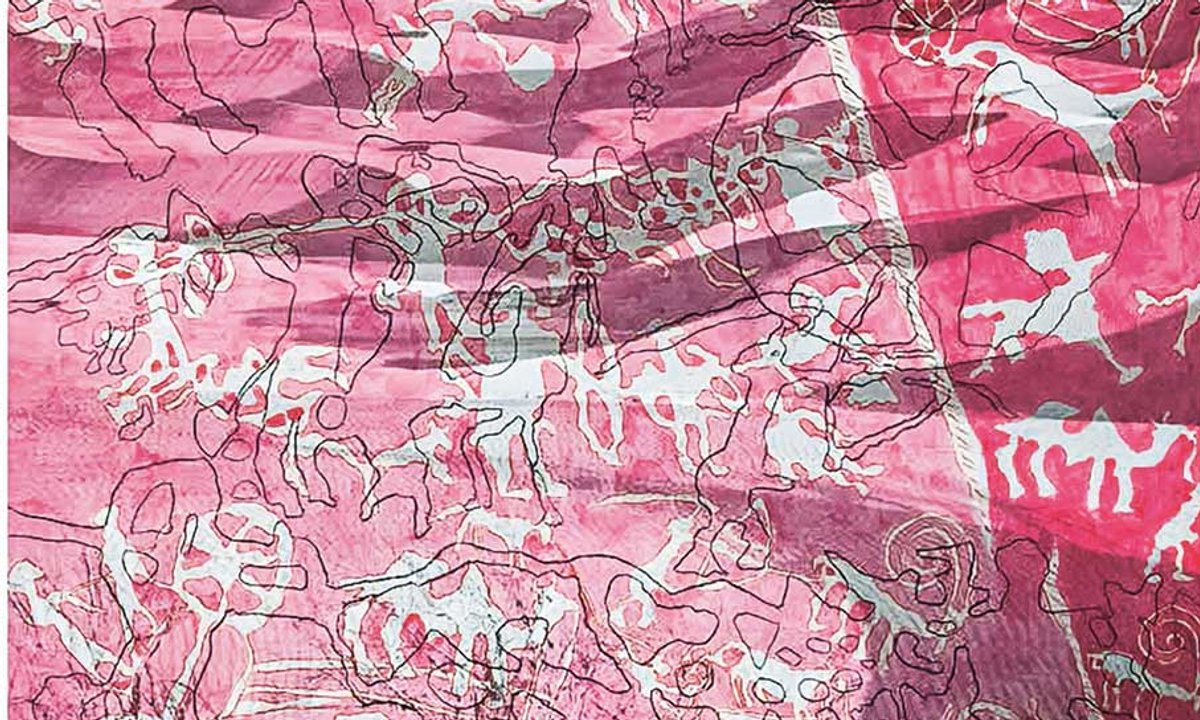
"Sometime in the summer of 1460, a traveller, Pierre de Montfort, found himself in the Alpine Vallée des Merveilles in south-east France. He was horrified. It was, he thought, "a hellish place with figures of devils and a thousand demons carved everywhere in the rocks". So aghast was he that he set his thoughts down, thereby leaving us the first written description of an encounter with rock art in European history."
"Rock art takes many forms, but the variety that De Montfort encountered were petroglyphs: images, using various techniques, cut into non-portable stone surfaces. In fact, as Christoph Baumer reveals in Rock Art and Its Legacy in Myth and Art, some 80% of the petroglyphs at Mont Bégo, the wider site that encompasses the Vallée des Merveilles, represent bulls, with anthropomorphic forms accounting for just 1%."
"Baumer, the president of the Society for the Exploration of EurAsia and a member of, among other organisations, The Explorers Club, New York, and the Royal Geographical Society, London, has little time, for example, for modern theories that link the production of rock art to shamanistic rituals: such arguments embody "a fundamentally ahistorical perspective reducing art to determinism", he writes."
In 1460 a traveller encountered intense petroglyphs in the Alpine Vallée des Merveilles and described them as a hellish scene of carved devils and demons. Petroglyphs are images incised into non-portable stone surfaces using varied techniques. At Mont Bégo roughly 80% of images depict bulls while anthropomorphic figures comprise about 1%. Interpretation of these powerful and often opaque marks is difficult and vulnerable to intellectual bias. Christoph Baumer rejects shamanism-based explanations as ahistorical determinism. Precise dating is challenging, sites can accrete images for up to two thousand years, and regional mythological records vary widely.
Read at The Art Newspaper - International art news and events
Unable to calculate read time
Collection
[
|
...
]