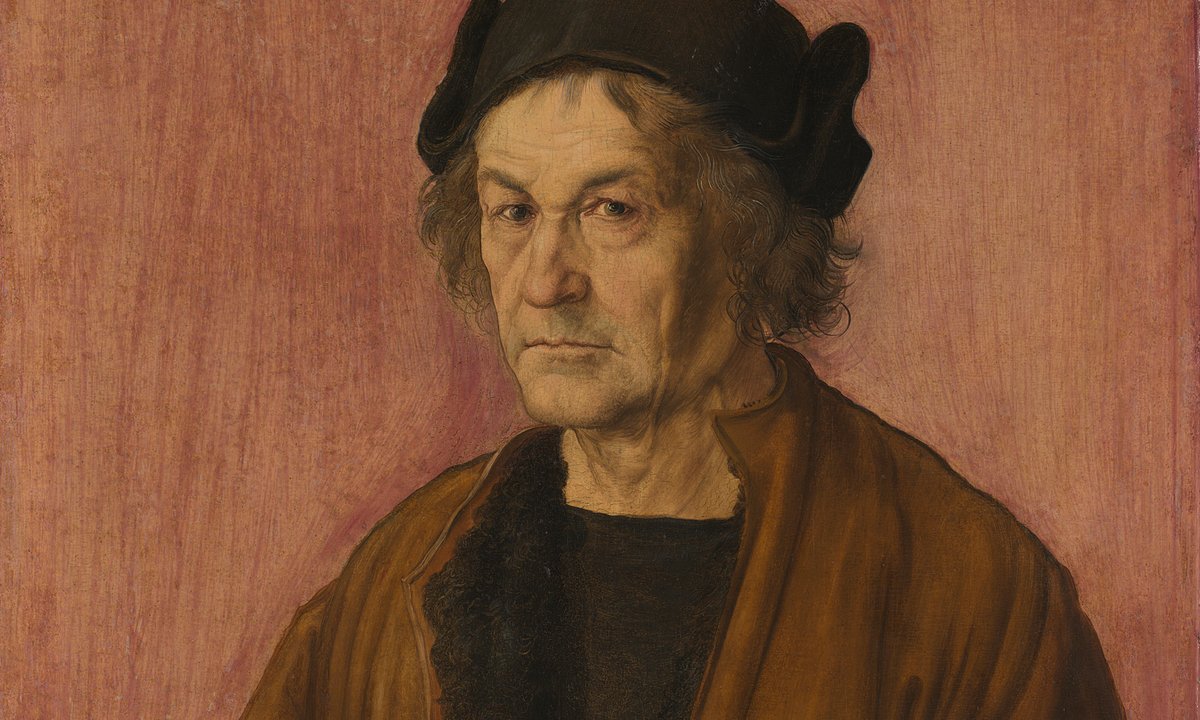
"The portrait of Albrecht Dürer's father at the National Gallery is authentic, according to a major publication by a German scholar-although this is rejected by the London institution. Christof Metzger, the lead author of Albrecht Dürer: The Complete Paintings, argues that The Painter's Father is indeed by the master, dating from 1497. However, the portrait has long been downgraded by the National Gallery, where it is regarded as a copy "after" Dürer by another hand. The museum's curators believe it was copied from a now-lost original in the second half of the 16th century, decades after Dürer's death in 1528."
"The status of the portrait is particularly important because it is such a highly personal painting of the artist's father, who shared the same first name. He is portrayed as a determined and perhaps stern individual, with a considerable amount of hair for a man of his age. Albrecht the Elder, a talented goldsmith, was initially disappointed that his son failed to follow in his profession, instead setting out to become an artist. The young Dürer would have been aged 26 when his father sat for him, and perhaps by this time the successful portrait helped convince the elder Albrecht that his son had made the right career decision."
Christof Metzger contends that The Painter's Father in the National Gallery is an authentic Albrecht Dürer from 1497. The National Gallery classifies the work as a later copy made "after" Dürer, likely derived from a now-lost original produced in the second half of the 16th century. The portrait depicts Albrecht the Elder at age 70 and conveys a determined, possibly stern character. Albrecht the Elder was a skilled goldsmith who at first lamented his son's choice of career; the portrait may have helped affirm the younger Dürer's success. A key technical question is whether the inscription is autograph or a later copy.
Read at The Art Newspaper - International art news and events
Unable to calculate read time
Collection
[
|
...
]