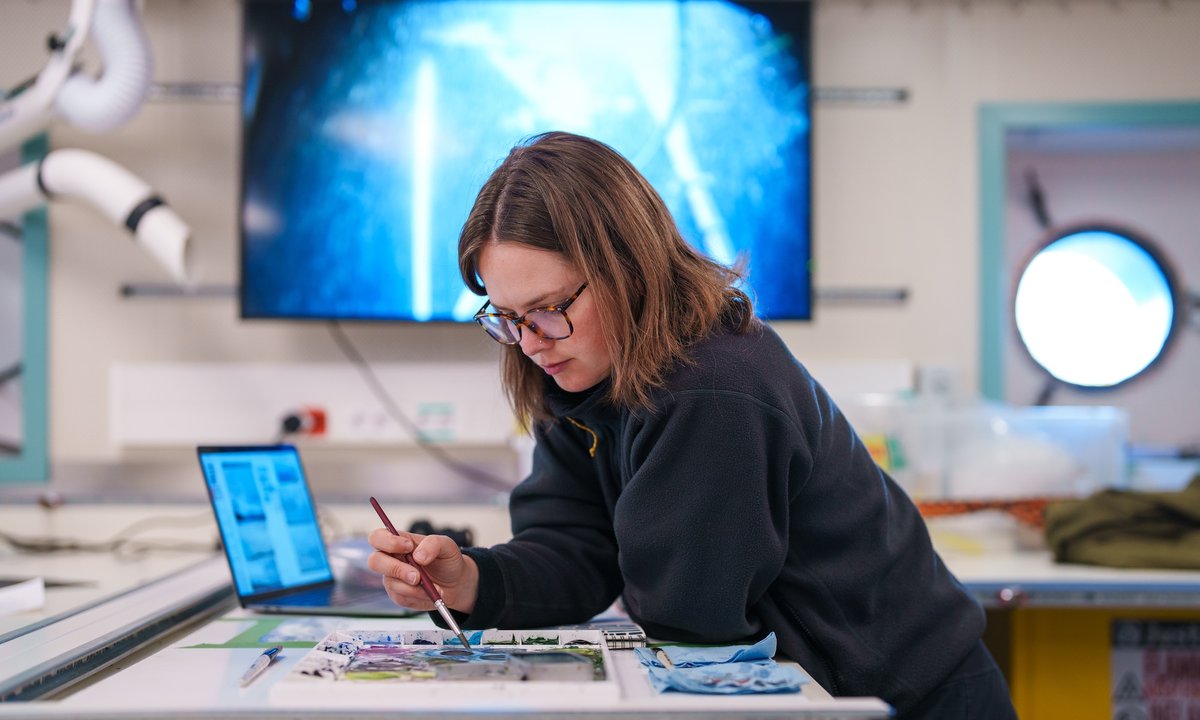
"Last summer, a scientist answered a question that many of us may have mused on: why are birds so colourful? In a supported in part by our grant-making organisation, Schmidt Sciences, birds were found to have evolved to accentuate their brightly coloured feathers via a layer of white and black feathers underneath. As the study notes, this is exactly the technique used by painters for centuries."
"But as have faced severe US federal cuts-resulting in the closure of entire organisations, layoffs and the loss of talent to other fields or countries-it is particularly urgent for advocates in public and private sectors to recognise that art and science are connected ways of understanding the world. They each inspire the other, working best in concert, and supporters of one would do well to step up for the other."
"I am not a scientist, but I work with them. I am also married to one. Scientists arrive at discoveries through testing, trial and error. They measure, calculate, form hypotheses and then start the cycle once more. Those of us with an artistic bent intuit. We channel emotions, use hunches, set out boldly and seek resonance in new ways of seeing and understanding."
Birds amplify feather colours by evolving a layer of white and black feathers beneath pigmented feathers, a technique analogous to painters’ use of underpainting. Art and science are commonly perceived as opposites because of differing methods, languages and cognitive styles, yet both provide complementary pathways to knowledge and often converge on similar solutions. Recent severe US federal funding cuts have led to closures, layoffs and talent loss, increasing urgency for public and private advocates to support both domains. Artists and scientists collaborate through programs like Artist-at-Sea, and their differing approaches—testing and hypothesis versus intuition and resonance—can mutually inspire innovation.
Read at The Art Newspaper - International art news and events
Unable to calculate read time
Collection
[
|
...
]