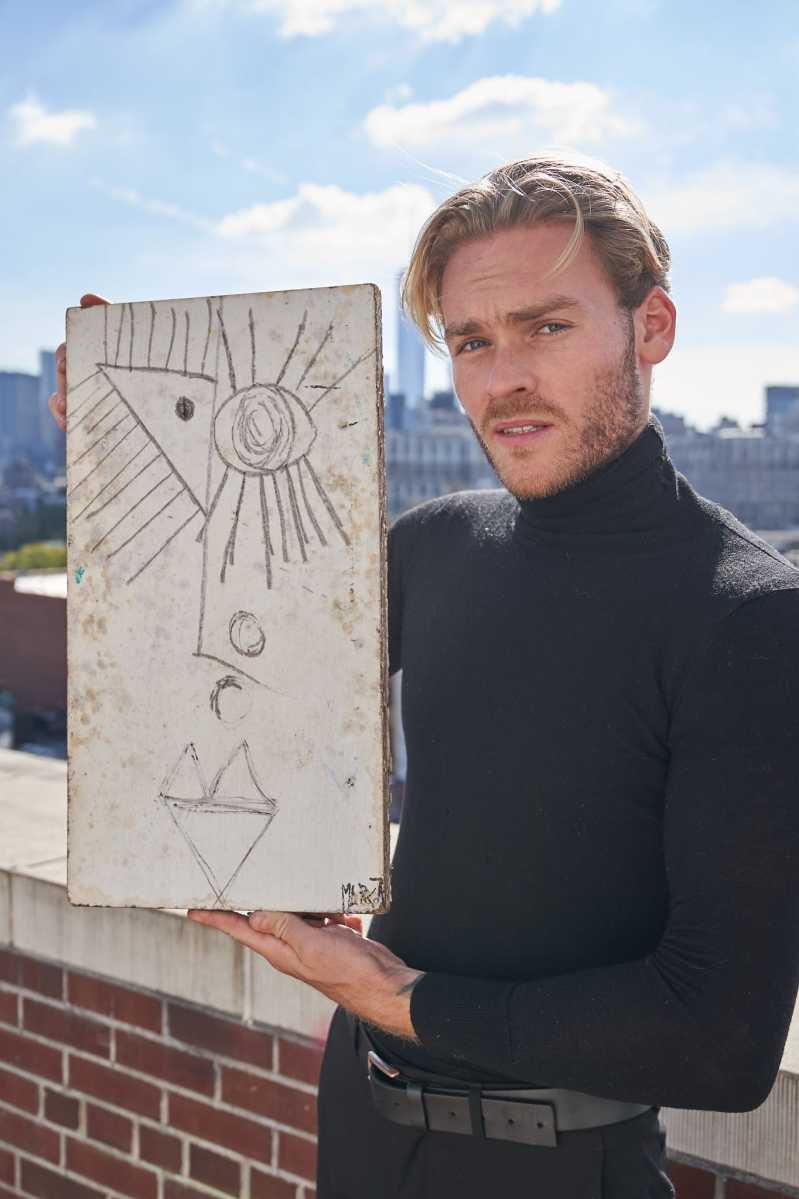
"Matthew Marcot's paintings do not aspire to contemporary ease or stylistic compliance. They operate instead as reminders of an older visual intelligence, one that understood images as charged sites rather than aesthetic objects. Faces in his work resemble masks pulled from ceremony rather than portraiture drawn from observation. Marks appear closer to glyphs than gestures, as though language itself were attempting to return to a pre-verbal state. Geometry enters not as design, but as containment, an effort to hold something volatile without neutralizing it."
"Art predates language, commerce, and taste. Before museums codified value and critics supplied terminology, images were carved, pressed, and drawn as acts of necessity. Cave walls bore animals, hands, and signs not meant for admiration, but for invocation. These early marks were instruments of survival, belief, and orientation in a world that felt immense and unknowable. To make an image was to negotiate with unseen forces, to give form to fear, reverence, and longing."
Matthew Marcot's paintings prioritize ritual intensity over contemporary stylistic trends. Images function as charged sites rather than decorative objects. Faces resemble ceremonial masks rather than observational portraiture. Marks read as glyphs seeking a pre-verbal register. Geometry serves as containment to hold volatile force without neutralizing it. The impulse to make marks predates language, commerce, and taste, appearing in cave art, African sculpture, illuminated manuscripts, and early abstraction. Modernity often conceals this ritual origin beneath refinement, yet successive generations rediscover it when conventions fracture. Matthew Marcot's work operates within this uninterrupted continuum, reviving ancient visual intelligence.
Read at www.amny.com
Unable to calculate read time
Collection
[
|
...
]