"Going on for a long time is... a necessary gamble. Even with great artists, it often wrecks pictures, irredeemably. My pictures are finished when the subject comes back, once he had combined the visual memory of an event-meeting a person, an experience in a city or landscape-together with his emotions and somehow transmuted, transformed or made it into a physical object."
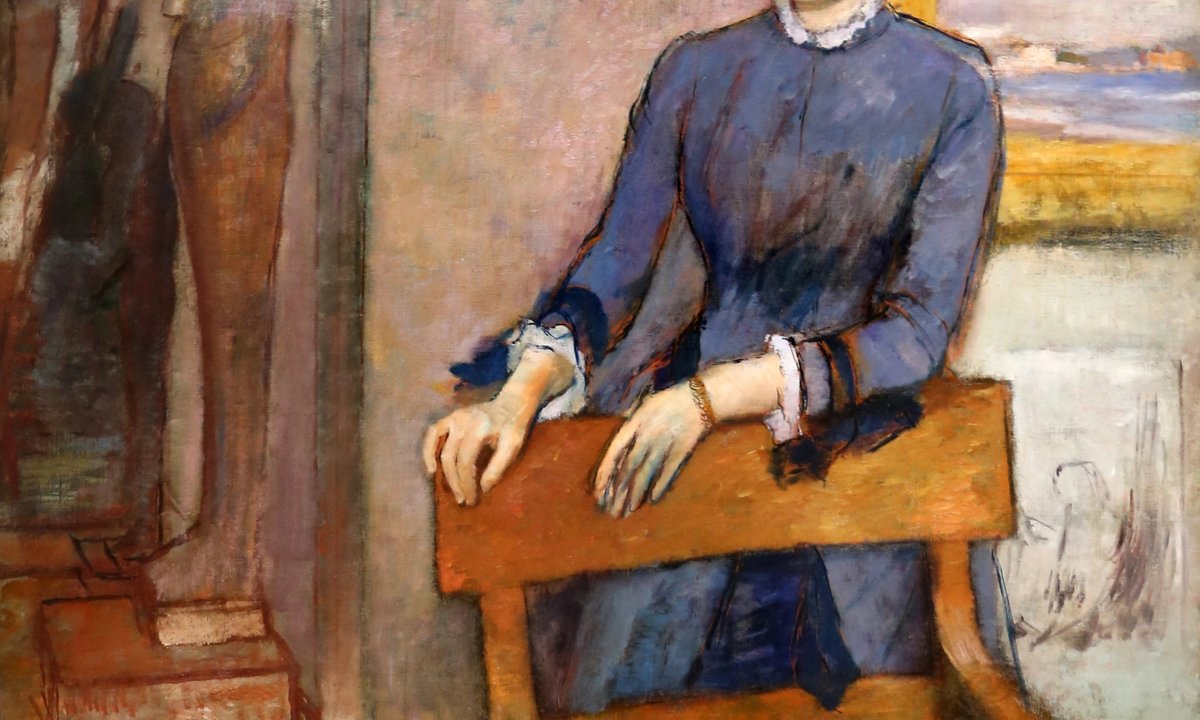
"I think the whole picture is deliberately made to look like an unfinished painting. He pointed to the element most loved about Degas's painting: those curious red and blue pastel lines round the arm, along the edge of the body. Hodgkin suggested that Degas drew back, deliberately employing unfinished elements to enhance the composition's artistic effect and visual impact."
Determining when artwork is finished presents one of artists' greatest challenges. Works risk appearing either undercooked or overworked, with excessive refinement potentially damaging the piece irreparably. Howard Hodgkin, a British painter, explained his completion process through a 1982 interview with critic David Sylvester. Hodgkin's paintings often required years to complete, sometimes spanning decades. He identified completion when the subject—a visual memory combined with emotional response—had been successfully transmuted into physical form. At that moment, no further work was necessary. Hodgkin and Sylvester examined Edgar Degas's Hélène Rouart in her Father's Study, discussing how Degas deliberately employed unfinished elements, including distinctive red and blue pastel lines, to enhance the composition's artistic effect.
Read at The Art Newspaper - International art news and events
Unable to calculate read time
Collection
[
|
...
]